










Researchers have been left stunned after discovering Romans used what has been described as an "ancient machine gun" to attack Pompeii more than 2,000 years ago.
Italian academics have uncovered evidence that Roman forces deployed a devastating repeating catapult during their assault on the city in 89BC - nearly two centuries before its destruction by volcanic eruption.
The weapon, known as a polybolos, was a Greek-designed device capable of firing metal-tipped projectiles in rapid succession.
A team led by Adriana Rossi and Silvia Bertacchi from the University of Campania Luigi Vanvitelli, alongside Veronica Casadei from the University of Bologna, identified the weapon as the likely cause of distinctive circular craters in Pompeii’s defensive walls.
TRENDING
Stories
Videos
Your Say
Their findings, published in Heritage magazine, followed five years of engineering analysis.
The study focused on damage along the city’s northern fortifications, which researchers said had "miraculously survived" Roman rebuilding, Second World War bombing and natural disasters.
Roman general Lucius Cornelius Sulla led the siege, targeting Pompeii’s 40ft walls during a months-long campaign to bring the rebellious city under control.
Using digital surveying techniques, the team created 3D models of the wall damage, matching its size and shape.
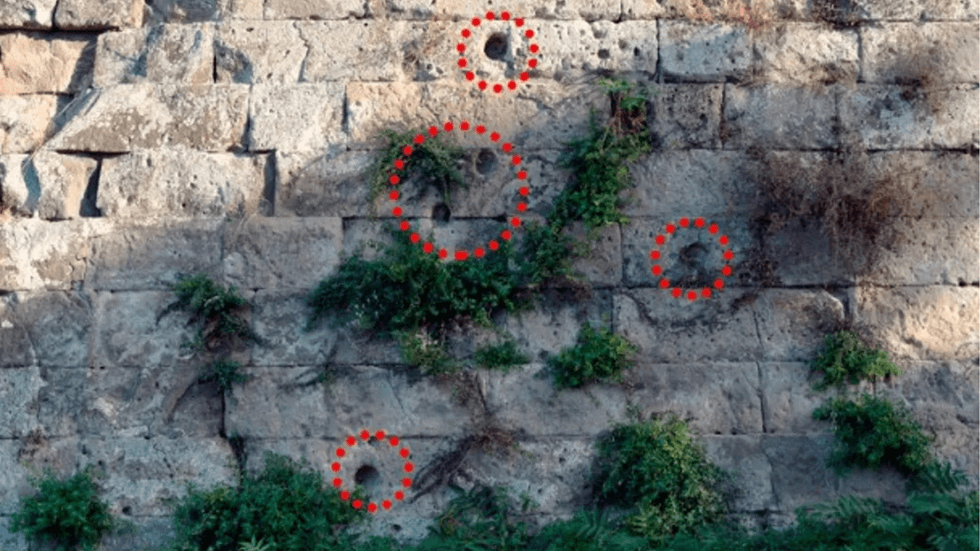
Researchers identified the weapon as the likely cause of distinctive circular craters in Pompeii’s defensive walls
|ROSSI ET AL. HERITAGE 2026
They then compared the patterns to the known mechanics of ancient artillery.
Through reverse engineering, the researchers concluded that only a high-velocity weapon could have caused the damage, effectively pulverising stone on impact.
"The artillery deployed during the assault was primarily intended for anti-personnel purposes, targeting defenders positioned along the ramparts and between the merlons, rather than to demolish the fortifications themselves," the researchers wrote.
Fan-shaped indentations preserved by volcanic ash from Vesuvius had long puzzled historians.
REMARKABLE FINDS - READ THE LATEST:
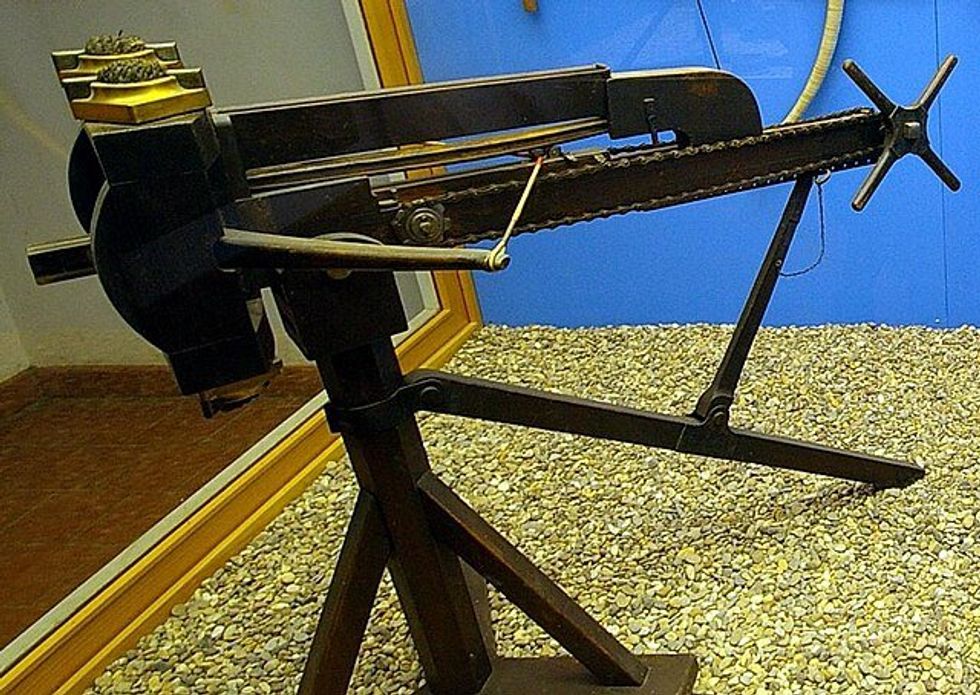
The polybolos was a Greek-designed device capable of firing metal-tipped projectiles in quick succession
|WIKIMEDIA COMMONS
Further evidence came from iron-tipped darts found at other Roman military sites, which matched the specifications identified in the wall damage.
The siege marked a turning point for Pompeii.
Sulla ultimately forced the city to surrender by cutting off supply lines and starving it into submission.
Pompeii was then absorbed into the Roman Empire, undergoing sweeping changes to its political and legal systems.

The siege marked a turning point for Pompeii
| GETTYRoman influence reshaped its buildings and homes, and the city later became a retreat for wealthy elites.
With around a third of Pompeii still buried beneath volcanic material, researchers believe further discoveries about the polybolos may yet emerge.
Roman armies were renowned for their sophisticated siege weaponry, which played a key role in expanding the empire.
Originally developed by the Greeks and refined by the Romans, the ballista was a powerful torsion-driven weapon that fired bolts or stones like a giant crossbow, with pinpoint accuracy over distances of more than 500 yards.
Our Standards: The GB News Editorial Charter