










Archaeologists working near Luxor have unearthed a concealed burial chamber containing 22 wooden coffins - believed to belong to an ancient cult.
The find was made in the Theban Necropolis, a site on the Nile's western bank where Egyptian nobles and officials were interred during the Pharaonic era.
Teams supervised by Egypt's Supreme Council of Antiquities and the Zahi Hawass Foundation uncovered the chamber whilst excavating the limestone courtyard of a previously known tomb.
The sarcophagi date to the Third Intermediate Period, between 1077 and 664 BC.
Despite spending as many as 3,000 years underground, the coffins remain remarkably intact.
Their exteriors display striking blues, greens, reds and yellows which have only slightly faded over time.
While no personal names appear on the coffins, most carry the title "Singer of Amun" or "Chantress of Amun."
Amun, known as "the Hidden One," had become one of ancient Egypt's most powerful deities by this period.
Often merged with Ra as Amun-Ra, he represented creation, kingship and cosmic order.
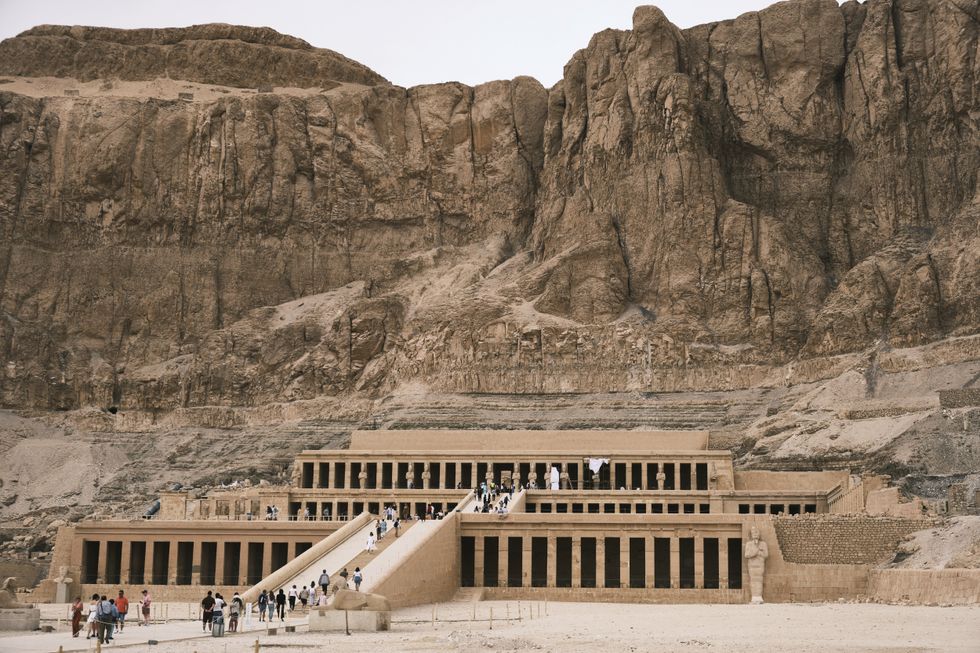
The find was made in the Theban Necropolis, a site on the Nile's western bank where Egyptian nobles and officials were interred during the Pharaonic era
| GETTY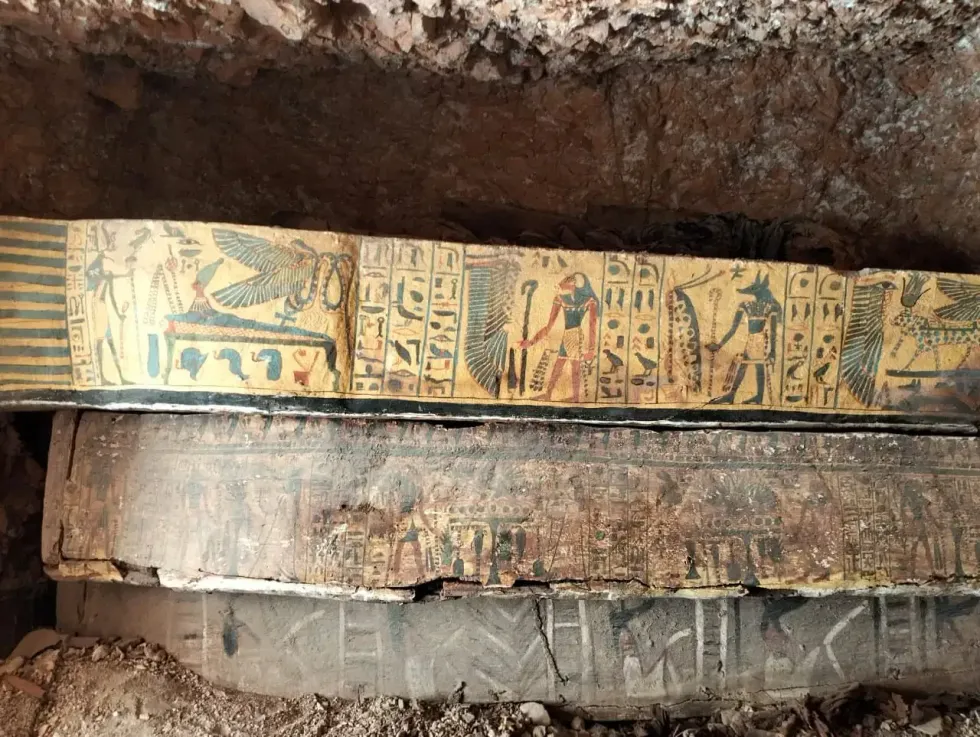
Archaeologists found the coffins were arranged in 10 horizontal rows with their lids removed, a way to maximise the available space
|MINISTRY OF TOURISM AND ANTIQUITIES
The abundance of temple singers buried here suggests the considerable importance of musical worship in Amun's cult.
Researchers hope further analysis will reveal the identities of those interred in these elaborately decorated coffins.
The Third Intermediate Period marked an era of political turmoil following the death of Rameses XI and the collapse of the New Kingdom.
Egypt split between rulers in Tanis and Thebes, where high priests wielded enormous influence.
But the Cult of Amun remained exceptionally powerful throughout this turbulent time.
INCREDIBLE FINDS FROM EGYPT - READ MORE:
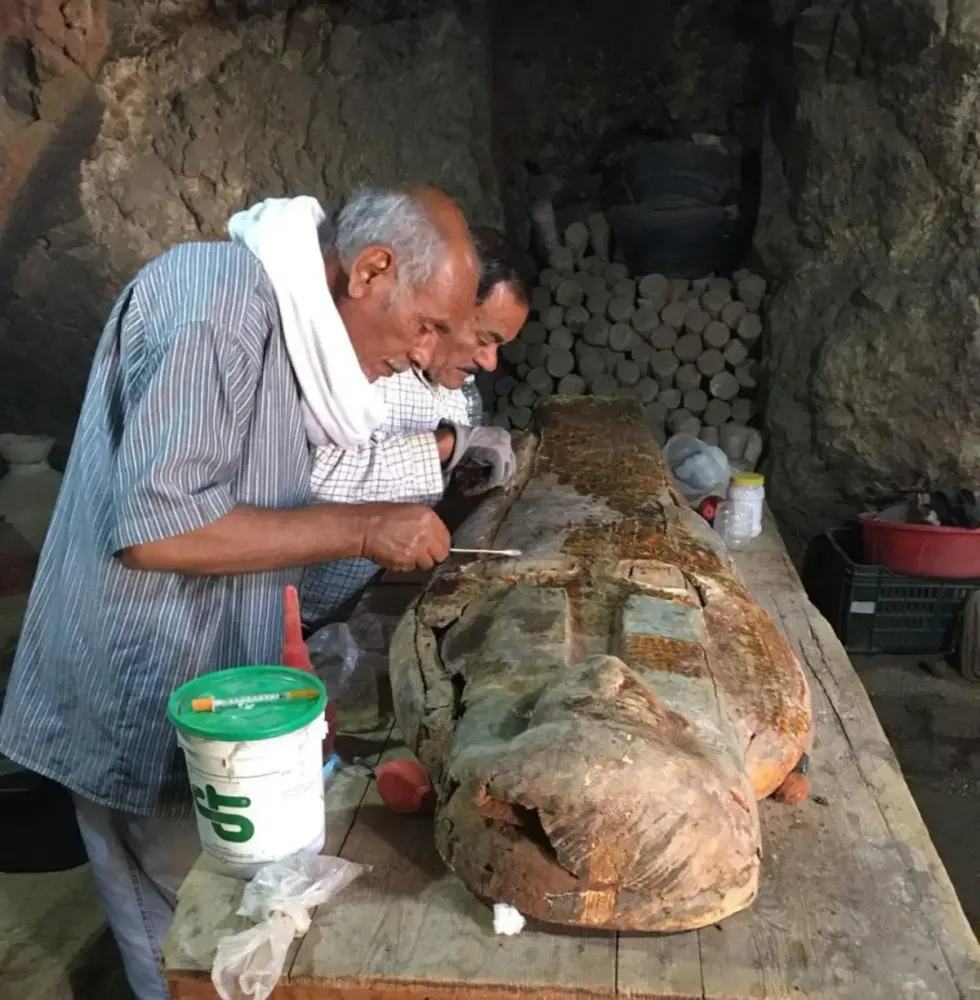
The sarcophagi date to the Third Intermediate Period, as far back as 1077 BC
|MINISTRY OF TOURISM AND ANTIQUITIES
Thebes functioned as a theocracy, with priests consulting Amun on all matters of governance.
Back below the earth, archaeologists found the coffins were arranged in 10 horizontal rows with their lids removed, a way to maximise the available space.
Burial practices during this era prioritised the body itself rather than elaborate tomb decorations or grave goods.
Conservation work is now underway to stabilise the fragile wooden sarcophagi.
Specialists are reinforcing deteriorating fibres and preserving layers of plaster that have degraded over the centuries.
Careful cleaning has removed deposits that had dulled the painted surfaces.
Within the same chamber, excavators discovered a large pottery vessel containing eight papyrus scrolls.
These mysterious documents remain sealed with their original clay seals.
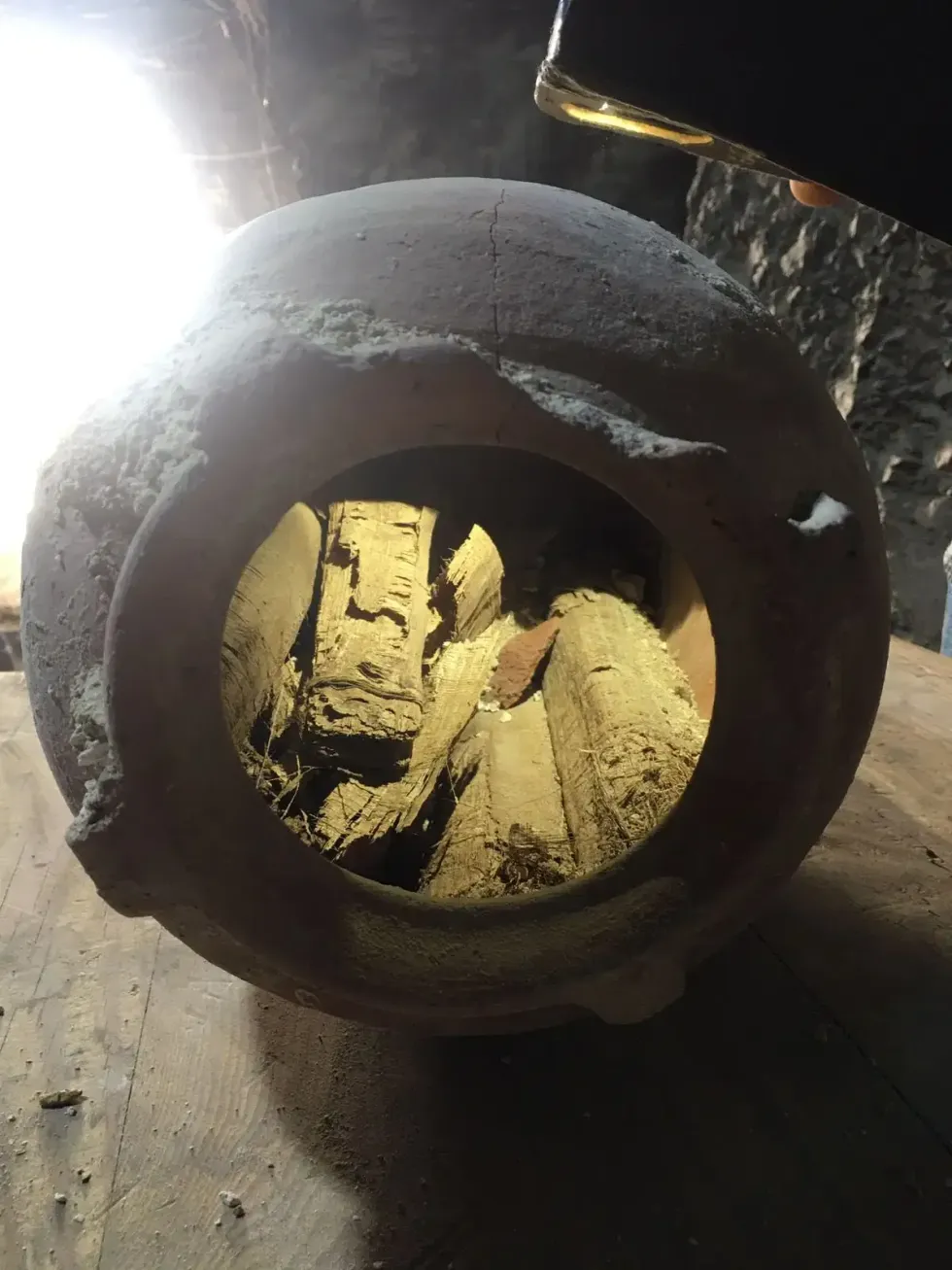
Within the same chamber, excavators discovered a large pottery vessel containing eight mysterious scrolls
|MINISTRY OF TOURISM AND ANTIQUITIES
The scrolls will be translated once they have been carefully unfurled.
Egypt's Minister of Tourism and Antiquities, Sherif Fathy, told Daily News Egypt that this discovery "reflects the state's continued support for archaeological research under a comprehensive strategy aimed at preserving cultural heritage and highlighting its civilisational and human value".
The find represents a significant addition to understanding religious practices during one of Egypt's most unstable periods.
Wives of both the king of Tanis and the High Priest of Thebes held the title God's Wife of Amun, commanding wealth and influence nearly equal to their husbands.