










The tale of King Harold's exhausted army marching nearly 200 miles on foot to confront William the Conqueror at Hastings may be nothing more than historical fiction, according to new research.
Professor Tom Licence, who specialises in medieval history and literature at the University of East Anglia, contends that Harold's forces predominantly made their journey south by sea following their triumph at Stamford Bridge in Yorkshire.
The widely accepted account of a gruelling overland trek has been taught for generations, but Prof Licence argues this narrative originated from a Victorian-era misreading of historical documents.
He will outline his findings at the Maritime and Political World of 1066 conference at Oxford University on March 24.
TRENDING
Stories
Videos
Your Say
The Anglo-Saxon Chronicle, among the most significant early records of English history, appears to suggest that Harold had sent his naval forces away, compelling him to move his troops southward by foot.
Professor Licence maintains that Victorian scholars misread a passage stating the ships "came home" as evidence that the king had disbanded his navy entirely.
In reality, the vessels simply returned to their operational base in London and continued to function throughout that year, he argues.
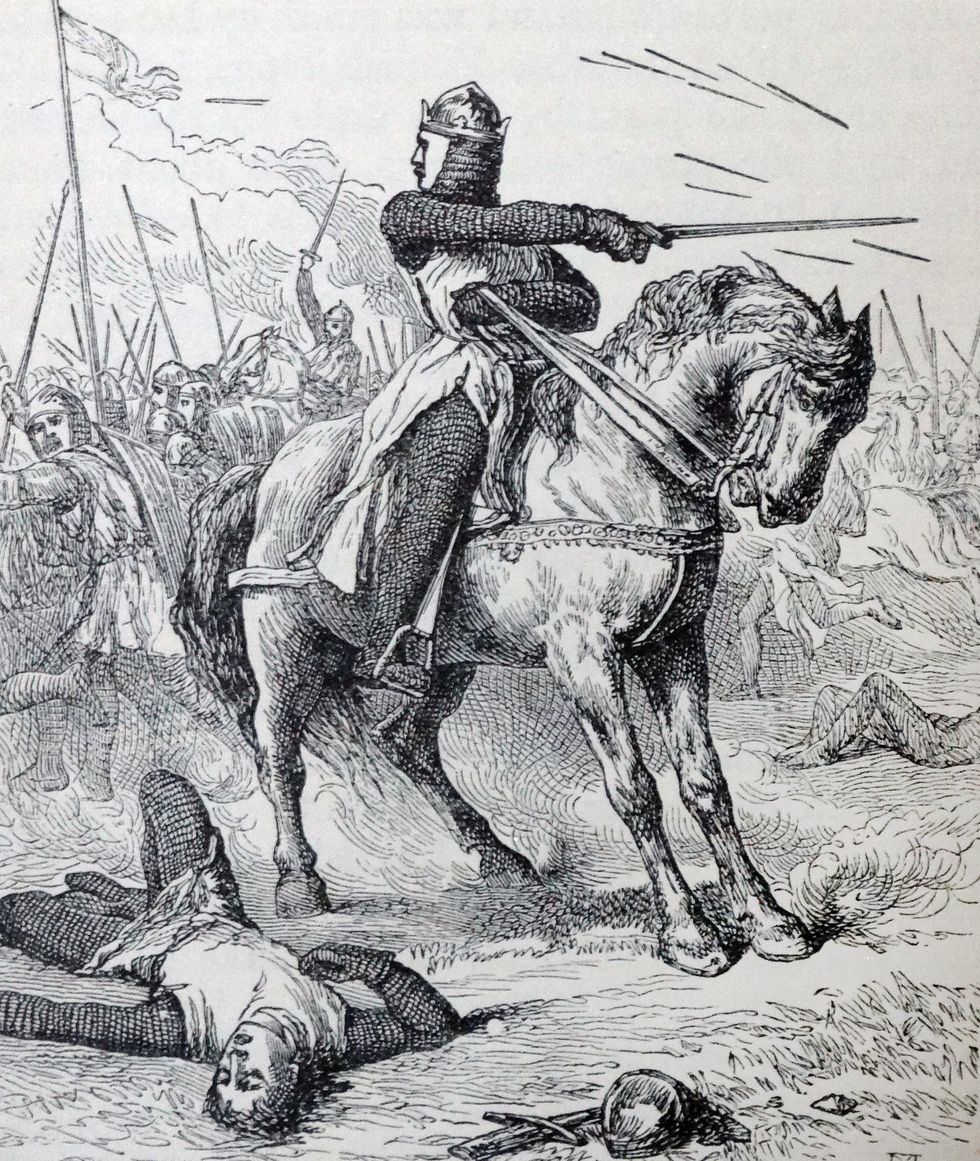 King Harold II was killed during the Battle of Hastings in 1066, marking the end of the Anglo-Saxon era | GETTY
"I checked the evidence for him having sent the fleet home and found that it was just a misunderstanding," he said.
"The idea of a heroic march is a Victorian invention that has shaped our understanding, or misunderstanding, of 1066 for far too long".
Professor Licence questioned the feasibility of battle-weary soldiers without horses covering such vast distances in just ten days, before immediately engaging Norman forces on the Hastings peninsula.
"Only a mad general would have sent all his men on foot in this way if ship transports were available," he said.
MORE ARCHAEOLOGICAL FINDS:
 Anglo-Saxon is used to describe the cultural group of people who emerged in the aftermath of the fall of Roman Britain but before the Norman conquest in 1066. | Flickr
His investigation revealed that contemporary writers frequently referenced Harold's fleet, yet modern historians had either dismissed or attempted to explain away these accounts.
"I went looking in the sources for evidence of a forced march and found there wasn't any," Professor Licence said.
According to period sources, Harold dispatched hundreds of vessels to intercept Duke William following the Norman landing.
The professor argues this evidence "reframes the events of 1066 and highlights a previously overlooked aspect of Anglo-Saxon maritime capability".
"Harold was not a reactive, exhausted commander, he was a strategist using England's naval assets to wage a co-ordinated defence," he said.
Professor Michael Lewis, who curates the Bayeux Tapestry Exhibition at the British Museum, welcomed the findings as the famous medieval artwork prepares to travel to London later this year.
"With the Bayeux Tapestry coming to the British Museum later this year, Professor Tom Licence's research shows there is much still to be learned about the events of 1066," he said.
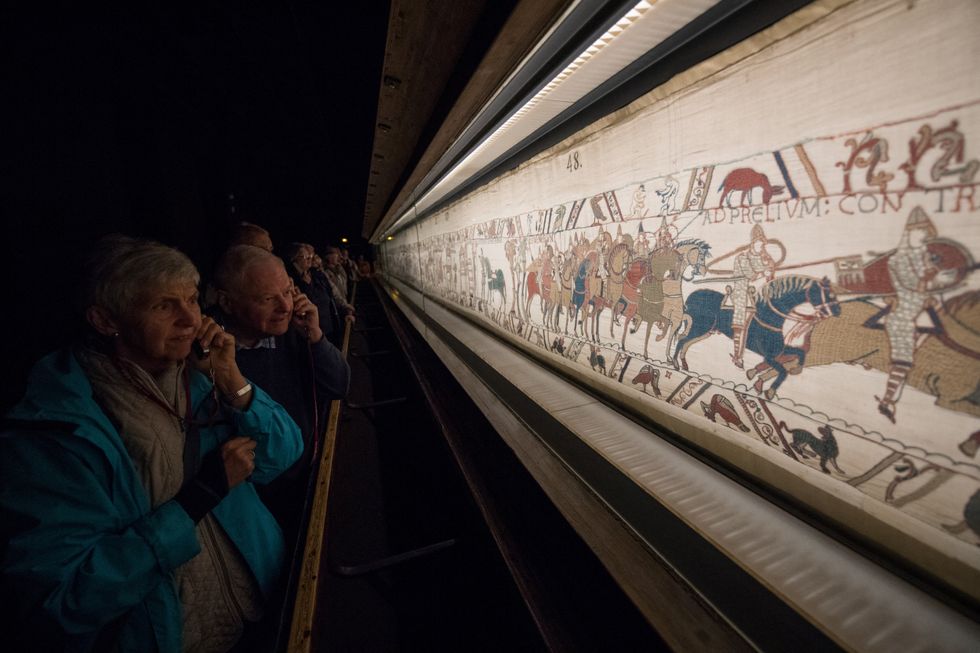
The priceless artefact is set to return to British shores for the first time in over 900 years this September
| GETTY"It is clearly a fascinating discovery that following the Battle of Stamford Bridge Harold took an easier, more logical, trip south by ship to meet Duke William in battle, rather than a long trek overland, as has long been supposed".
Professor Lewis expressed hope that the research would encourage visitors to view the embroidery during its London display.
The embroidery famously depicts Harold's death at Hastings, showing him grasping an arrow to his eye, before William's victory made him England's first Norman monarch.