









Archaeologists have uncovered a gruesome discovery in southern Scotland during the construction of a wind farm.
The cremated remains of multiple people were found interred together approximately 3,300 years ago near Sanquhar in Dumfries and Galloway.
The discovery was made during construction work for the Twentyshilling Wind Farm access route.
Guard Archaeology conducted excavations at the location between 2020 and 2021, revealing an ancient burial mound containing five tightly packed urns filled with human bones.
TRENDING
Stories
Videos
Your Say
The find has been described as evidence of a "mysterious mass burial event" that researchers believe points to some form of catastrophe striking the local community during the late Bronze Age period.
The excavation revealed that at least eight individuals had been placed within the five urns, all deposited during a single burial event.
Thomas Muir, the archaeologist who led the dig, noted that the urns were positioned closely together within a pit, all falling within the same 15th to 13th century BC timeframe.
Researchers used radiocarbon dating to place the interment between 1439 and 1287 BC.
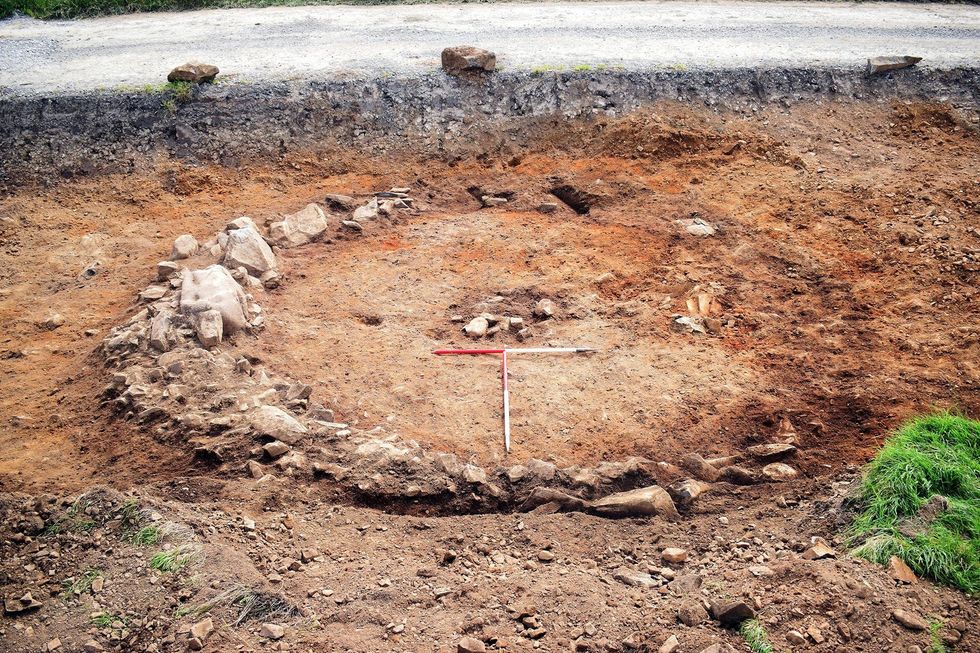
The Twentyshilling site as it was first unearthed
|GUARD
This clustering suggests the deceased may have belonged to the same family or community group.
Additionally, a separate collection of pits discovered further north at the site showed evidence of earlier Neolithic activity, dating from 2867 to 2504 BC.
Mr Muir explained that what makes the Twentyshilling remains particularly notable is the speed with which the bodies were cremated and then interred.
"What is significant about the Twentyshilling remains is that they were cremated and then buried almost immediately," he said
LATEST DEVELOPMENTS
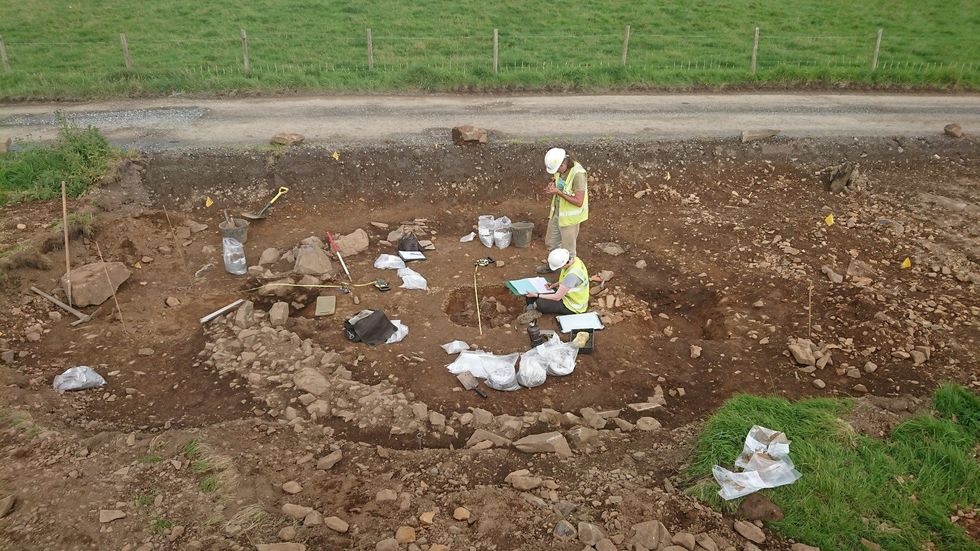
Archaeologists worked at the site to uncover the ancient urns
|GUARD
This practice differed markedly from typical Bronze Age customs, where communities often left the deceased exposed for extended periods before burial.
Mr Muir pointed to another excavation at Broughton in the Borders as an example of more conventional practice.
"That had been reopened a few times and reused so it has been used by a community over a long period of time," he noted.
The contrast with Broughton led Mr Muir to conclude that something catastrophic must have befallen the Twentyshilling community.
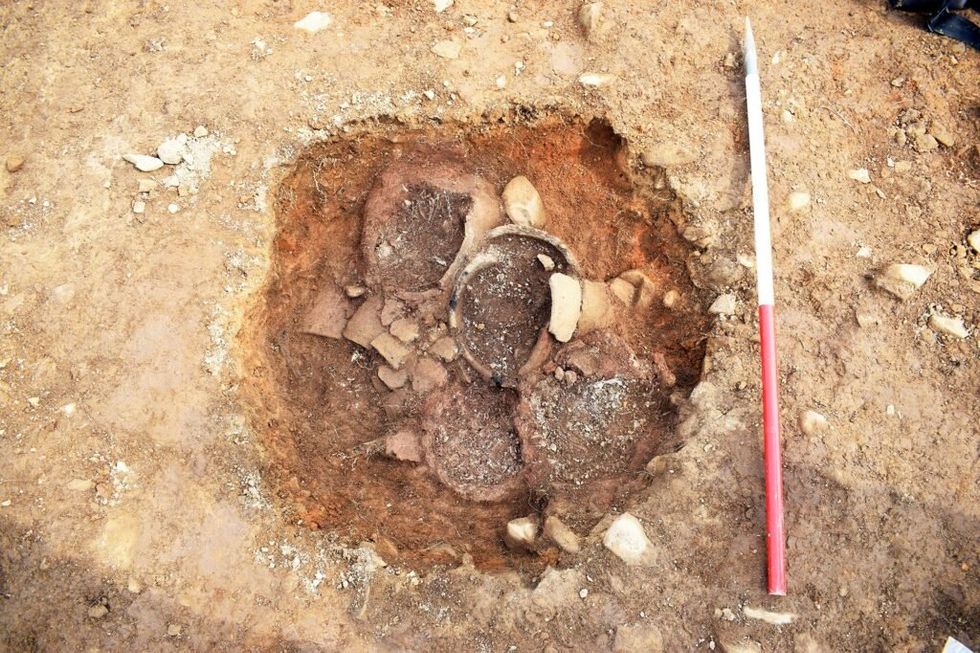
The urns were discovered closely packed together
|GUARD
"Whereas what we have at Twentyshilling is some sort of horrible event must have happened to the community - possibly famine - and a lot of people have died within a very short period of each other," he said.
The region appears to have experienced considerable hardship during this era, with other burial sites in the area also showing signs of famine and settlement abandonment.
The archaeological investigation was carried out as a planning condition for the wind farm, which has since become fully operational.
On the opposite side of the country, Guard Archaeology was involved in the discovery of the largest early neolithic timber hall to be found in Scotland.
The site was discovered in Carnoustie in Angus AND measured 35m (115ft) long by 9m (30ft) wide.
One of the co-authors of a report on the discovery Beverley Ballin Smith said: "It was fully formed, architecturally sophisticated, large, complex and required skills of design, planning, execution and carpentry."
Stone tools were also discovered carefully deposited at the site, which they said offered "tantalising traces" of the hall's role in the local community's beliefs and rituals.