










Two colossal statues depicting Pharaoh Amenhotep III have been unveiled in Luxor following an extensive restoration effort spanning approximately 20 years.
Egyptian authorities presented the reassembled monuments on Sunday, describing them as among the most significant landmarks of ancient Egyptian civilisation.
The Colossi of Memnon, positioned on the western bank of the Nile opposite Luxor, suffered severe damage from a powerful earthquake around 1200 BC, which also destroyed the pharaoh's nearby funerary temple.
The seismic event left the monuments fragmented, with their pedestals scattered and some stone blocks subsequently repurposed in the Karnak temple complex.
Archaeologists retrieved these dispersed elements to reconstruct the ancient sculptures.
Originally erected in 1350 BC, these imposing monuments stand nearly 50ft tall and were crafted from quartzite sandstone blocks extracted from quarries close to present-day Cairo.
The massive stone components travelled some 420 miles to reach their final destination.
Both sculptures portray the pharaoh in a seated position, his hands placed upon his thighs, with the figures oriented eastward towards the river and the morning sun.
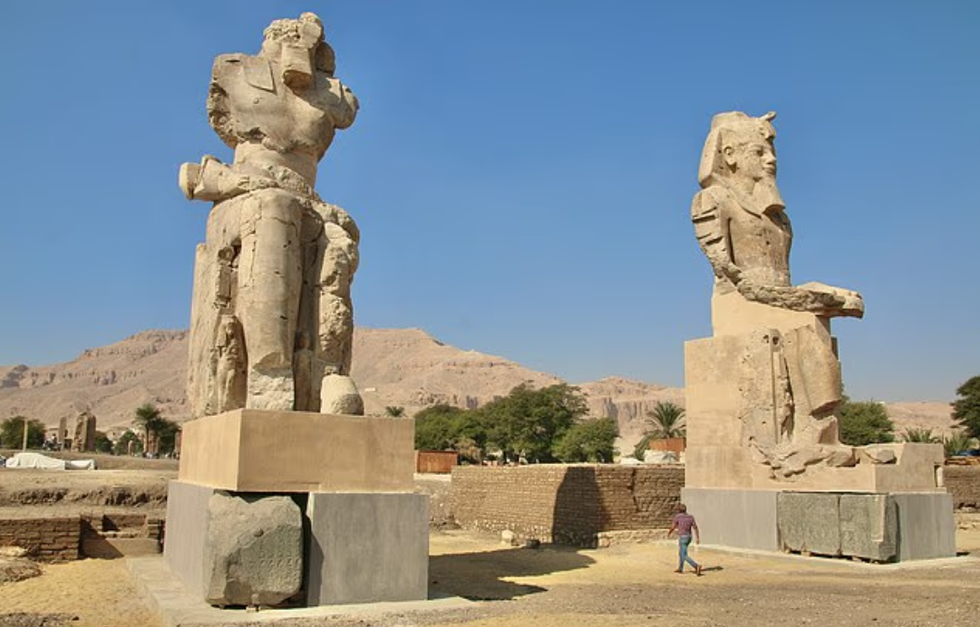
The Colossi of Memnon were positioned on the western bank of the Nile opposite Luxor
|GETTY
The royal iconography includes the traditional striped nemes headdress topped with double crowns, alongside the pleated ceremonial kilt symbolising divine kingship.
Smaller statues at the pharaoh's feet represent his wife, Tiye, whilst over 100 Greek and Latin inscriptions adorn the monuments.
Amenhotep III presided over ancient Egypt during the New Kingdom period, widely regarded as the civilisation's most prosperous era.
Michael Habicht, an archaeologist at Flinders University in Australia, noted that the pharaoh "promoted peace and lived in a time of the greatest economic prosperity".
LATEST DEVELOPMENTS
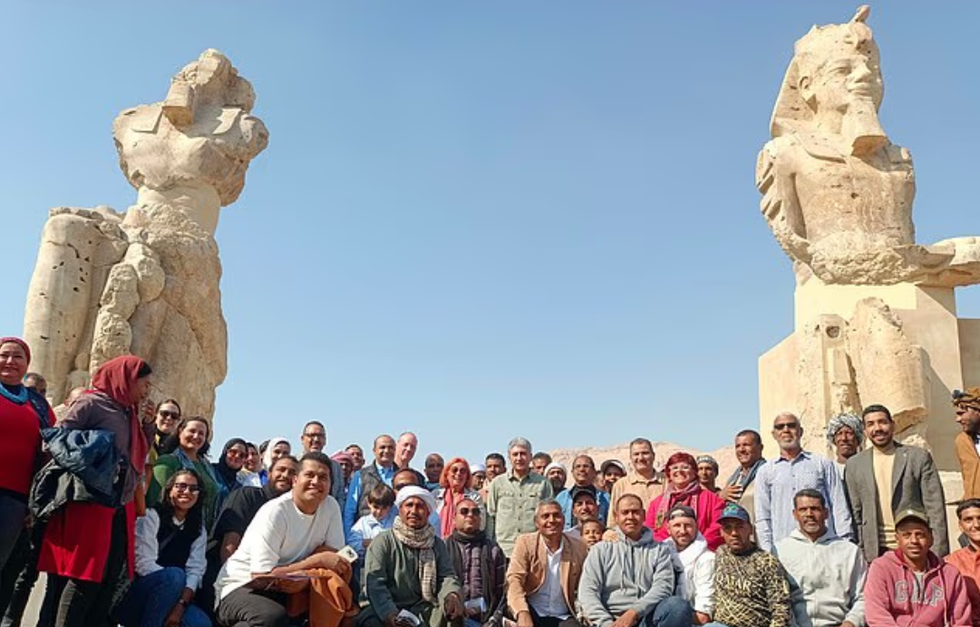
Originally erected in 1350 BC, these imposing monuments stand nearly 50ft tall
|GETTY
"He might well have been one of the richest men that ever lived, at least in his epoch," Dr Habicht said.
Foreign rulers would write to him requesting gold as gifts, with diplomatic correspondence suggesting the precious metal was "as abundant in Egypt as sand".
The academic also characterised Amenhotep III as having considerable interest in women, reportedly bringing hundreds of foreign women into his harem.
Amenhotep III governed Egypt from approximately 1391 to 1353 BC, a period marked by stability and grandeur, and was venerated as a living deity.
He is believed to have died between 40 and 50 years of age, bequeathing to his son Akhenaten a realm at the pinnacle of its influence.
The pharaoh was also the grandfather of Tutankhamun, whose tomb discovery in 1922 captivated the world.
Mohamed Ismail, secretary-general of the Supreme Council of Antiquities, explained that the restoration aims to recreate the original appearance of Amenhotep III's funerary temple.