










The earliest evidence of cavemen using fire has been uncovered in a groundbreaking discovery in Suffolk.
Archaeologists at the site in Barnham believe they have uncovered the oldest example of deliberate fire-making by humans, dating back approximately 400,000 years.
"It's an astounding discovery. This is a game-changer in the field," researchers said.
Two small pyrite rock fragments, each measuring around two centimetres, were discovered alongside ancient campfire hearths at the location.
TRENDING
Stories
Videos
Your Say
Evidence of the deliberate use of fire meant humanity’s distant ancestors understood the practice 360,000 years earlier than previously thought.
The fire-makers were most likely early Neanderthals, based on skull samples previously found nearby.
Since pyrite does not occur naturally in the Barnham landscape, its discovery alongside the campfires indicates these early humans possessed the ability to create fire whenever they needed it.
When struck against flint, pyrite produces sparks capable of igniting flames, making it an essential component of any fire-starting kit.
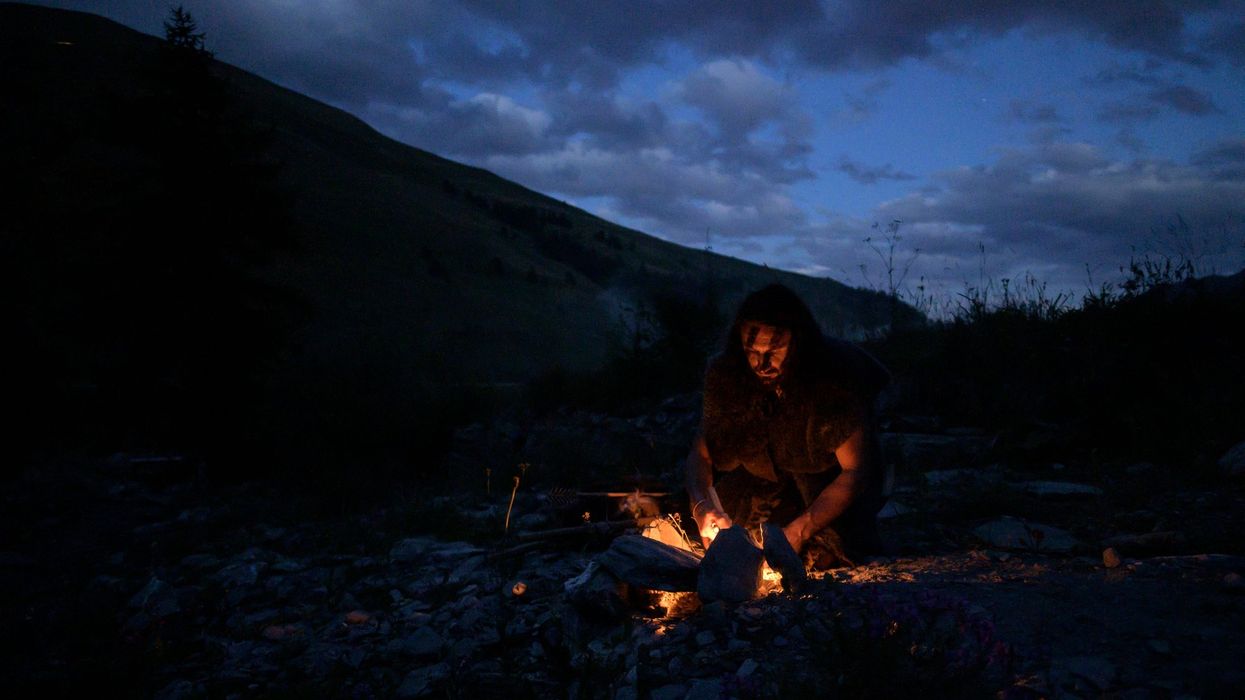
The earliest proof of cavemen making fire, dating back 400,000 years, has been unearthed in Suffolk
|GETTY
"As soon as we saw the pyrite, we realised we had found something remarkable," recalled Simon Parfitt, a senior researcher at University College London who was present when the fragments were unearthed.
Dr Silvia Bello, an expert on ancient human behaviour, explained: "The fact that there are the pyrites shows not just that they could maintain the fire, but they were making fire."
The mastery of fire represented a transformative moment in human evolution, enabling early humans to ward off predators, survive cold nights and cook food, which made a wider range of resources digestible.
Fires also likely served as a gathering point for social interaction and the sharing of knowledge between early humans.
LATEST DEVELOPMENTS
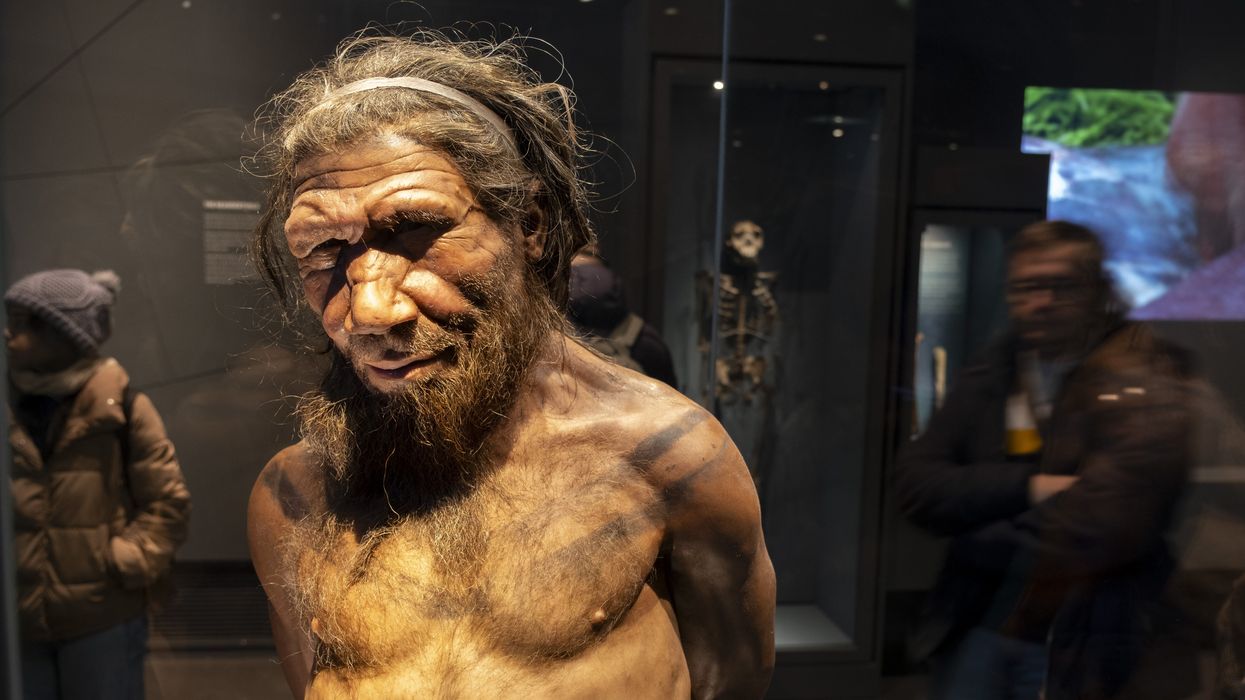
Evidence suggested the fire was lit by Neanderthal, an ancestor of modern humans
"Fire is a source of warmth, and on cold, dark nights it can extend the day," said Dr Bello, adding: "I imagine that fires were good learning areas."
It was the development of storytelling and generational oral traditions around fires that laid the earliest groundwork for modern complex communication.
The Barnham site, where the astonishing find was uncovered, was originally a clay pit during the late nineteenth century, providing material for local brick production.
Even then, workers extracting clay were finding remains of ancient elephants and flint tools crafted by early humans.
The location once featured a spring-fed lake encircled by grassland and open woodland, which attracted a diverse range of wildlife.
Excavations resumed in the late 1980s and expanded significantly from 2013, with researchers spending the past decade uncovering a remarkable ancient wetland ecosystem.
Fossils recovered include bison, elephants, deer, frogs, fish and macaque monkeys, painting a vivid picture of life nearly half a million years ago.
The site also revealed two separate stone tool traditions, with simpler Clactonian flake tools in lower layers and more sophisticated handaxes above, suggesting different human species occupied the area at different times.
Our Standards: The GB News Editorial Charter