








A growing number of kidney cancer cases are being caught too late, with the latest figures from Kidney Cancer UK's survey showing one in five patients discover they have the disease at stage 4, when it is most advanced.
The findings, released ahead of Kidney Cancer Awareness Week, paint a concerning picture of late detection leading to more aggressive treatments, diminished quality of life, and substantially higher death rates.
Delayed diagnoses have been attributed to the disease's characteristically vague or non-existent symptoms, which frequently result in patients being overlooked or incorrectly diagnosed until their cancer has progressed significantly.
The charity's findings show that patients at stages 1 to 3 most frequently reported back, flank or side pain (34 per cent), blood in urine (28 per cent), and fatigue (24 per cent), while 29 per cent experienced no symptoms whatsoever.
TRENDING
Stories
Videos
Your Say

Back pain is one of the most commonly reported symptoms in the advanced stages of the disease
|GETTY
Those receiving a stage 4 diagnosis commonly presented with similar complaints - back pain (37 per cent), tiredness (34 per cent), blood in urine (26 per cent), and weight loss (26 per cent) - though 15 per cent remained entirely symptom-free.
In response, Kidney Cancer UK is urging the development of a straightforward primary care test, enhanced GP training and awareness, and full implementation of forthcoming NICE guidelines expected this spring.
Kidney cancer now stands as Britain's sixth most prevalent cancer, with approximately 13,800 new cases emerging annually, equivalent to roughly 38 diagnoses each day.
The disease claims around 4,700 lives per year, translating to some 13 deaths daily. Mortality rates have climbed dramatically, rising by 73 per cent since the 1970s.
The survival outlook varies starkly depending on when the cancer is detected. Patients diagnosed at stage 3 have approximately a 74-75 per cent chance of surviving five years or more.
However, for those whose cancer has spread to distant organs at stage 4, this figure plummets to 15 per cent.
Perhaps most concerning for British patients, the UK's five-year survival rates rank among the poorest across Europe.
LATEST DEVELOPMENTS
Diagnostic challenges stem from kidney cancer's silent nature during its earliest stages, when the disease produces virtually no warning signs.
More than half of patients, or 54 per cent, discover their cancer purely by accident, during scans conducted for entirely unrelated conditions.
The survey found that nearly a third of patients waited more than three months between first feeling unwell and receiving their diagnosis, showing scant improvement from the previous year's figure of 34 per cent.
Misdiagnosis remains a persistent problem, with over a quarter of patients initially told they had a different condition - up from 21 per cent the year before.
Many report feeling dismissed when their symptoms are attributed to benign causes such as kidney stones or urinary tract infections, only to later learn they have cancer.
Kidney Cancer UK is demanding a government-funded research strategy to create an affordable, simple test suitable for GP surgeries, alongside improved decision support software to help primary care practitioners identify suspected cases more readily.
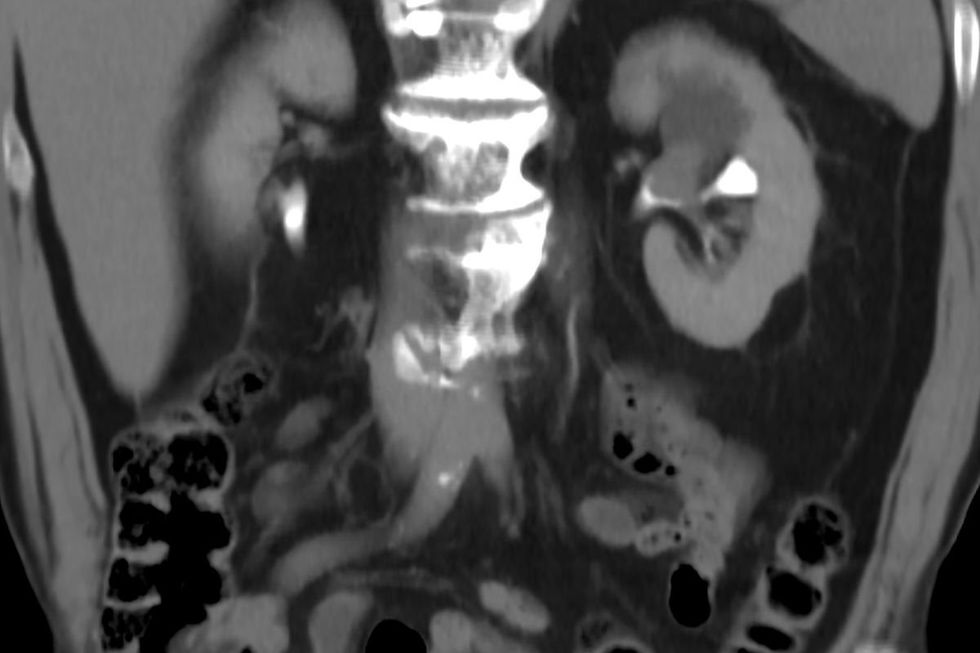
Kidney cancer claims around 4,700 lives per year
|GETTY
Professor Grant Stewart, Professor of Surgical Oncology at the University of Cambridge and Consultant Urologist at Addenbrooke's Hospital, described the findings as "a concerning year-on-year increase," noting that "kidney cancer often presents with non-specific or subtle symptoms, which can be overlooked or misattributed, leading to delays in diagnosis".
Malcolm Packer, Chief Executive of Kidney Cancer UK, stated: "This isn't just a clinical issue, it's a human one, with devastating consequences for treatment options, quality of life, and survival."
He urged healthcare professionals to embrace the forthcoming NICE guidelines and work collectively to improve patient pathways.
Our Standards: The GB News Editorial Charter