



All products and promotions are independently selected by our experts. To help us provide free impartial advice, we will earn an affiliate commission if you buy something. Click here to learn more







It's taken nearly five years, but Microsoft appears to be getting what it wanted all along – millions of PC owners finally making the switch to its newest operating system.
Recent figures from Statcounter reveal that Windows 10 now powers just 26.27% of Windows PCs worldwide as of February — a steep fall from 35.77% recorded in January. Meanwhile, Windows 11 has surged ahead, reaching 72.77% adoption globally.
This comes shortly after Microsoft announced Windows 11 is being used by 1 billion people worldwide.
The main reason? Microsoft pulled the plug on official Windows 10 support back in October 2025, bringing the curtain down on a decade-long run.

Recent figures from Statcounter reveal that Windows 11 now powers 72.77% devices globally
|STATCOUNTER
This means if you're still using Windows 10, you're no longer receiving those monthly software and security updates that keep your machine running smoothly.
If you don't update your systems immediately, you could be leaving the back door open for a fraudster to install malware on your device. This could result in your personal data being stolen, such as your personal files, account logins, financial information, and more.
Since the sunset of Windows 10, millions of older, compatible printers have been affected. Microsoft is also retiring Security Boot — another security feature meant to protect your device against malware.
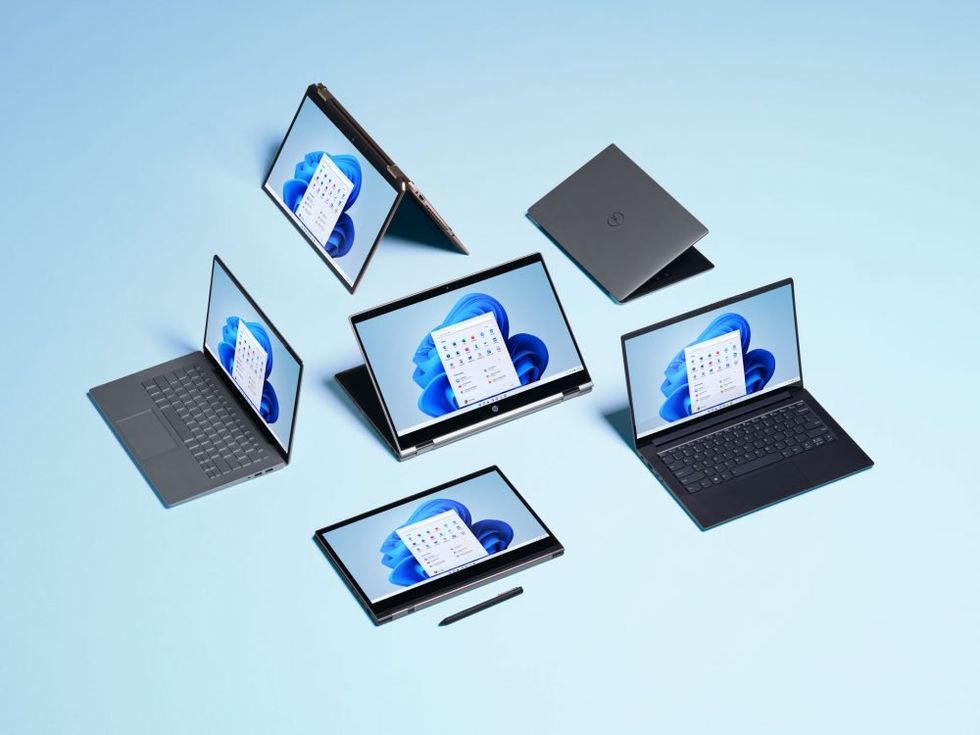 To ensure your device can receive these critical updates, you must have Windows 11 installed, which is the latest software system from Microsoft | MICROSOFT PRESS OFFICE
When you update your device to Windows 11, you can expect a steady stream of software updates to address security vulnerabilities, bugs and glitches, and other critical issues. You'll also enjoy new features and functionality added to the operating system over time.
AJ Thompson, Chief Commercial Officer at Northdoor Plc. told GB News, "Windows 11 brings encryption by default, better virtual desktop support and seamless integration with Office 365. Millions of users will be affected by the shift, and millions will have no patch, so it will be interesting to see how regulators like the ICO respond. The reality is simple: organisations need to act now."
The death of Windows 10 has pushed many users to either upgrade to the new operating system or replace their PCs with devices that support it, so they can prevent hackers from taking advantage of them not being treated to these critical security updates.
For instance, a critical Windows security update was recently released by Microsoft to fix 59 flaws.
If your Windows 10 computer meets the minimum criteria to run Windows 11, Microsoft will let you upgrade to its newest operating system free of charge. Similar to the free upgrade scheme that let PC owners with Windows 7 and Windows 8 switch to Windows 10, there's no charge to unlock the latest Windows 11 features.
To check the eligibility of your laptop or desktop PC, you can either use the PC Health Check feature included on Windows 10 or third-party tools like WhyNotWin11. If your hardware is compatible, the simple upgrade process involves clicking the Windows Start button, then select Update & Security> Windows Update.
LATEST DEVELOPMENTS
However, it's unlikely to be that simple.
Windows 11's minimum requirements have been a point of contention since its release back in October 2021. The desktop operating system demands a 64-bit processor, a minimum of 4GB of RAM and 64GB of storage. More controversially, it requires TPM 2.0 and Secure Boot capabilities, features absent in many older PCs.
Microsoft says this hardware is required as it enables many of the security features baked into the operating system — making it more secure and ensuring your important files remain under lock-and-key.
 Those who are running Windows 11 — the newest operating system — on their devices will continue to receive security protection | UNSPLASH
While there are unofficial workarounds exist to bypass eligibility checks — enabling PCs that do not meet these requirements to install the successor to Windows 10, these involve registry modifications and may lead to future update issues. Some users have found success with third-party tools like Rufus, which offers a Registry bypass hack for Windows 11 24H2 in-place upgrades on ineligible systems.
Without these workarounds, the strict requirements have left numerous Windows 10 users unable to upgrade, causing some to warn that as many as 240 million working laptops could be destined for landfill.
On the other hand, you could upgrade to a new machine altogether.
Shopping for a new desktop PC, tablet or laptop today, you won't find anything that ships with Windows 10 preinstalled. The newer Windows 11 has become the standard for all modern PC hardware. In fact, Samsung will release its latest Windows 11 laptops in the UK next month.
Shopping for a new desktop PC, tablet or laptop today, you won't find anything that ships with Windows 10 preinstalled
|UNSPLASH
Interestingly, though, not all versions of Windows 11 are created equally.
Last summer, Microsoft introduced a new category of PCs — known as Copilot+ PCs — that deliver unique AI features, including the controversial Recall feature, not available on the standard installation of Windows 11. These devices ship with a new key on the keyboard dedicated to the Copilot assistant, the first shake-up to the Windows keyboard layout since the Start key was introduced back in 1994.
Microsoft spearheaded this all-new category of Windows 11 laptops with its own new Surface Laptop and Surface Pro, while Samsung's first Copilot+ PC is the Galaxy Book 4 Edge. Other brands have also launched a series of Copilot+ PCs, including laptops from from ASUS, Lenovo, and HP too.
On the one-year anniversary of the introduction of Copilot+ PCs, Microsoft introduced two new variants to its lineup — the new Surface Pro and Surface Laptop, which offer the lowest-ever starting price of any of these Windows 11 machines.
More From GB News