










Archaeologists have made the "discovery of the decade" after unearthing a burial chamber dating back an incredible 1,400 years.
The tomb, located in the Central Valleys of Oaxaca, has been hailed as a landmark find by Mexico's president.
President Claudia Sheinbaum Pardo declared at a press conference the findings represent "the most important archaeological discovery of the last decade in Mexico due to its level of preservation and the information it provides".
The stone structure was constructed by the Zapotec civilisation, whose people were known as the Be'ena'a or "Cloud People" and dominated the region during the pre-Hispanic era.
TRENDING
Stories
Videos
Your Say
Dating from approximately 600 CE, the tomb has remained hidden for over a millennium before its recent excavation.
The site's exceptional state of preservation has captured the attention of researchers and government officials alike, who believe it will yield unprecedented insights into ancient Mesoamerican culture and burial traditions.
A striking carved owl dominates the tomb's entrance, its open beak framing the face of what researchers believe to be a Zapotec lord.
For the Be'ena'a people, owls represented night, death and authority, suggesting this burial site honoured a powerful ancestor whose spirit was expected to ascend to the heavens.
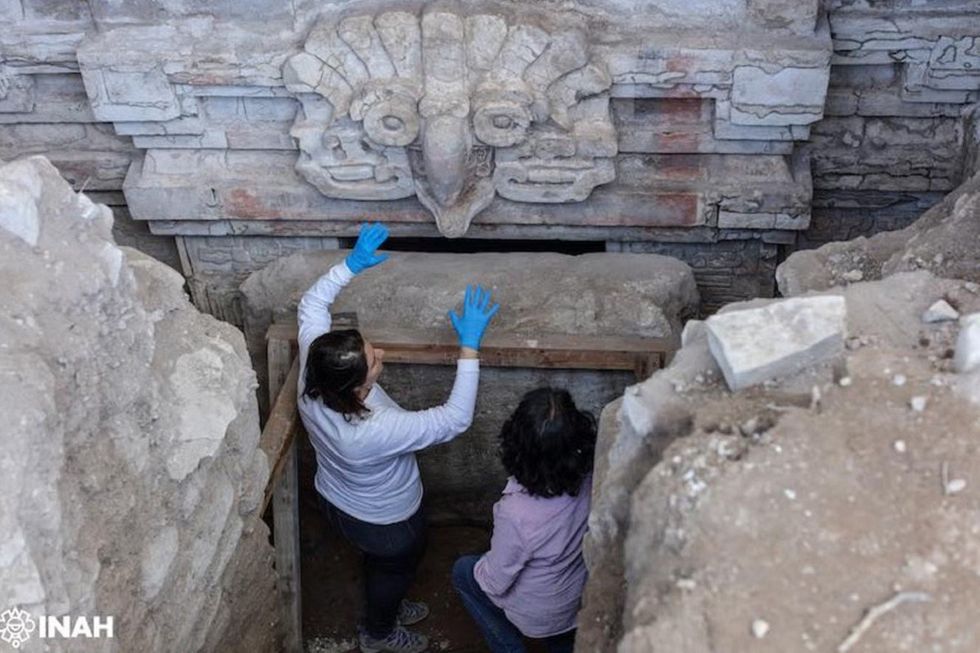
The stone structure was constructed by the Zapotec civilisation
|INAH
The doorway itself features elaborate stonework, including a frieze of engraved slabs bearing calendrical names across its lintel.
Two carved figures—a man and woman dressed in ceremonial headdresses and grasping ritual objects—stand sentinel on either side, interpreted by experts as the tomb's guardians.
Within the burial chamber, sections of vivid murals have survived remarkably intact, rendered in ochre, white, green, red and blue pigments.
The principal artwork shows a ceremonial procession of figures bearing copal bundles—sacred tree resin used in rituals—as they advance towards the entrance.
The Zapotec people established one of Mesoamerica's most remarkable pre-Columbian civilisations, with a history extending more than 2,500 years before their influence in the region began to wane mysteriously around 900 AD.
Sophisticated agricultural techniques and a developed writing system have been discovered at their principal settlement at Monte Albán.
LATEST DEVELOPMENTS:
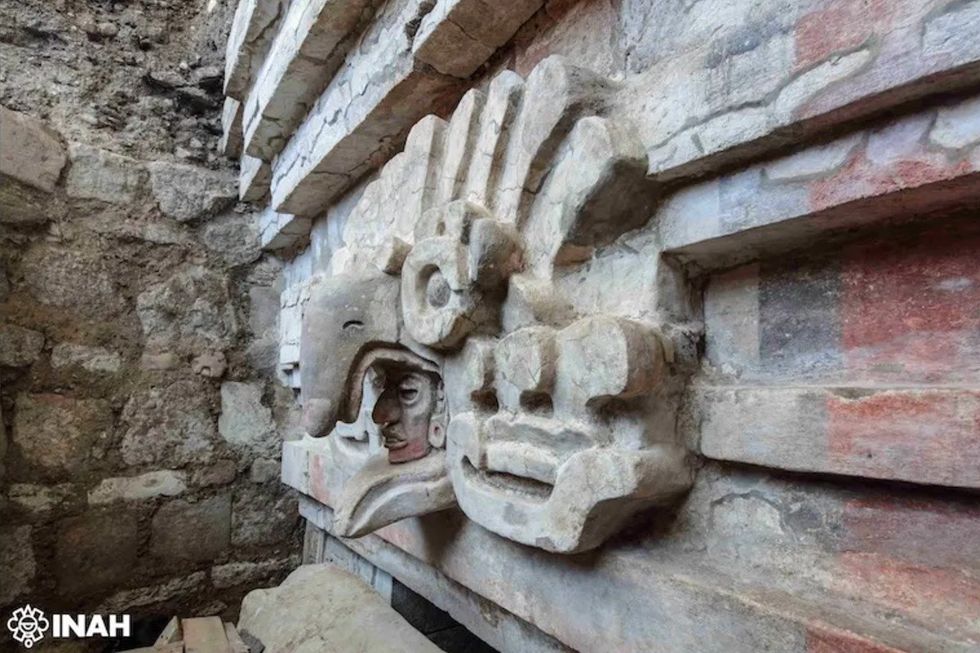
A striking carved owl dominates the tomb's entrance, its open beak framing the face of what researchers believe to be a Zapotec lord
|INAH
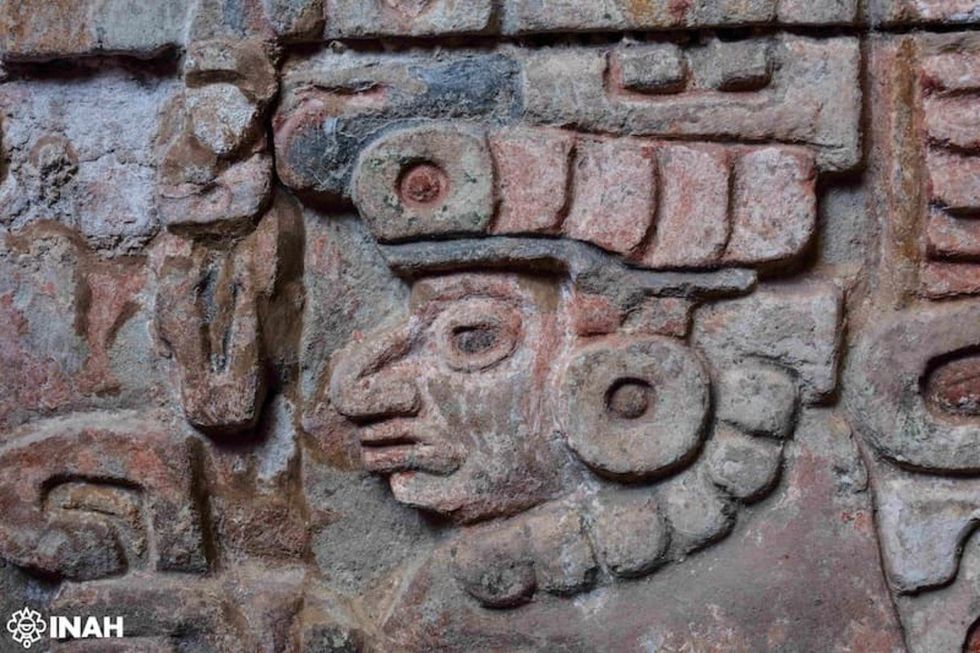
The doorway features elaborate stonework
|INAH
Central to Zapotec spirituality was the conviction that their forebears had originated from the clouds above.
This cosmological belief shaped their elaborate funeral customs, as they held that deceased souls would journey back to the celestial realm in spiritual form.
While the civilisation's political dominance diminished over a millennium ago, the Zapotec people themselves have endured through the centuries.
At least 400,000 individuals across Mexico and Central America today identify as ethnically Zapotec.
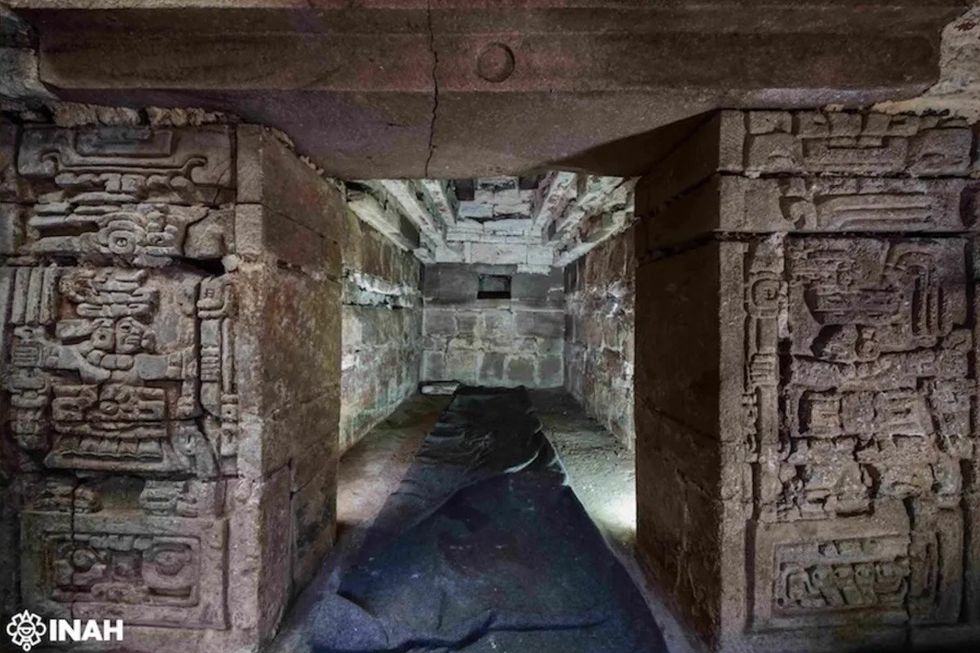
Within the burial chamber, sections of vivid murals have survived remarkably intact
|INAH
An interdisciplinary team from Mexico's National Institute of Anthropology and History is currently working to safeguard the site, with particular focus on the fragile painted walls.
The artwork faces threats from encroaching roots, insect damage and fluctuating temperature and humidity levels.
Alongside preservation work, researchers specialising in ceramics, iconography, epigraphy and physical anthropology are conducting detailed analyses of the tomb's contents.
Their studies aim to unlock information about the social hierarchies, burial customs and spiritual beliefs of this pre-Hispanic society.
Mexico's Secretary of Culture, Claudia Curiel de Icaza, described the discovery as "exceptional" due to its remarkable state of preservation and what it reveals about Zapotec social structure and funeral rites.
She added: "It is a compelling example of Mexico's ancient grandeur, which is now being researched, protected, and shared with society."