






A remarkable archaeological find at Pompeii has unveiled the secrets behind how the Romans built their expansive empire.
Researchers excavating the ancient city discovered a construction site frozen in time since Mount Vesuvius's catastrophic eruption in 79 AD, offering an unprecedented glimpse into the building methods that enabled Roman structures to endure for over two millennia.
The site remained completely undisturbed beneath volcanic ash, preserving the precise ingredients and techniques that have long puzzled scientists studying ancient architecture.
This discovery finally explains how the Romans managed to construct monuments such as the Colosseum and Pantheon that continue to stand today, some 2,000 years after their creation.
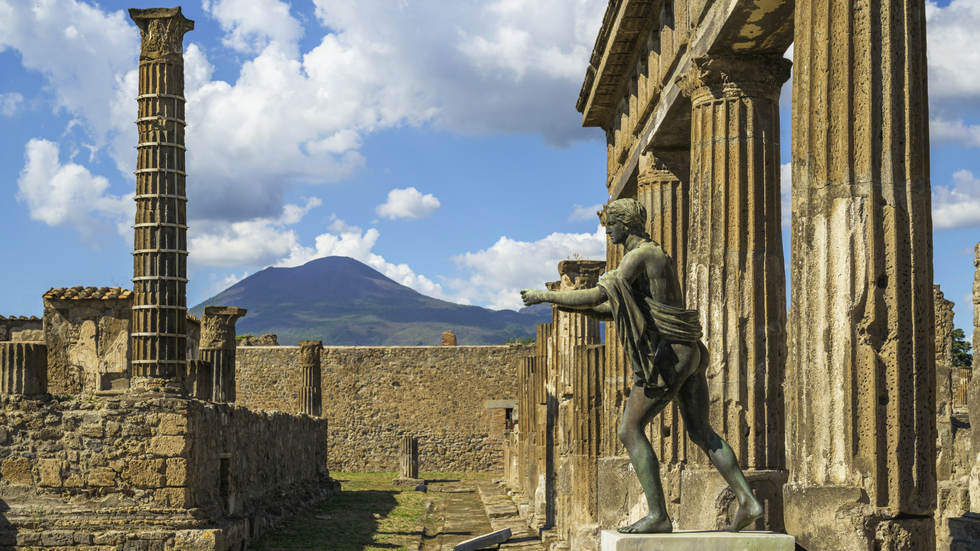
Researchers excavating the ancient city discovered a construction site frozen in time since Mount Vesuvius's catastrophic eruption
|GETTY
The find represents a significant breakthrough in understanding ancient engineering practices.
The investigation revealed that Roman builders employed a sophisticated method known as "hot mixing" to create their remarkably resilient building material.
This process involved combining quicklime - limestone that had been heated to remove moisture – directly with water and a mixture of volcanic rock and ash sourced from the nearby Somma-Vesuvius region.
The combination triggered a chemical reaction that generated heat naturally within the mixture.
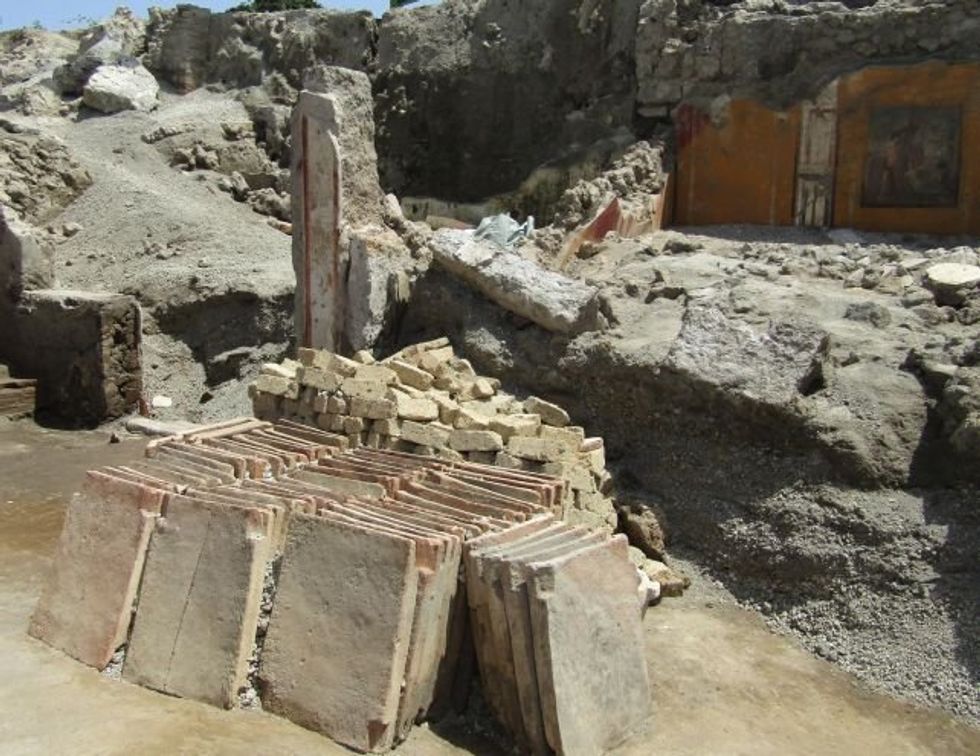
The find represents a significant breakthrough in understanding ancient engineering practices
|ARCHAEOLOGICAL PARK OF POMPEII
What made this concrete truly exceptional was its capacity to repair itself over time.
As the lime and volcanic glass within the material continued reacting long after application, they gradually filled any gaps that formed and strengthened the overall structure.
This ongoing chemical process reduced cracking and enhanced durability, enabling the concrete to harden even underwater - a crucial property for building harbours and breakwaters.
The excavation of Domus 1 demonstrated that Roman construction workers operated with remarkable organisation and efficiency.
Building materials were meticulously sorted and stored according to type across different rooms within the site.
ARCHAEOLOGY - READ THE LATEST:
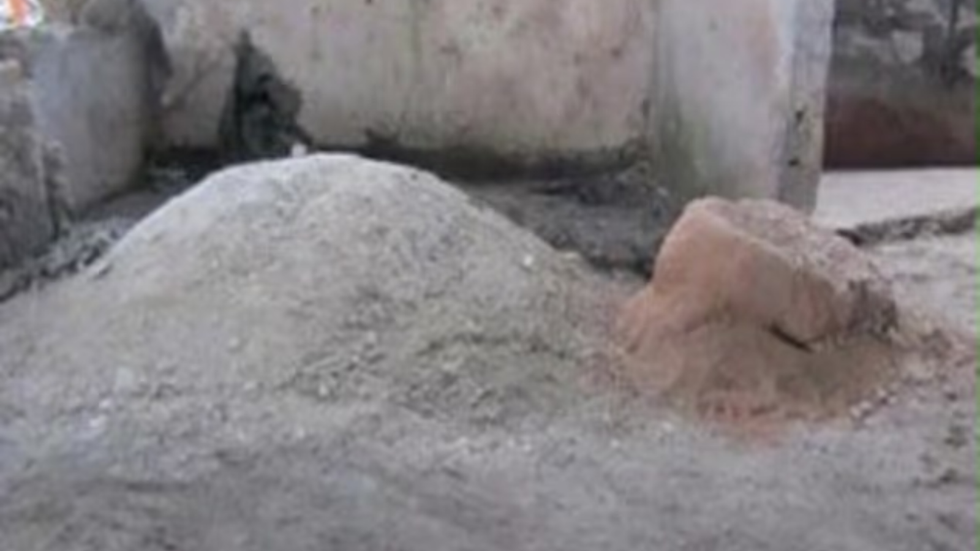
The investigation revealed that Roman builders employed a sophisticated method known as 'hot mixing'
|MIT
The atrium likely contained pre-mixed dry lime and pozzolanic sand ready for mortar production, whilst a separate chamber housed tiles and stone.
Workers added water to the dry components at a fountain pool located elsewhere in the complex.
Broken amphorae served as vessels for transporting the prepared mortar, which craftsmen then applied using trowels whilst checking alignment with plumb lines.
Analysis of mortar samples indicated consistent preparation from the same pre-mixed materials, though some contained elevated calcium levels where additional lime had been incorporated to enhance workability or strengthen repair and finishing layers.
Admir Masic, an MIT professor of civil engineering who led the study, emphasised the potential modern applications of these ancient techniques.
"Modern concretes generally lack intrinsic self-healing capability, which is increasingly important as we seek longer-lasting, lower-maintenance infrastructure," he said.
"So while the ancient process itself is not a direct replacement for modern standards, the principles revealed can inform the design of next-generation durable, low-carbon concretes."
Prof Masic described the experience of examining the site as profoundly immersive.
"Studying it truly felt as if I had travelled back in time and was standing beside the workers as they mixed and placed their concrete," he said.
The Romans began industrialising concrete production during the first century BC and AD, transforming construction possibilities across their empire.
Our Standards: The GB News Editorial Charter