










Mortgage rates have fallen to their lowest level since before the September 2022 mini-budget, offering relief for homebuyers and people looking to remortgage.
The typical two-year fixed mortgage now stands at 4.86 per cent, Moneyfacts data shows.
The average five-year fixed deal has dropped to 4.85 per cent.
It is the first time since May 2023 that the average five-year fix has fallen below five per cent.
Last week 24 lenders reduced rates, with some cutting as much as 0.35 percentage points from their products.
The wave of price reductions comes as banks prepare for a possible cut to the Bank of England base rate later this month.
The Bank of England is widely expected to reduce the base rate from four per cent to 3.75 per cent when the monetary policy committee meets on December 18.
This would be the fifth reduction in the past 12 months.
Lenders are already pricing in expected changes for next year.

Mortgage rates drop to lowest since pre‑September 2022 mini‑budget bringing relief to buyers and remortgagers
|GETTY
Falling swap rates, which influence fixed mortgage pricing, show banks anticipate further cuts in 2025.
Adrian Anderson, director of mortgage broker Anderson Harris, said: "The main reason we are seeing these reductions is that swap rates are falling, which shows that markets feel quite confident that there will be base rate reductions in the future".
He added: "The markets are also pricing in two base rate reductions next year".
Mr Anderson said the current environment resembles a price war.
He said lenders have been competing aggressively in recent months as they seek new business.
Moneyfacts spokesperson Rachel Springall said: "There were double the number of lenders making rate tweaks compared with the week before".
LATEST DEVELOPMENTS
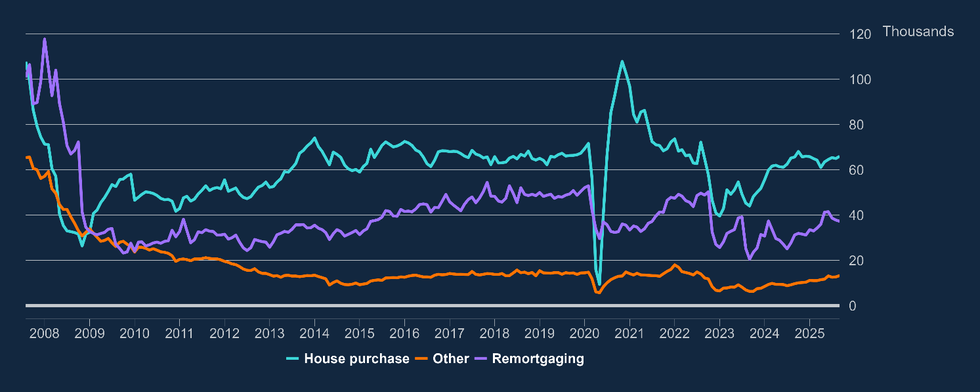 Net mortgage approvals increased by 1,000, to 65,900 in September |
 BANK OF ENGLAND
She added: "As swap rates have been falling, alongside expectations for a base rate cut this month, it's perhaps no surprise to see so many lenders improving their range".
Nationwide cut selected mortgage products by up to 0.21 percentage points.
The lender’s best two-year fixed mortgage at 60 per cent loan-to-value now sits at 3.58 per cent.
This is Nationwide’s lowest rate since September 2022.
Barclays reduced certain products by 0.18 percentage points.
HSBC cut some deals by 0.12 percentage points.
NatWest reduced selected rates by 0.2 percentage points.
First Direct made the biggest changes, cutting some mortgages by 0.35 percentage points.
Mortgage rates were at their highest in August 2023.
The average five-year fixed rate reached 6.85 per cent and typical two-year deals rose to 6.22 per cent.
The increases followed significant market disruption after the September 2022 mini-budget.
Unfunded tax cuts announced at that time caused concern among investors and pushed borrowing costs sharply higher.
Rates increased again the following summer due to concerns about inflation.
The shift represents a major change from conditions in 2020 and 2021.
During that period, some rates dropped below 1 per cent when the Bank of England held the base rate at 0.1 per cent.
Rates were rising before the mini-budget, but the political turmoil accelerated the increase.
Mr Anderson said banks are taking into account expected future cuts, including those anticipated after Chancellor Rachel Reeves’s autumn budget.
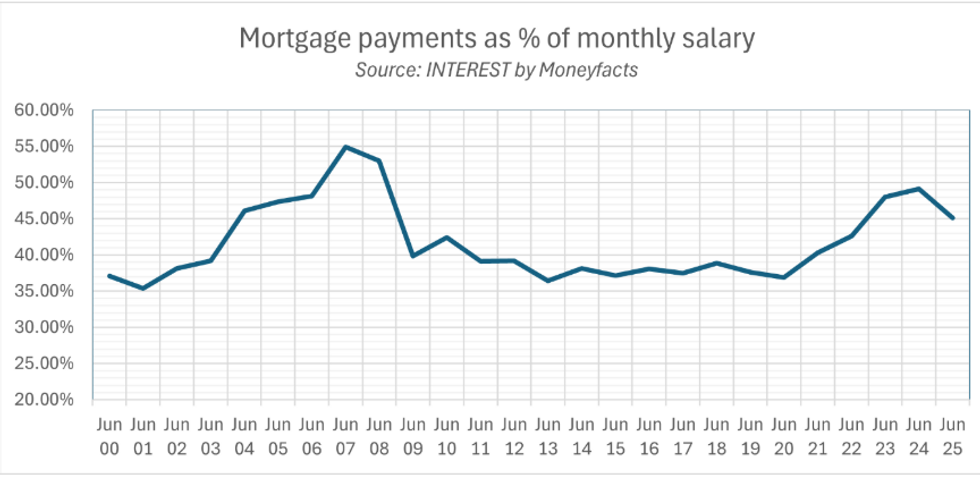 Analysis shows mortgage repayments now swallow nearly half of average earnings | INTEREST BY MONEYFACTS
"While many people might have thought the budget was disappointing in terms of tax increases, from a mortgage interest rate perspective it wasn't inflationary.
"This meant the markets reacted quite positively, and this has helped the mortgage market."
David Hollingworth from broker L&C Mortgages said lower buyer activity is another factor behind falling prices.
"You have got lenders competing hard and keeping their margin really quite skinny."
He added: "This means that when there is an improvement in outlook, it passes on quite quickly to customers".