


All products and promotions are independently selected by our experts. To help us provide free impartial advice, we will earn an affiliate commission if you buy something. Click here to learn more






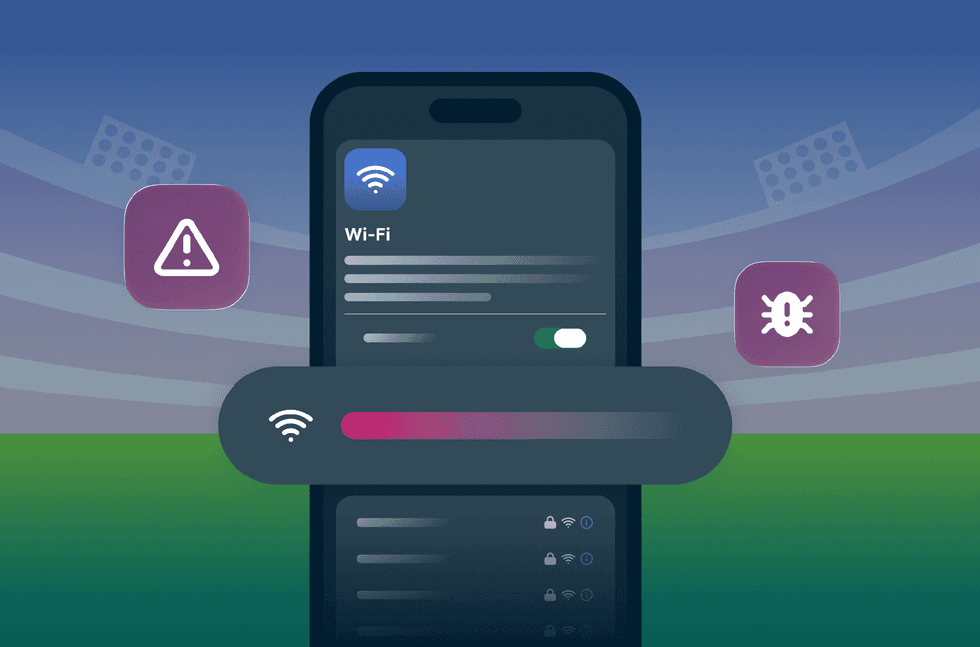
Naming a Wi-Fi network after a famous stadium is enough to trick most football fans into connecting – and that's a massive problem with the 2026 World Cup getting ready to kick off.
World Cup supporter ExpressVPN — a digital privacy provider behind one of the best VPN deals — has found that more than seven in ten supporters would happily join a public Wi-Fi network if it looked like it belonged to the venue they were visiting. This is similar to "Wembley_Guest_WiFi" popping up on your phone – most visitors wouldn't think twice before tapping connect.
With an estimated 6.5 million people expected to attend matches across three host nations, criminals could be anticipating the opportunity to set up fake networks at stadiums, airports, and hotels during the tournament.
And arguably the most worrying part is that while most fans are perfectly happy to connect to these networks, hardly any of them can actually tell if they're genuine.
Aaron Engel, ExpressVPN's Chief Information Security Officer, said: "Our research shows the vast majority of fans would connect without thinking twice. Brand trust has become a vulnerability malicious actors are keen to exploit, and the World Cup—with millions of fans travelling to stadiums across three countries—is the biggest opportunity attackers have had in years.
Research from ExpressVPN has found that more than seven in ten supporters would happily join a public Wi-Fi network if it looked like it belonged to the venue they were visiting
|EXPRESSVPN
Fewer than four in ten people said they'd be able to spot a dodgy network from a real one. German fans were the least confident, with just 19% believing they could tell the difference – yet more than three-quarters of them would still connect to something called "MetLife_Stadium_WiFi" without hesitation.
Britons weren't much better, with only a third feeling confident about identifying fakes, despite over 80% saying they'd trust a venue-named network.
The major gap between willingness to connect and ability to detect fraud is exactly what cybercriminals are counting on. Creating a convincing fake hotspot requires almost no technical skill – just a believable name.
What makes this even more concerning is what people actually do once they're connected.
Fans aren't just checking scores – they're logging into social media, accessing their emails, and even opening banking apps on stadium Wi-Fi. British supporters were the most likely to check social media while connected, with nearly 57% admitting to it. Meanwhile, more than one in four American fans have made purchases on unverified networks.
Around one in seven fans in both the UK and the US have accessed financial apps while sitting in a stadium – that's a lot of bank details potentially floating through dodgy connections.
And plenty of people have already been stung. Nearly a fifth of British fans reported experiencing scams or fraudulent charges at major sporting events, with French supporters hit hardest at 29%.
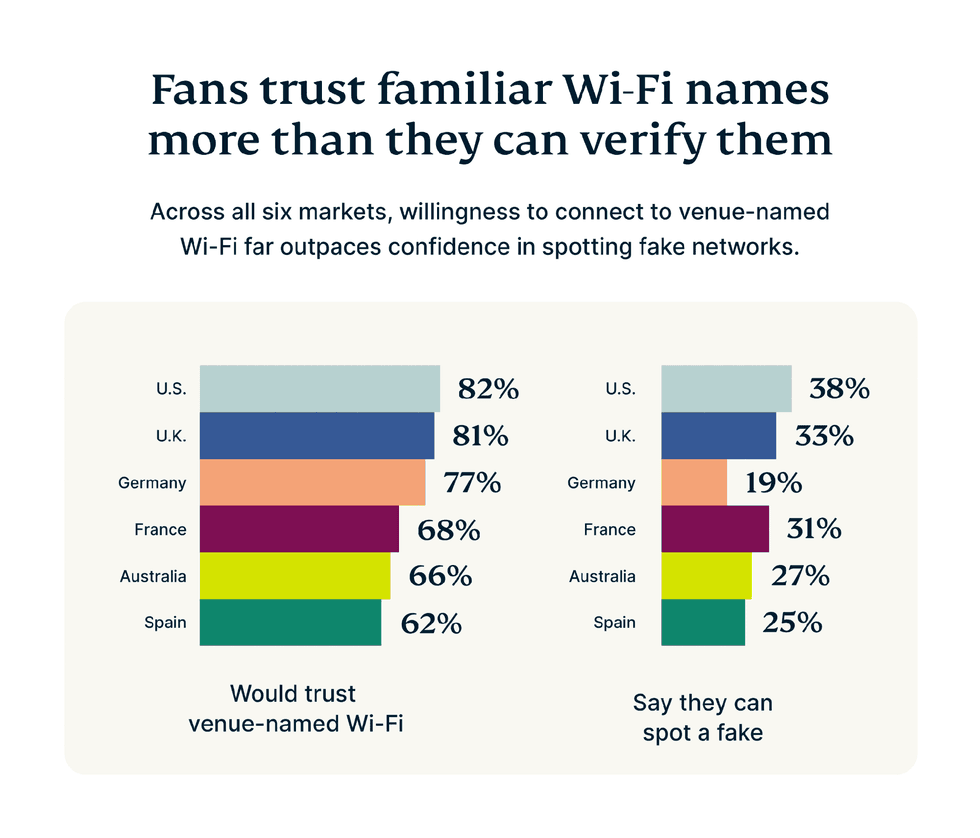
Only a third of Britons say they can spot a fake venue-named Wi-Fi network
|EXPRESSVPN
Younger fans are at even more risk, the survey has found. Gen Z supporters were consistently the most willing to sacrifice security for staying connected. In the US, nearly half of 18-to-29-year-olds said they'd use public Wi-Fi to follow a match even knowing it might not be safe. In the UK, that figure was almost 39%.
More than 45% of American Gen Z fans have entered details like email addresses or phone numbers to access Wi-Fi during matches, with British youngsters not far behind at 38%.
For cybercriminals, this creates the perfect hunting ground – and they don't need fancy equipment to take advantage.
The good news? Mr Engel has provided several ways you can protect your personal information ahead of watching a match.
1. Subscribe to a VPN
A VPN protects your privacy by securing your online activity from being tracked by your Internet Service Provider (ISP) or other third parties. When you use a VPN, your real IP address is hidden, and your connection is encrypted, so websites you visit, files you download, and your browsing activity are not directly linked to you.
VPNs with RAM-only, no-logs servers, like ExpressVPN, make it technically impossible for fraudsters to retrieve your browsing history or connection logs from the VPN provider, even if requested.
And if you subscribe to ExpressVPN, you'll be treated to the chance to win match tickets.
Charles Butler, Chief Executive Officer of ExpressVPN, said: "The FIFA World Cup 2026 is the greatest show on Earth, and our goal is for fans to experience every moment of it securely, without their data being stolen in the process. By bringing this vision to the global stage and onto the world's largest screens, we are fulfilling our mission. We are thrilled to give back to fans by offering them the chance to win match tickets.”
Protect everything you do online with ExpressVPN and win tickets to the World Cup 2026

When you protect your online activity with a subscription to ExpressVPN, you'll automatically be entered into a raffle for the chance to win tickets to the World Cup.
ExpressVPN adds military-grade encryption across up to 10x devices, including iPhone, Android, Linux, Windows, Mac, Fire TV, and dozens more, to secure your internet traffic from prying eyes, advertisers, and governments. You'll benefit from an extra 4 months free with a two-year plan
2. Watch out for scams tied to the World Cup
Fraudsters are counting on the World Cup to create themed social media profiles and websites in an attempt to sell you fake tickets, faulty merchandise, and dodgy streaming sites. If successful, they can steal your personal information to either impersonate you or drain your bank accounts.
Mr Engel said: "Be cautious of things that are too good to be true, such as offers of unreasonably cheap tickets or free access to a paid stream. Attackers rely on fans doing nothing. Don't make it that easy for them."
France led the way in being the most vulnerable to this type of fraud attempt, but Britons didn't trail too far behind them.
LATEST DEVELOPMENTS
3. Double-check the venue's public Wi-Fi name
A Wi-Fi network name, unfortunately, won't reveal who set it up. Most stadiums, hotels, and airports publish their official Wi-Fi name on signage, in their app, or on their website.
Mr Engel says it's best practice to verify a Wi-Fi connection was actually created by the venue or avoid it altogether.