










Scientists think the Moon is getting smaller after discovering more than 1,000 new fractures across its surface.
Researchers at the National Air and Space Museum's Centre for Earth and Planetary Studies identified the cracks, which demonstrate the lunar body is contracting then reshaping itself.
The shrinkage occurs as the moon's interior gradually cools, causing the outer layer to compress.
This process has been understood since 2010, but the latest findings reveal the extent of surface changes.
The discovery raises concerns about potential dangers for astronauts who may eventually explore or establish permanent bases on the lunar surface, with devastating quakes posing a significant risk.
The newly-identified fractures, termed "small mare ridges", appear across the lunar maria – the vast dark areas visible from Earth.
This marks the first time scientists have documented such widespread features in these regions, having previously only observed similar formations called "lobate scarps" in the lunar highlands.
The research team found 1,114 new small mare ridges, bringing the total number detected on the moon to 2,634.
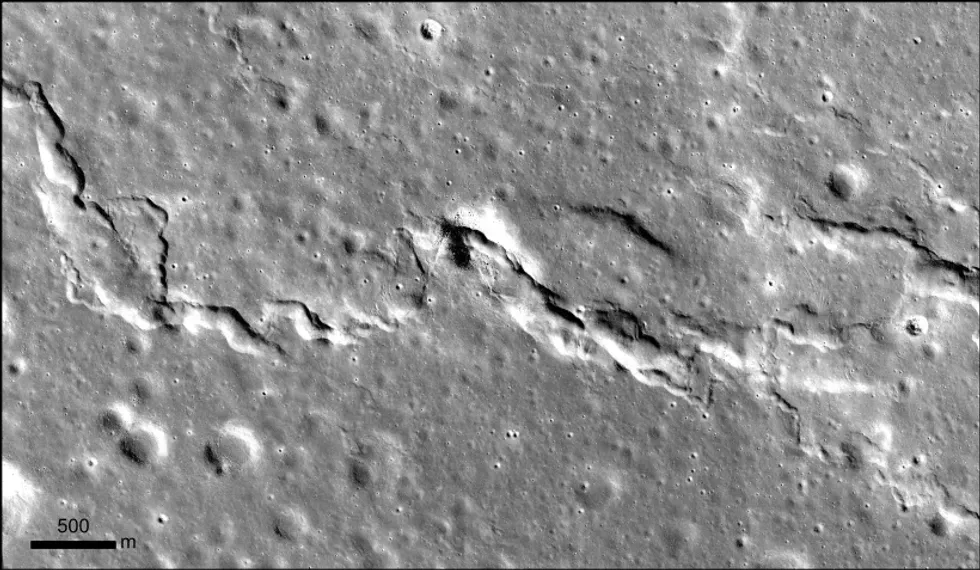
PICTURED: The newly-identified fractures, termed 'small mare ridges', on the surface of the Moon
|NASA
The ridges are around 124 million years old on average, making them among the youngest geological formations on the surface of the Moon.
Tom Watters first identified lunar cracks in 2010,
He said: "Our detection of young, small ridges in the maria, and our discovery of their cause, completes a global picture of a dynamic, contracting moon."
While Dr Cole Nypaver, the study's lead author, said: "Since the Apollo era, we've known about the prevalence of lobate scarps throughout the lunar highlands, but this is the first time scientists have documented the widespread prevalence of similar features throughout the lunar mare.
LATEST SPACE HEADLINES FROM GB NEWS:
"This work helps us gain a globally complete perspective on recent lunar tectonism on the moon, which will lead to a greater understanding of its interior and its thermal and seismic history, and the potential for future moonquakes."
"We are in a very exciting time for lunar science and exploration," Dr Nypaver went on to say.
He added: "Upcoming lunar exploration programs, such as Artemis, will provide a wealth of new information about our moon."
Dr Nypaver added that a better understanding of lunar tectonics and seismic activity "will directly benefit the safety and scientific success" of missions to the Moon in future.
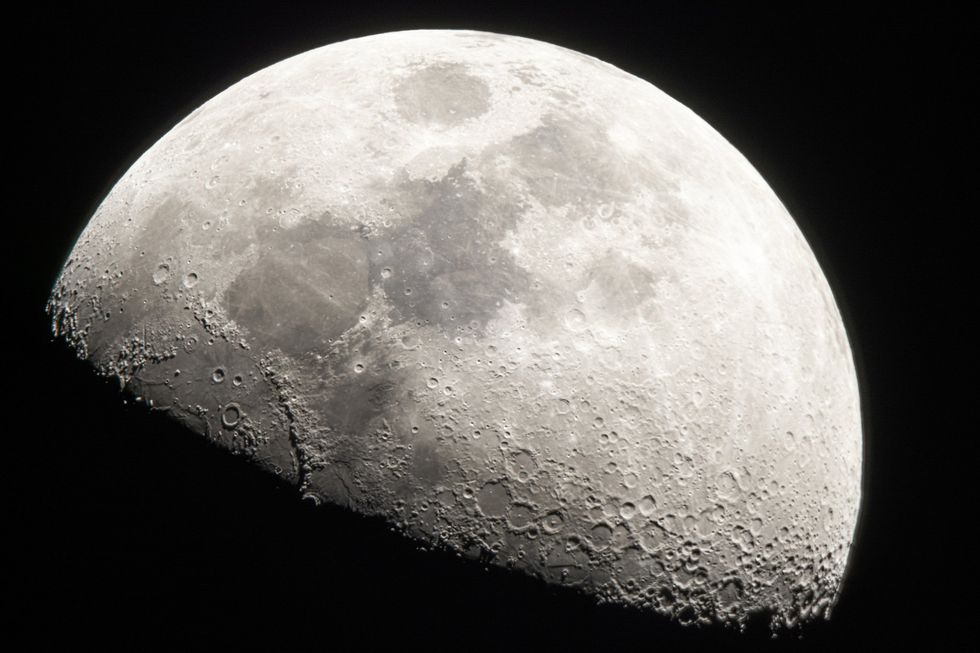
'We are in a very exciting time for lunar science and exploration,' Dr Nypaver said
| GETTYAs he pointed out, his research carries significant implications for space agencies with lunar ambitions, particularly Nasa's planned Artemis III mission targeting a crewed landing by 2028.
At the moment, the agency is working on Artemis II, a mission which could lift off as early as this month.
Artemis II will blast off from the Kennedy Space Centre in Florida, carrying astronauts on humanity's first journey beyond low Earth orbit since the Apollo era.
Four astronauts will undertake the 10-day voyage around the Moon before returning to Earth.
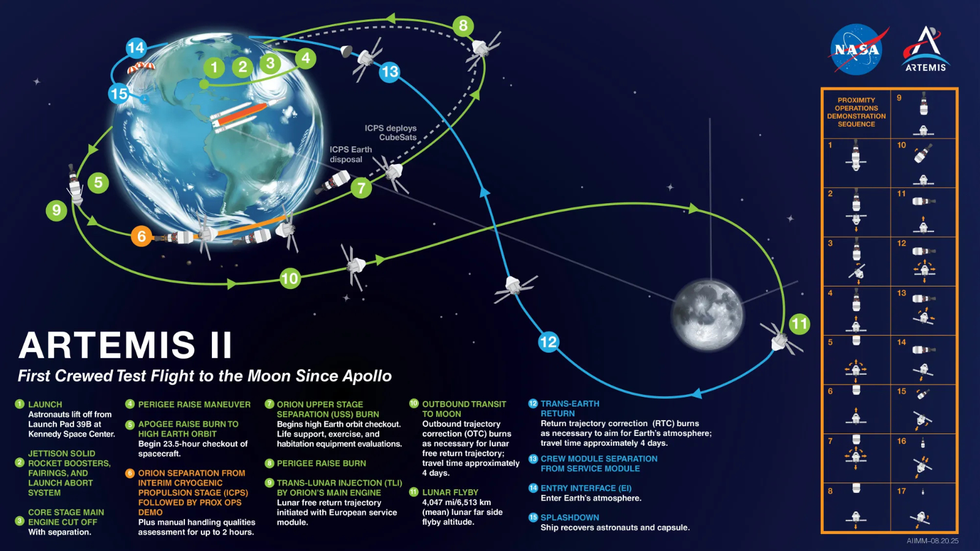 PICTURED: Artemis II's projected flight map | NASA
Artemis III has so far been earmarked for 2027.
The Moon breakthrough will also likely prove of note to engineers in Britain, with Rolls-Royce working on a nuclear reactor for a potential future Moon base.
Staff at the firm are working on a "Micro-Reactor" programme, developing technology they hope will provide the power needed for humans to live and work on Earth’s natural satellite.
Researchers warned in their study: "The distribution of small mare ridges may also be of relevance to any long-term lunar habitation due to the hazards that shallow moonquakes pose to human-made lunar infrastructure."
The research was published in the Planetary Science Journal.