










Scientists may have spotted a long-lost lunar spaceship on the surface of the Moon, 60 years after it vanished.
The Soviet Union's uncrewed Luna 9 lander was the first spacecraft to land on the lunar surface in February 1966, years before the US Apollo missions.
After the craft sent back an image of the moon, its batteries gave out, leaving its final location a mystery.
However, scientists now believe they have tracked down Luna 9's hiding spot.
TRENDING
Stories
Videos
Your Say
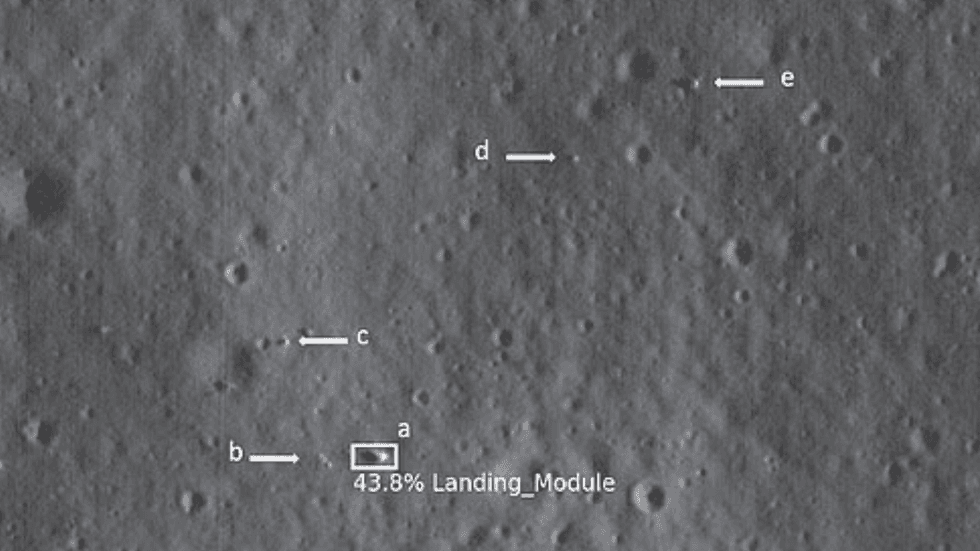
A computer programme dubbed You-Only-Look-Once-Extraterrestrial-Artefact"(Yolo-Eta) scanned hundreds of images taken by Nasa's Lunar Reconnaissance Orbiter.
It was able to find several previously unseen marks on the Moon's Ocean of Storms.
The intrusions into the lunar surface might have been made by Luna 9's descent.
The lander utilised a spherical landing capsule and hit the Moon at 14mph, deploying inflated airbags and firing its braking engine.
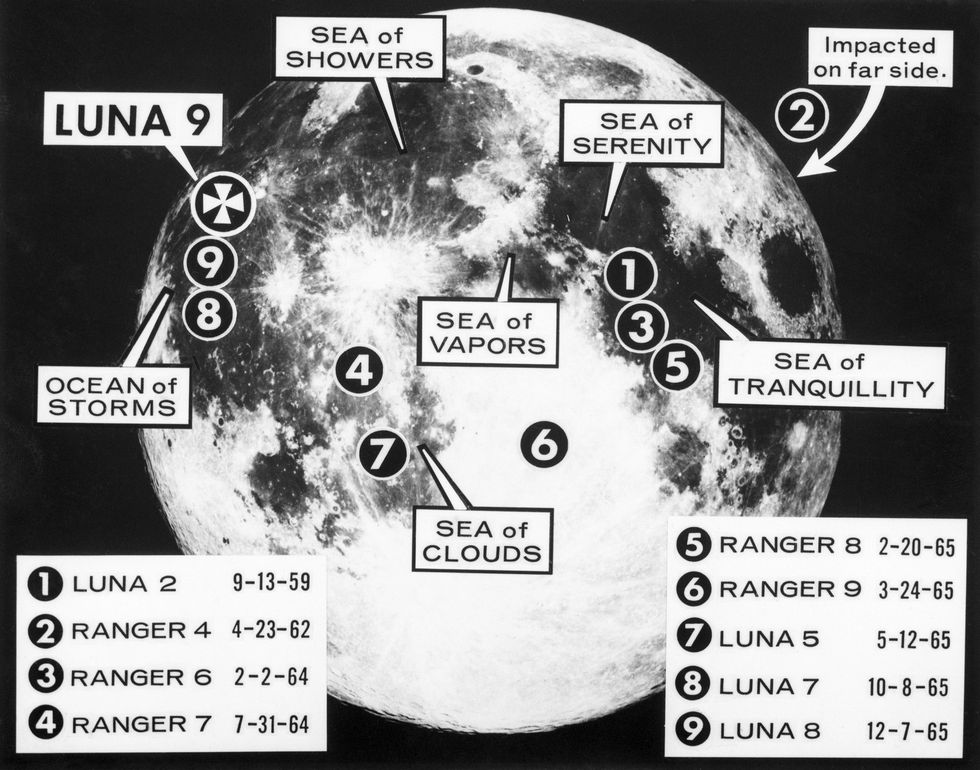
PICTURED: Map from 1966 showing the locations of lunar impacts - including the Ocean of Storms
|GETTY
It is believed it bounced several times before coming to a stop thanks to four-petal like panels.
The lander had no solar panels and was only able to send 9 images back to Earth over the course of three days.
Due to poor calculations of the spacecraft's trajectory and a chaotic descent.
In 2009, Nasa's Lunar Reconnaissance Orbiter began to send back high quality images of the moon.
LATEST FROM OUTSIDE OUR ATMOSPHERE
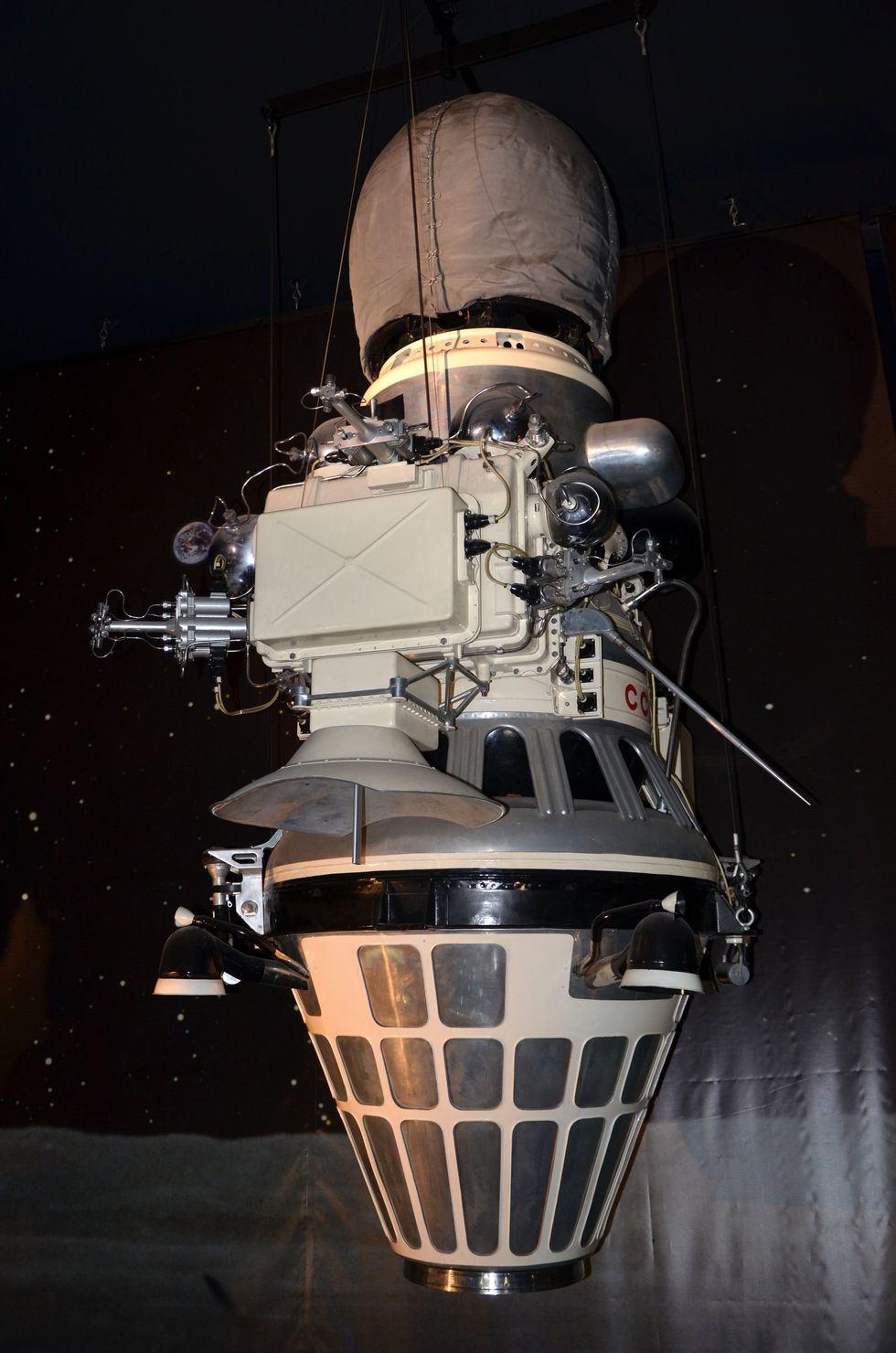
PICTURED: A mock-up of the lander at a Paris museum. It is believed the lander bounced several times before coming to a stop thanks to four-petal like panels
|WIKIMEDIA COMMONS
Scientists believed Luna 9's location would be contained within the photography.
They then decided to develop their machine-learning algorithm Yolo-Eta, which was trained on known lunar landing sites.
Yolo-Eta "practiced" by finding Apollo landing sites and the Soviet Union's Luna 16.
When it successfully found both previous landing sites, it was let loose to find Luna 9.
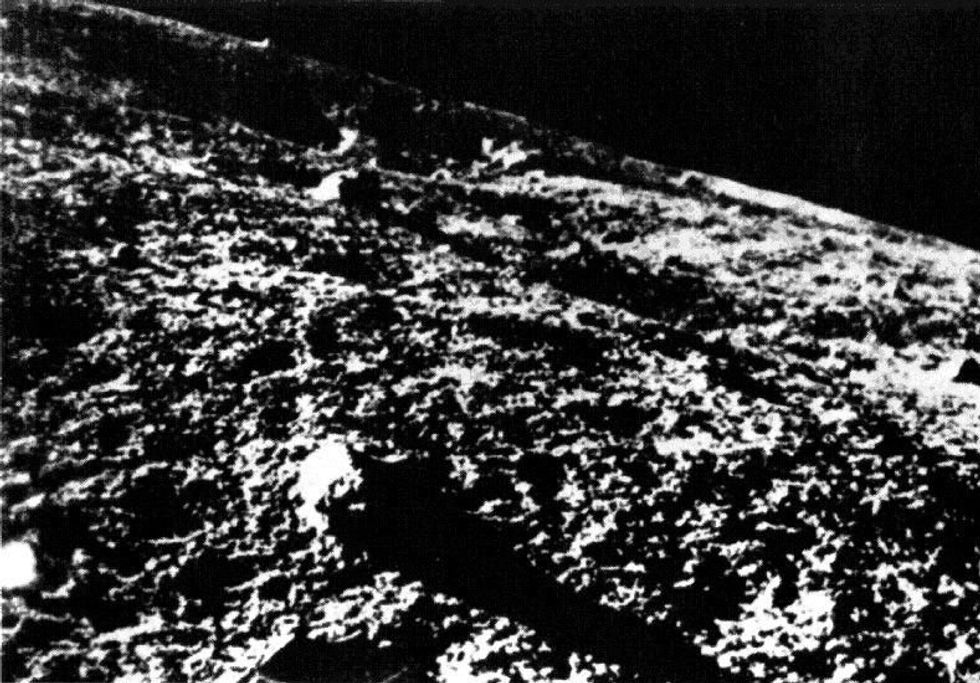
Luna 9 sent back the first ever image of the lunar surface taken from the Moon itself
|NASA
In their paper, published in the journal npj Space Exploration, researchers identified a location they believed to be the likeliest spot for Luna 9 to be hiding.
Within 200 metres of that spot, astronomers found several small marks which might be the Soviet spacecraft's components.
They also identified a series of craters which might correspond to Luna 9's impact sites.
Finally, they compared their possible location to the photography Luna 9 sent back from the moon before its batteries gave out.
They found it to be a plausible match based on the horizon and general topography.
The researchers said: "Taken together, these results identify a small cluster of features near 7.03 degrees north, -64.33 degrees east that display spatial and morphological characteristics consistent with spacecraft hardware."