










An incredible 2,200-year-old Roman shipwreck has revealed the "surprising" way ancient sailors managed to keep their vessels water-resistant while at sea.
The wreck, called Ilovik-Paržine 1, sunk near the Croatian coastline, rests in Paržine Bay close to Ilovik Island, dating around the mid-second century BC.
Scientists from France and Croatia examined the protective layers on the hull in a study published in Frontiers in Materials.
Using a mixture of molecular testing with pollen examination of 10 samples from various sections of the ship, it was revealed that ancient vessels depended on these waterproof coatings to prevent seawater damage and protect against shipworms.
Despite their significance to ship construction, these materials have historically attracted less scholarly attention than wooden structures in the past.
But, thanks to the new research, scientists uncovered just how crews maintained their ships during long voyages across the Adriatic.
Most of the coating consisted of pitch derived from heated pine resin, with chemical markers confirming pine as the source across all samples.
However, one sample proved different from the rest.
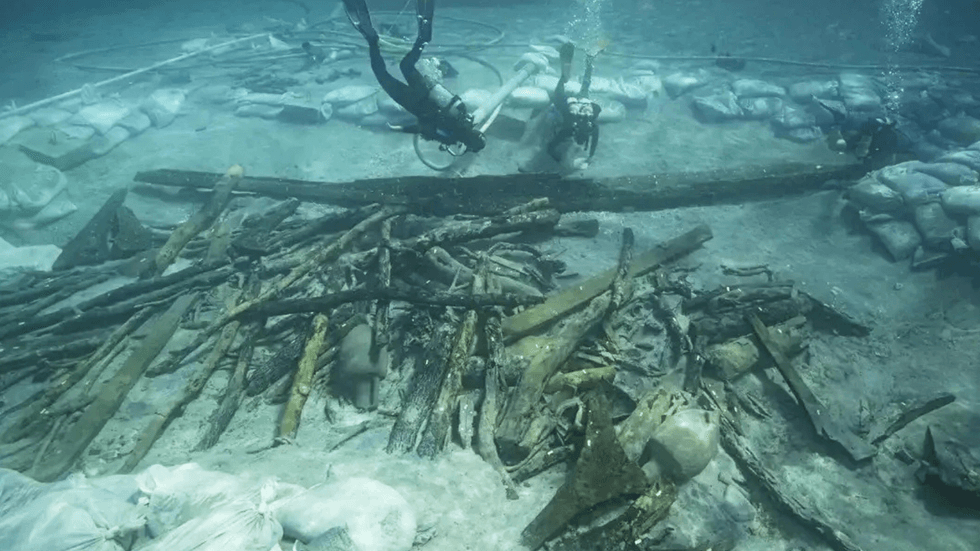
The wreck, called Ilovik-Paržine 1, sunk near the Croatian coastline
|CENTRE CAMILLE JULLIAN - CNRS
"Chemically, on this wreck, the surprise was the discovery of a sample composed of pitch and beeswax, in contrast to the majority of samples which consisted solely of pitch," corresponding author Armelle Charrié told Discover.
This blend is known as zopissa, previously described by Pliny the Elder in his Natural History as a material used by Greek shipbuilders.
The useful addition of beeswax made the coating more pliable and simpler to spread when heated, researchers said.
The ship was likely constructed near Brundisium, modern-day Brindisi in southern Italy.
LATEST ARCHAEOLOGY FINDS:
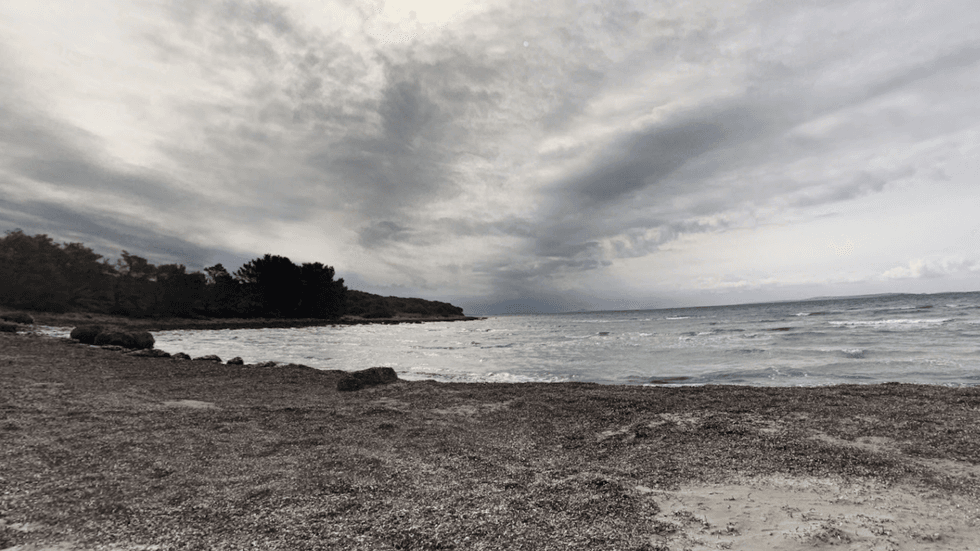
The wreck was discovered in Paržine Bay
|GOOGLE STREET VIEW
In the past, during the ancient civilisations, the location had strong connections to Greek colonies, explaining the shared techniques.
Pollen trapped within the sticky coatings offered crucial clues about where maintenance occurred.
When assessed, the microscopic grains were able to indicate the type of the vegetation growing near production or application sites.
Upon testing, samples revealed a diverse range of environments including Mediterranean shrublands with olive and hazel, holly oak and pine forests, and waterside trees like alder and ash.
Meanwhile, traces of fir and beech indicated nearby upland areas - the botanical signatures of which match landscapes along both Italian and northeastern Adriatic coastlines.
This distribution suggests the vessel underwent repeated repairs during its working life, docking at various locations to be done-up.
Some coating layers came from near Brindisi, while others originated closer to where the ship eventually sank.
"We don't know any archaeological evidence or sources that address the subject of ancient Roman ship maintenance," Ms Charrié shared.
She added: "However, it is highly likely that over the ship's lifetime, the protective coatings will have deteriorated and required repair. The question is how to identify these repairs if no written records exist."
On most ancient wrecks, such coatings survive only as brown residue.
"They are part of the heritage materials, and their study [is] potentially rich in information: they tell a story," Ms Charrié explained.