







British scientists are planning to fire salt water into clouds in a bold attempt to cool Earth's rising temperatures.
The £6million initiative, led by Hugh Coe at the University of Manchester, zones in on a technique called marine cloud brightening.
Laboratory experiments are currently underway inside a three-storey stainless steel "cloud chamber" at the university.
The principle is straightforward: misting salt water into clouds makes them more reflective, bouncing additional solar energy back into space.
If the research is proved to be successful, Britain's first outdoor trial of this technology could take place along the coastline within two years.
The Reflect project is currently focused on identifying the perfect salt particle size, which researchers have described as finding the "Goldilocks" zone for the particles.
If particles are too big, they absorb moisture before smaller droplets can develop.
Particles that are too small fail to activate correctly, leaving clouds insufficiently bright.

Outdoor trials could take place within just two years
|GETTY
Scientists are suspecting their approach is viable because pollution from dirty shipping fuel previously brightened clouds.
Cleaner fuel regulations introduced six years ago inadvertently darkened ocean clouds, speeding up warming.
The salt spray could, in turn, replicate this lost cooling effect using large misting cannons similar to those at festivals.
The Reflect project makes up part of a broader £57million Aria programme examining 22 geoengineering schemes.
LATEST SCIENCE NEWS:
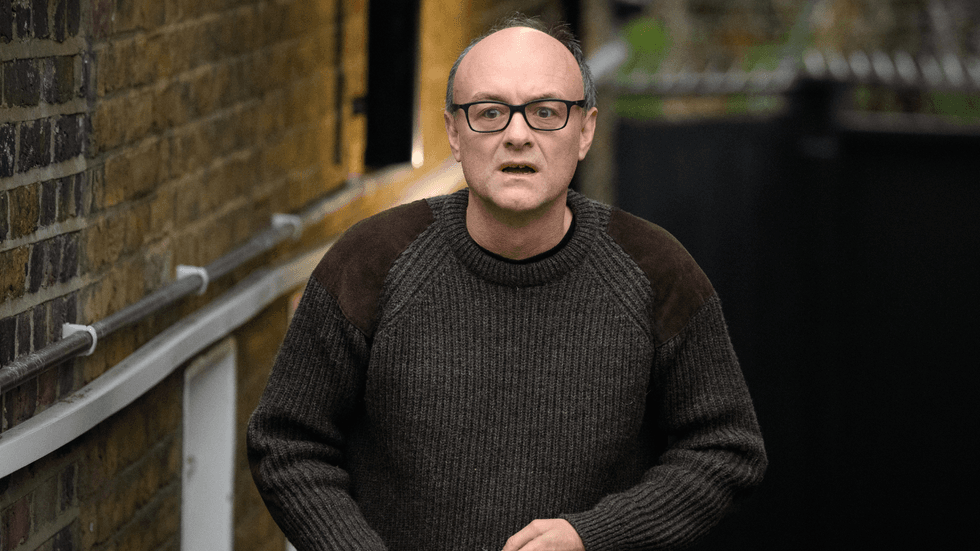
Dominic Cummings's research body Aria was designed to establish Britain as a 'science superpower'
|GETTY
Aria, the high-risk research body conceived by Dominic Cummings, was designed to establish Britain as a "science superpower".
As it stands, geoengineering remains contentious, with some environmentalists worried it provides cover for avoiding emission reductions.
Reform MPs have claimed Ed Miliband supports plans to "block out the sunshine", which the Energy Secretary dismissed as "conspiracy theories gone mad".
A proposed UK field test of solar geoengineering was abandoned in 2012 over governance and intellectual property complications.
"We're starting to see major, major environmental effects, costing us huge amounts in terms of human life and money. That becomes intolerable," Mr Coe said.
If laboratory work progresses well, testing will move next year to a controlled setting such as a polytunnel.
Aria and an independent panel must then approve outdoor trials planned for as soon as 2028 and 2029.
The coastal location remains undecided, though Coe recognises the importance of engaging local communities about potential concerns like fishing impacts.
Any field tests would run for just minutes and cover no more than a few kilometres.
Drones and Lidar will monitor the salt plume to prevent uncontrolled spread.
Mr Coe, however, stressed that cutting carbon emissions must remain the priority, saying: "The issue arises because we simply haven't done a good job of it."