










Archaeologists working at Pompeii have unearthed the remains of a man believed to have fled the catastrophic eruption of Mount Vesuvius - while holding a terracotta mortar bowl above his head for protection.
The twisted skeleton was found just beyond the ancient city's southern gates.
Beside him lay the damaged bowl, a small lamp and ten bronze coins.
Researchers believe falling debris or the suffocating clouds of volcanic ash and gas killed him as he attempted to reach the sea.
Scientists have now mocked up an AI-generated image depicting his desperate escape through the ruined streets, his face showing terror as he clutched the heavy vessel.
This marks the first occasion Pompeii has employed artificial intelligence to visualise a victim's final moments.
Professor Luciano Floridi, director of the Digital Ethics Centre at Yale University, said: "2,000 years on, AI is helping us to reconstruct his last moments.
"AI will not replace archaeology – it just expands and enhances the possibilities."
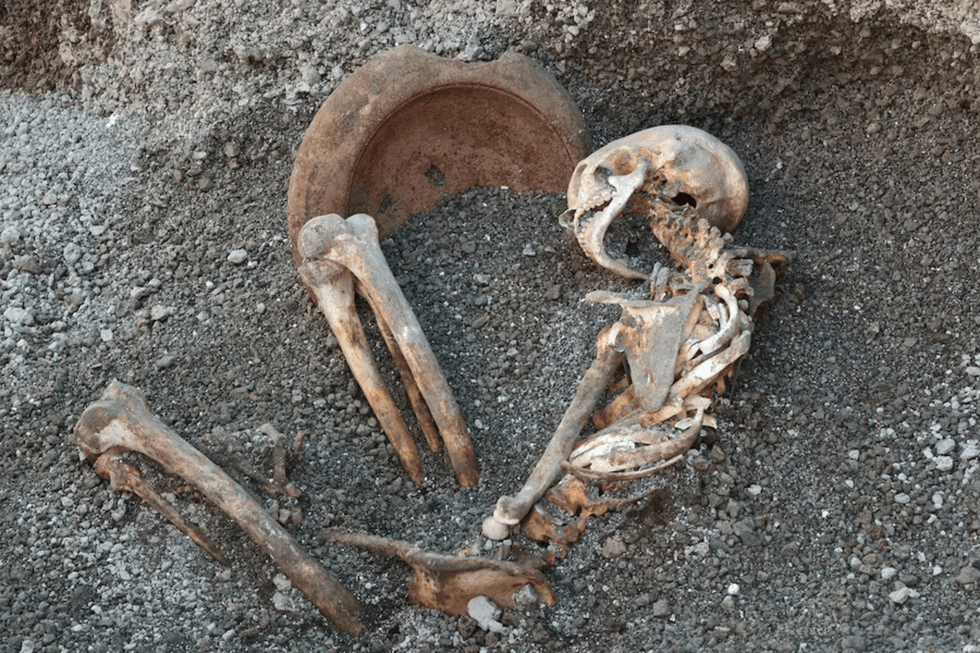
The twisted skeleton - and its bowl - was found just beyond the ancient city's southern gates
|POMPEII ARCHAEOLOGICAL PARK
Gabriel Zuchtriegel, the archaeological site's director, said: "The vast extent of archaeological evidence from Pompeii is such that only with the help of AI are we able to properly protect and promote it.
"If used well, artificial intelligence can contribute to a renewal of classical studies, illustrating the classical world in a more immersive way."
The man's improvised head protection echoes historical accounts from Pliny the Younger, who described survivors tying pillows and cushions to their heads with cloth as defence against the falling stones.
A second skeleton was also discovered at the site, belonging to a younger man who perished in a similar way while he tried to escape the doomed town.
ARCHAEOLOGY BREAKTHROUGHS - READ MORE:
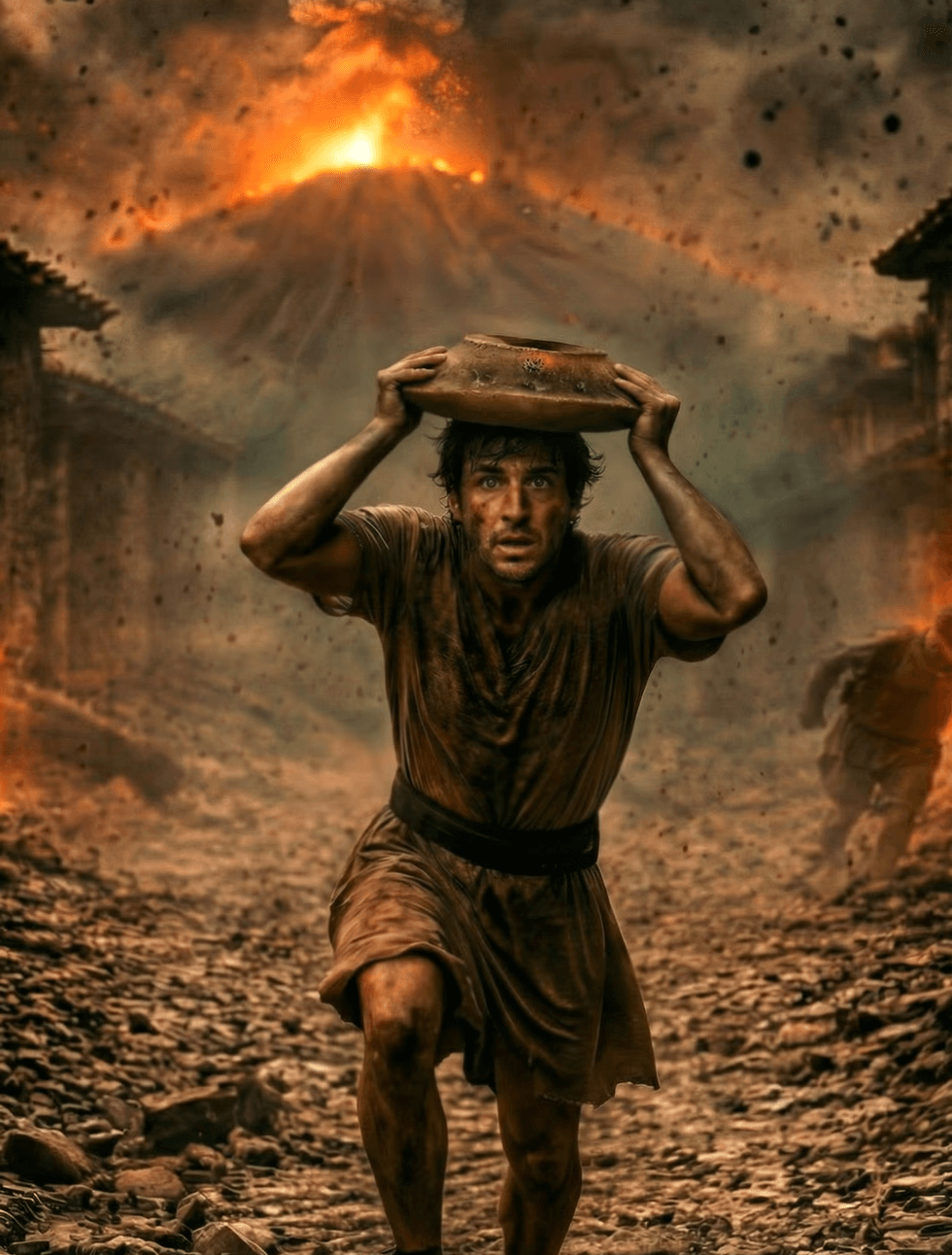
'Only with the help of AI' can Pompeii properly promote its treasures, the site's director said
|POMPEII ARCHAEOLOGICAL PARK
Recent years have brought numerous remarkable finds at Pompeii, aided by a funding boost and new excavations.
Discoveries include vividly coloured frescoes depicting deities, heroes and animals, alongside a private spa complex once owned by a wealthy Roman.
Earlier this year, archaeologists uncovered a lengthy passageway connecting the main theatres to Via Stabiana, its walls covered in graffiti boasting of sexual encounters, crude insults and a scene showing two armed gladiators in combat.
One inscription referenced a sex worker named Tyche, taken "ad locum" for encounters with three men.
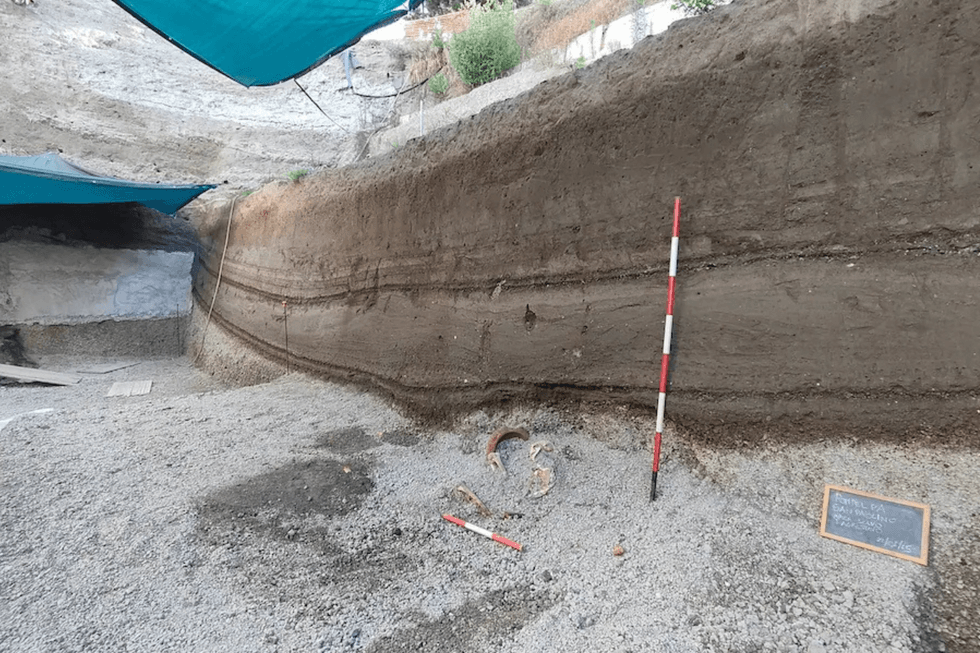
Further images from the park showed just how deep the young Roman's remains were buried
|POMPEII ARCHAEOLOGICAL PARK
In 2024, experts found stick figure drawings of gladiators made by children, suggesting young Romans witnessed the violent spectacles of the day.
While a new exhibition at the site has shown off more of the final moments of its residents after they were buried in volcanic ash.
Pompeii's Archaeological Park has put 22 plaster casts on show, taken from the ruins of the city destroyed by Mount Vesuvius nearly two millennia ago.
The volcanic eruption of AD 79 stands among history's deadliest, claiming an estimated 16,000 lives.