










Mysterious fossils which have been found standing upright throughout America could prove a Bible story true, researchers have claimed.
"Polystrate fossils" are tree trunk fossils which have extended vertically through multiple layers of sedimentary rock.
Researchers with Noah's Ark Scans believe the upright trees - found in National Parks across the States - are evidence the biblical Great Flood really happened.
"A dead tree doesn't stand upright for millions of years waiting for sediment to slowly build around it. It rots. It collapses," the group said.
It added: "These trees appear to have been rapidly buried by massive sediment flows before they could decay."
Supporters of the Great Flood theory believe a sudden catastrophic event rapidly buried entire forests under sediment flows, similar to what was described in the Book of Genesis.
Most mainstream geologists and palaeontologists do not believe the fossils to be evidence of a biblical flood.
Scientists say the fossils can form through "rapid local burial events", which can occur repeatedly over long geological timescales, including volcanic eruptions, river flooding, mudslides, and shifting sediment in swamp environments.
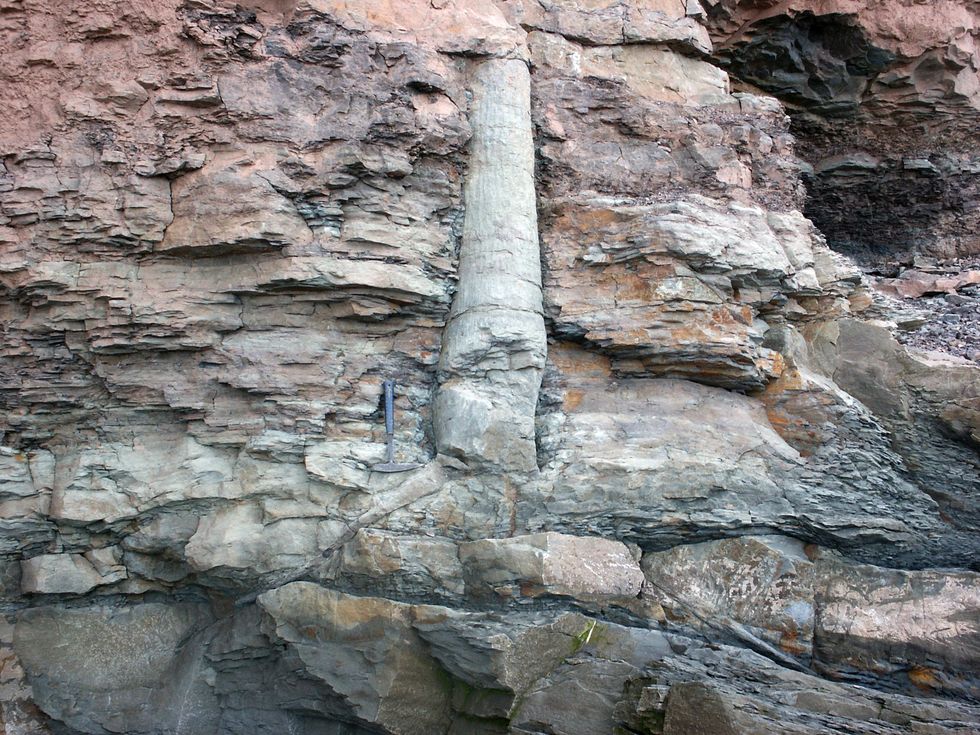
The upright tree fossils have been found throughout the United States
|WIKIMEDIA
Notable examples of the fossils - also known as upright fossil trunks - include those found near Mount St Helens in Washington State, inside the Mississippi River Delta, Yellowstone National Park, and Theodore Roosevelt National Park.
Scientists believe Mount St Helens and Yellowstone National Park's trees were both upright due to successive volcanic incidents.
In the Mississippi River Delta, the mysterious fossils have been found four to six feet tall.
Noah's Ark Scans researchers said: "The fossil record looks a lot more like the catastrophic world described in Genesis than the slow evolutionary timeline we've been sold."
LATEST ON ARCHAEOLOGY:
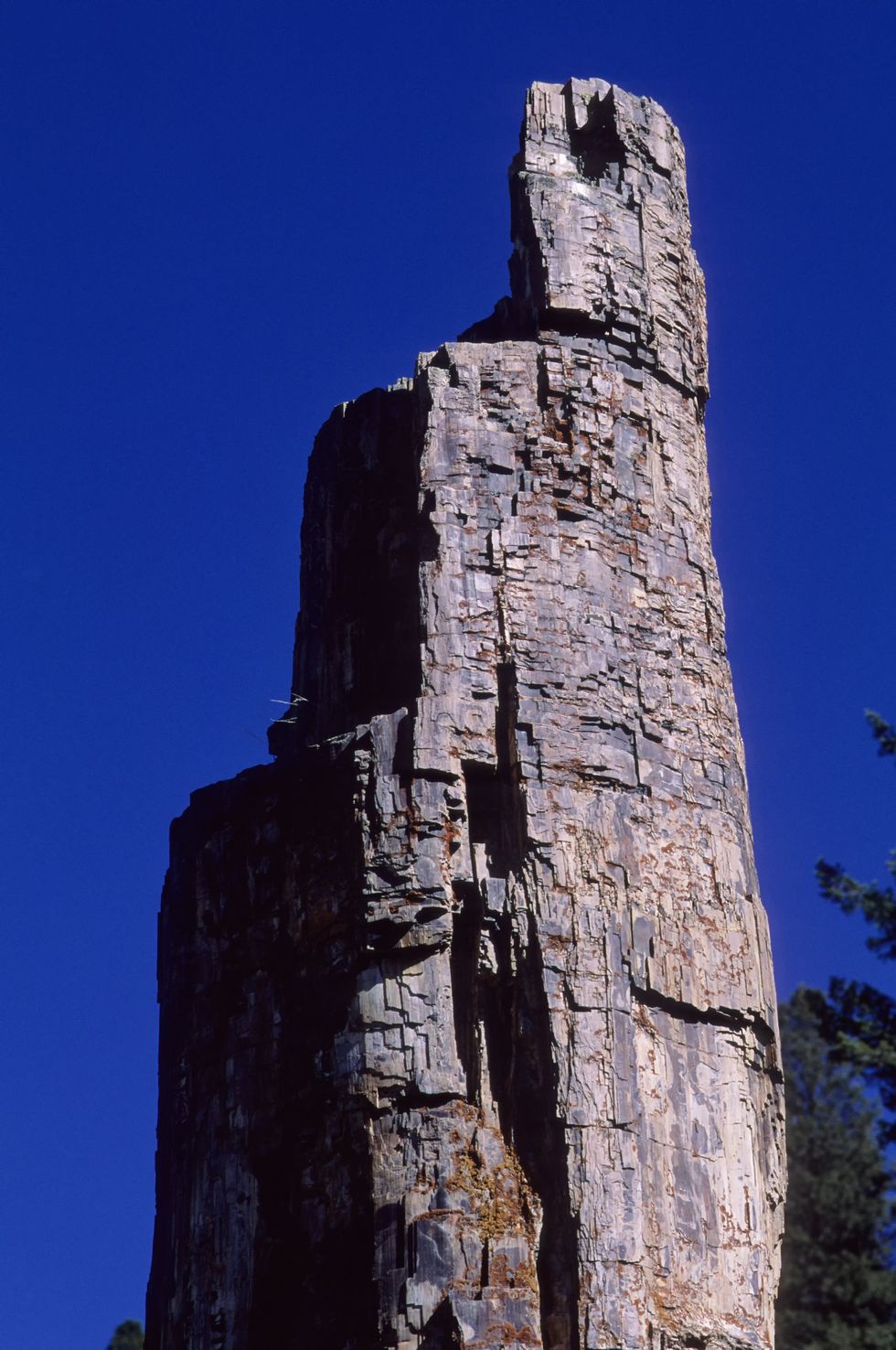
The fossils have been found in Yellowstone National Park, also home to petrified forests
|GETTY
Some scientists have said the fossilised trees are an indication of rapid sedimentation, and could not have remained standing for long enough in order to be prostrate.
Derek Ager, an emeritus professor of geology at the University College of Swansea, has said it would take about 328,000 years to bury a 33-foot-tall tree, a notion he said was "ridiculous".
In his writings, he concluded the sedimentation was "at times very rapid indeed", even if surrounding rock layers were not continuous.
Advocates of the Great Flood theory have said despite Mr Ager not being a Creationist, his findings reinforced the belief the fossils formed much quicker than believed.
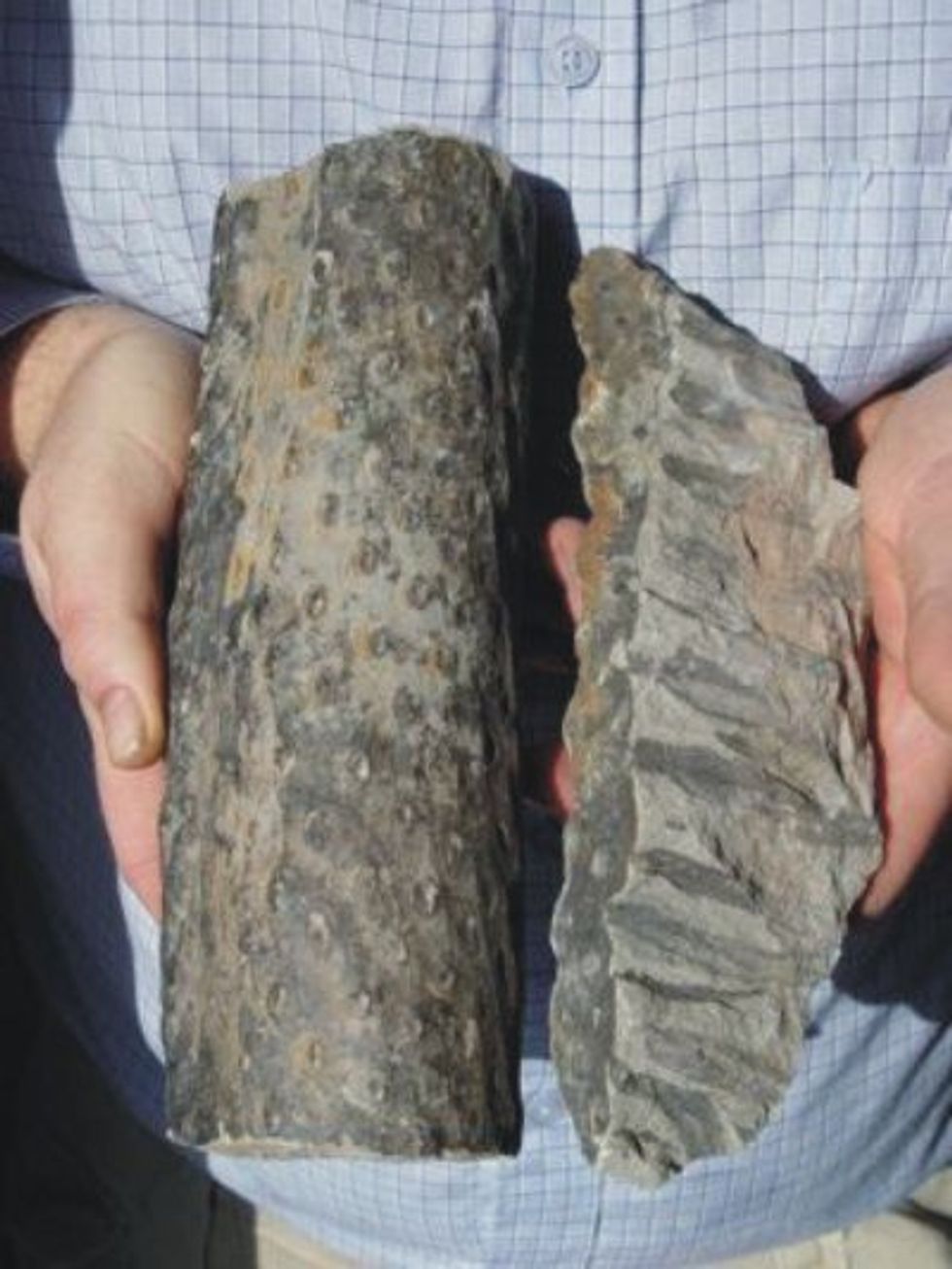
A chunk of fossilised root, which creationists believe could prove the Great Flood occurred
|IAN JUBY
They also believe the upright fossils challenge the consensus of slow geological processes because trucks extend through multiple rock layers while staying largely intact.
Creationist and robotics engineer Ian Juby described how the trees cut through multiple layers of sediment, challenging the idea sedimentary rock had formed slowly over millions of years.
On his website, he wrote: "The rock layers are called 'strata' and the fossil cuts through more than one, hence the name 'poly' for many and 'strate' for the strata the fossil cuts through.
"Polystrate fossils are found literally all over the world."