










Scientists have revealed the final moments of an ancient Roman killed by the eruption of Mount Vesuvius - as well as his career.
The man perished side-by-side with 12 others in 79 AD when the volcano destroyed the city of Pompeii.
Now, researchers have identified the mystery man as a medic after analysing a case he was holding when he died.
A team discovered the group of 13 had sought refuge in a vineyard, an area now known as the Garden of the Fugitives.
Most inhabitants of the city died within a day of the eruption from breathing in toxic ash and from thermal shock.
A newly-published study reveals the artefact clutched by this particular victim was an ancient medical kit.
Advanced diagnostic methods, including CT X-ray scans enhanced by AI, enabled researchers to examine his case's contents without damaging it.
It contained a small drawer made of organic material with metallic components, along with a fabric pouch holding bronze and silver coins.
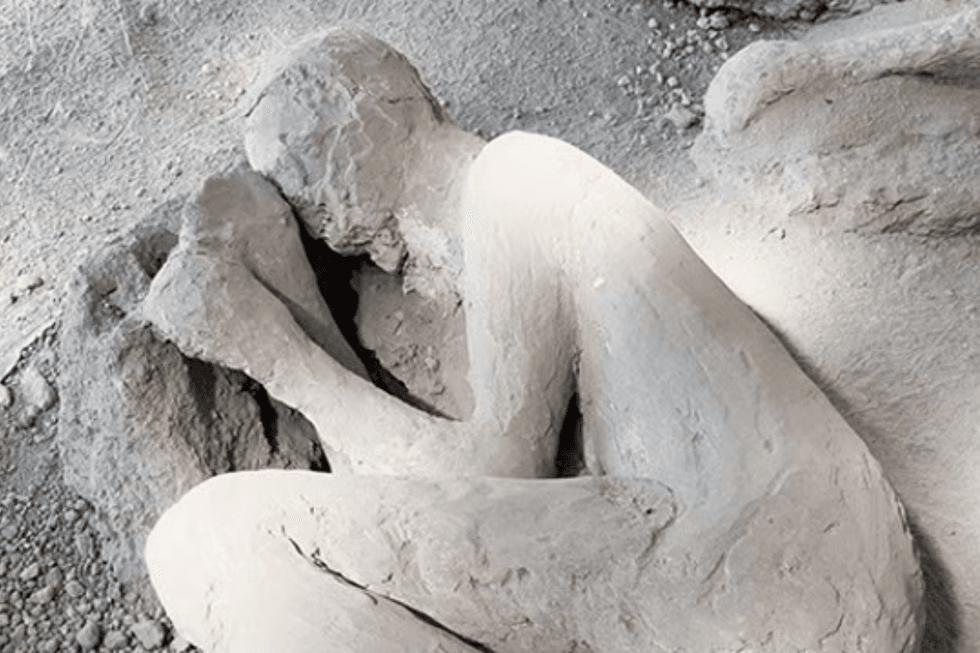
Researchers have identified the mystery man as a medic
|POMPEII ARCHAEOLOGICAL PARK
Excavation teams also found instruments consistent with ancient medical equipment inside the container.
A slate slab, which Romans used to prepare medicinal or cosmetic substances, was among the items recovered.
Small metal implements that researchers believe may have served as surgical tools were also present.
Based on their findings, scientists now strongly suspect the man was a medicus, the Latin term for a doctor.
ARCHAEOLOGY MARVELS - READ MORE:
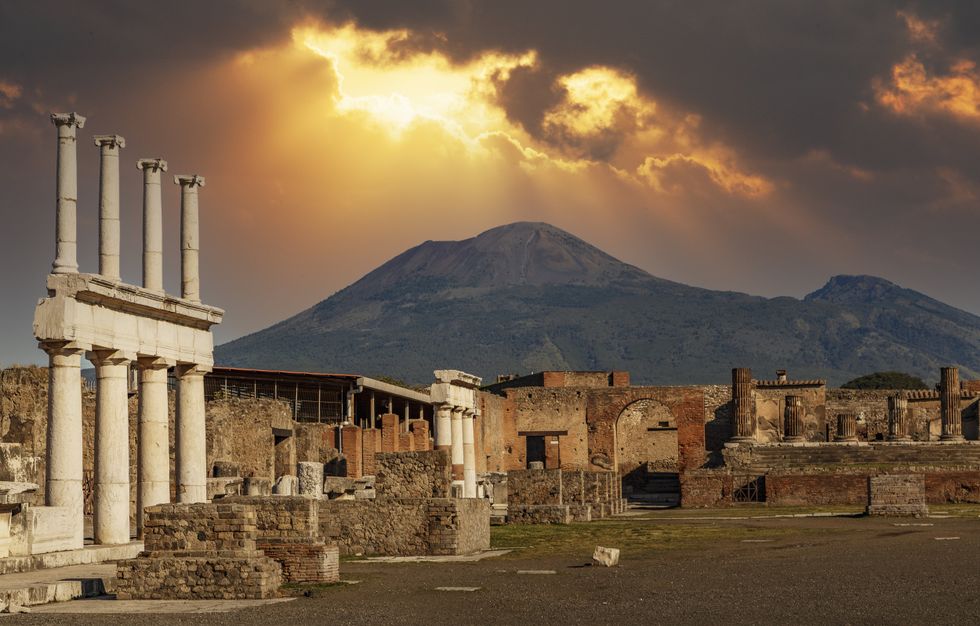
Most inhabitants of Pompeii died within a day of the eruption from breathing in toxic ash
|GETTY
Dr Gabriel Zuchtriegel, the director general of the archaeological park in Pompeii, said: "This man brought his tools with him to be ready to rebuild a life elsewhere, thanks to his profession, but perhaps also to help others."
"We dedicate this small but significant discovery to all the women and men who today continue to carry out this profession with a very high sense of responsibility and service to the community," Dr Zuchtriegel added.
The archaeologist noted that even two thousand years ago, some physicians were devoted to their calling beyond regular hours, remaining ready to serve even while fleeing the eruption.
Under Dr Zuchtriegel's watch, researchers have made a number of remarkable finds in the doomed city.
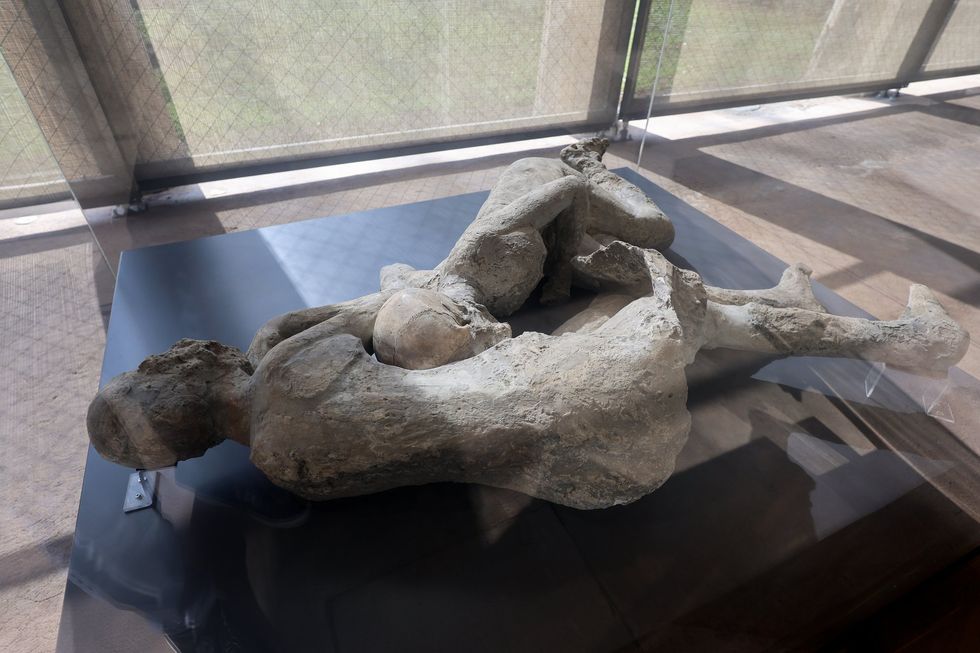
In March, the park put 22 plaster casts on show in a new exhibition
| GETTYThese include a "sumptuous" collection of frescoes buried by the eruption at Mount Vesuvius - and clues as to how Pompeii's ancient inhabitants took extraordinarily filthy baths.
And in March, the park put 22 plaster casts on show, taken from the ruins of the city destroyed by Mount Vesuvius nearly two millennia ago.
The volcanic eruption of AD 79 stands among history's deadliest, claiming an estimated 16,000 lives.
Archaeologists created the haunting figures by filling body-shaped voids left in the hardened ash with plaster.
The resulting moulds reveal victims frozen in positions of suffering, their bodies curled and contorted.