










A leading researcher has blown the lid on his work which could prove Noah's Ark was real.
Andrew Jones, of Noah's Ark Scans, has been studying a rock formation on Turkey's Mount Ararat for years.
The ancient rocks, first discovered in 1959, lie around 6,500 feet above sea level and resemble a boat.
They measure 515 feet long - matching the dimensions described in Genesis chapter six, using Egyptian cubits.
But "exciting" new findings, Mr Jones says, could prove the biblical accounts to be true.
After carrying out new ground-penetrating radar (GPR) scans and taking soil samples from the site, researchers have uncovered a series of "corridors" below the earth which could add further weight to the mythical boat.
Mr Jones told GB News his team had found "tunnels" running straight down the middle of the "boat" and on the inside edge of the ship shape, all leading to a central cavity he calls the atrium.
In the biblical account, he said, the Ark was written to have had three decks.
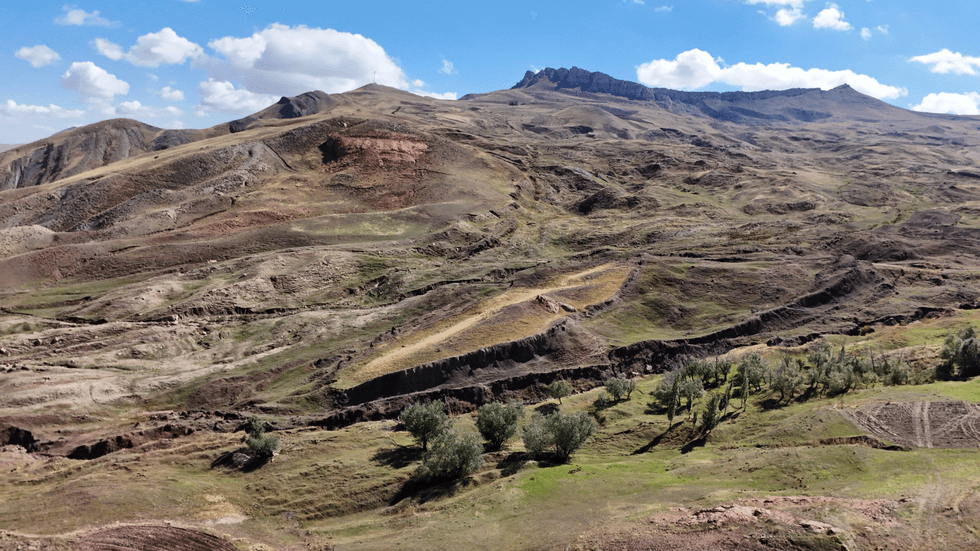
The ancient rocks, first discovered in 1959, lie around 6,500 feet above sea level and resemble a boat
|NOAH'S ARK SCANS
"God told Noah to bring the animals in. And so these animals would have stayed there, plus Noah and his family. What's interesting is that these voids are lining up below the ground - and they're not just random," Mr Jones continued.
"These tunnels are also following a pattern. GPR is just a way to look below the soil using radar. There's also been studies done with IRT, which is another geophysical technique - and they're showing a ship-shaped hull still preserved deep in the soil."
Through painstaking non-destructive techniques, researchers have also uncovered curious evidence which could hint that the rock formation is man-made.
"In 2024, we took 88 random soil samples inside and outside of that ship shape.
ARCHAEOLOGY BREAKTHROUGHS - READ MORE:
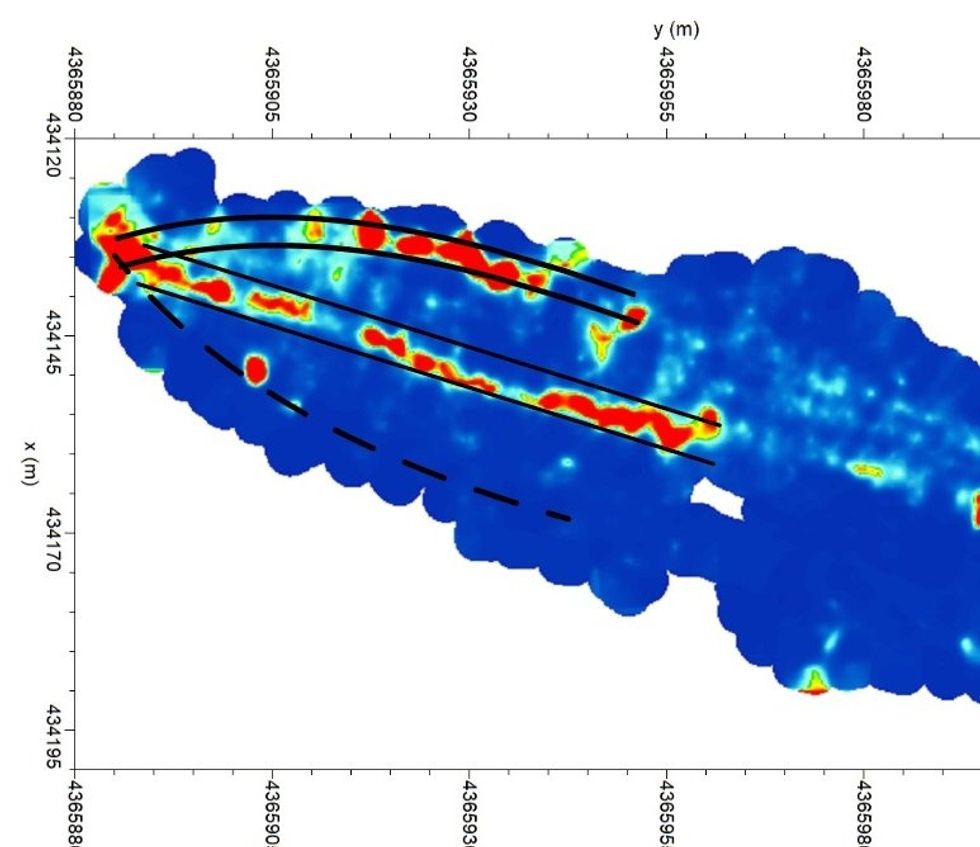
Researchers have uncovered a series of 'corridors' below the earth which could add further weight to the mythical boat
|NOAH'S ARK SCANS
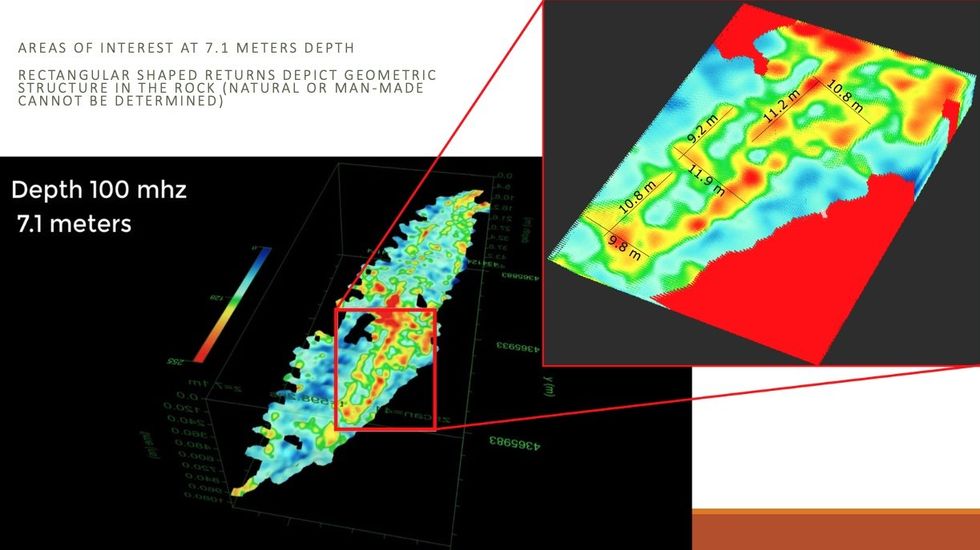
Researchers are pushing to find out whether the corridors may be man-made
|NOAH'S ARK SCANS
"And what they showed was that the soil inside the ship shape had three times more organic matter than right outside, and 38 per cent more potassium.
"What that shows is that the soil is unique. And the grass, in the fall, it has a yellower colour just inside."
Mr Jones says a wooden vessel like the Ark would have decayed over thousands of years, leaving behind a distinct chemical signature in the soil.
He again insisted what his team was seeing below the ground hinted the structure was the Ark.
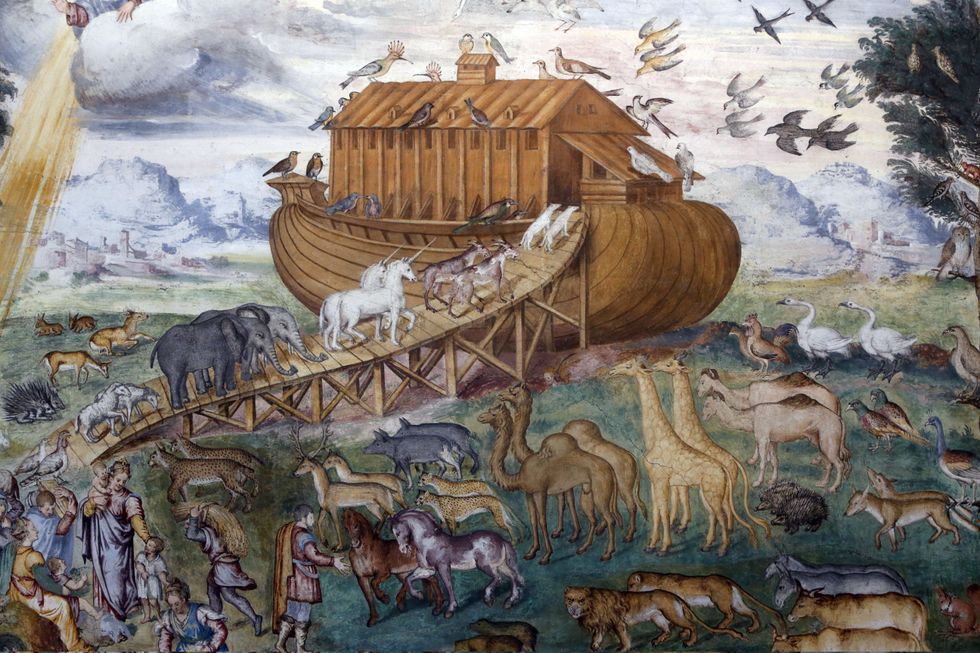
Mr Jones says a wooden vessel like the Ark would have decayed over thousands of years, leaving behind a distinct chemical signature in the soil
| GETTY"It's exactly the link given to the Bible. It's 300 Egyptian cubits. For us, these are all positive lines that we're pursuing, and it's showing that there's more to be found," he said.
The researcher also claimed the existence of fossil remains around the "Ark" was evidence of the Great Flood.
Ancient coral and seashells found in the rocks high in the mountains prove that "one time this area was underwater," he says.
A more common explanation is that the rocks now high above sea level were raised through a process lasting millions of years, with tectonic plate movements lifting prehistoric ocean floors up.
Now, Mr Jones and his team are pushing to physically explore the inside of the tunnels.
"We have a team that is designing a robotic remote-controlled device that could go down inside the holes and explore the tunnels," he said.