









A cavern concealed beneath the walls of an 11th-century Welsh castle has been hailed as a site that could fundamentally reshape understanding of Britain's ancient past.
Wogan Cavern, located under Pembroke Castle in Pembrokeshire, has yielded what researchers describe as "extremely rare" traces of prehistoric human activity alongside animal remains dating back 120,000 years.
Among the discoveries are hippopotamus bones from creatures that once inhabited Wales during a warmer climatic period.
"There is no other site like it in Britain – it is a once in a lifetime discovery," said Dr Rob Dinnis from the University of Aberdeen.
The cave itself is substantial, stretching 23 metres in length with ceilings reaching up to 10 metres high.
Visitors can reach the cavern through a spiral staircase descending from the castle above, with the underground space believed to have been excavated during the Victorian era.
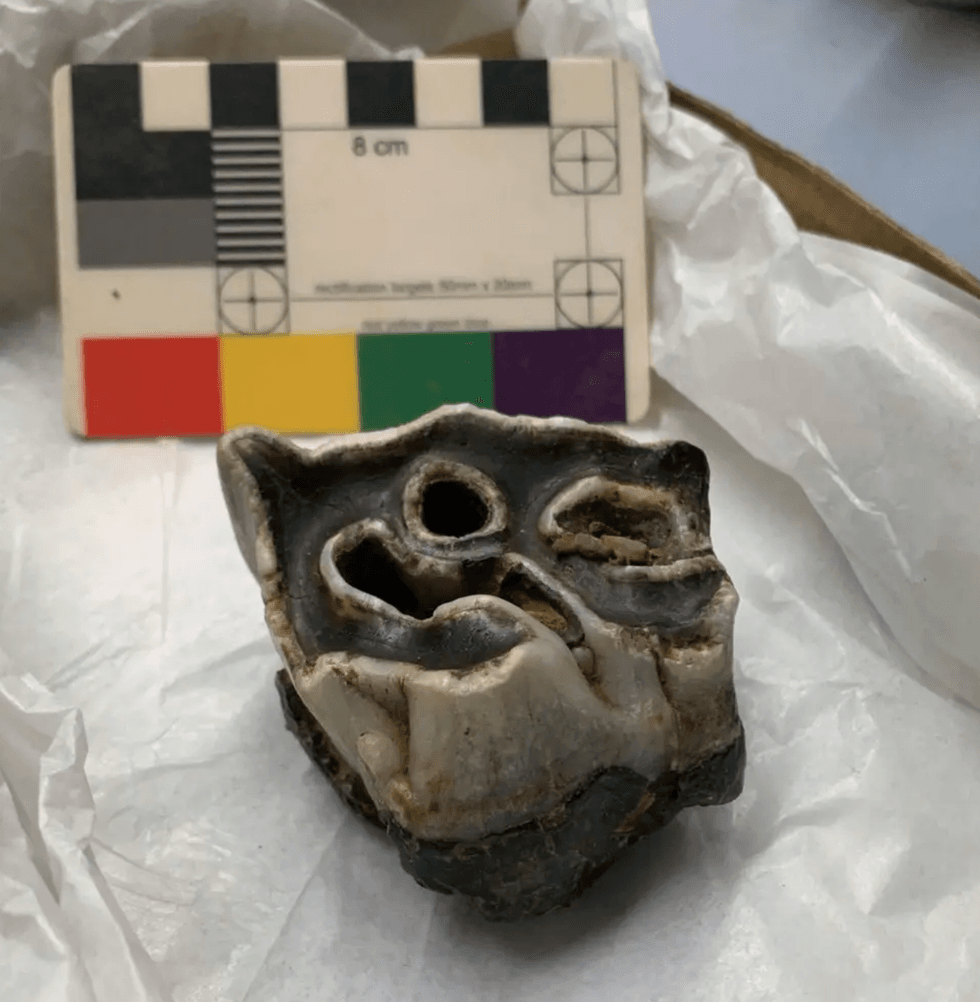
Smaller digs at the site yielded rewards
|ABERDEEN UNIVERSITY
For years, experts assumed the site held little remaining archaeological value, but smaller digs conducted between 2021 and 2024 proved otherwise.
These preliminary investigations unearthed stone tools alongside bones from mammoths and woolly rhinoceroses, with the remains found in remarkably good condition.
Scientists now regard the cavern as one of Britain's most significant prehistoric archives.
Dr Dinnis, who oversaw the initial excavations and will direct the forthcoming project, expressed confidence about future findings.
LATEST DEVELOPMENTS

A cave under Pembroke Castle may contain secrets about Britain's past
|PA
"Despite the limited work done so far, we can already say that Wogan Cavern is a truly remarkable site," he said.
The archaeologist noted that beyond the exceptionally rare evidence of early Homo sapiens, there are indications of even older human presence, likely Neanderthals.
He explained that the team hopes to trace human occupation across an extensive timeline, from hunter-gatherers who lived there approximately 11,500 years ago following the last Ice Age, back to Britain's earliest modern humans between 45,000 and 35,000 years ago.
The University of Aberdeen will spearhead the comprehensive five-year exploration, with work set to commence at the end of May.
The Pembroke Castle Trust is backing the project and has confirmed that all artefacts recovered from Wogan Cavern will remain in Pembroke for curation.
For the castle itself, birthplace of Henry Tudor and a major tourist destination, the excavation opens an entirely new dimension to its story.
"This is incredibly exciting news for everyone at the castle," said manager Jon Williams.
"We have watched with great interest as Wogan Cavern has started to reveal its secrets – it's very different from the medieval history we usually deal with at the castle."