










Renovation work on a Dutch church may have uncovered a skeleton belonging to the "fourth musketeer", stunning archaeologists who have been searching for it since his death in 1673.
There is hope that DNA testing will confirm the bones found in St Peter and Paul church in Wolder, near Maastricht, belong to Charles de Batz de Castelmore, the Earl of Artagnan - "d'Artagnan".
Wim Dijkman, an archaeologist, told Dutch broadcast L1Nieuws he had been searching for d'Artagnan's tomb for 28 years.
He said: "This could be the highlight of my career. So far, nothing has been found that contradicts the idea that this is not him. But again, I am awaiting the DNA analysis."
Deacon Jos Valke was the first to involve Mr Dijkman, as he believed the skeleton was d'Artagnan based on several details.
The archaeologists found a musket ball near the skeleton's ribs, matching up with historical accounts of d'Artagnan's death.
"He lay buried under the altar in consecrated ground. There was a French coin from that time in the grave," the deacon said.
The story of the The Three Musketeers was immortalised by Alexandre Dumas, whose 1844 novel has been adapted into more than 100 films and referenced in countless others.
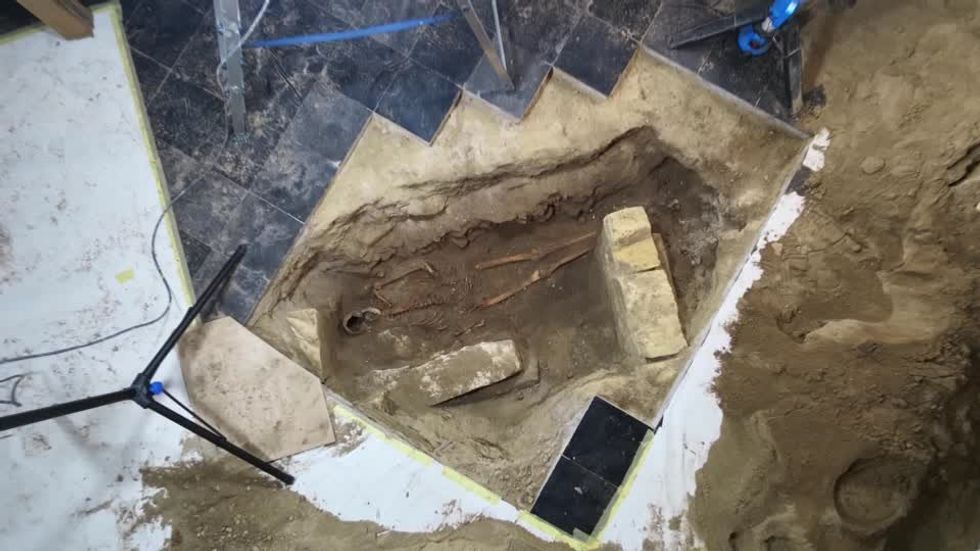
The skeleton of d'Artagnan was found near the altar of the church in Maastricht
|REUTERS
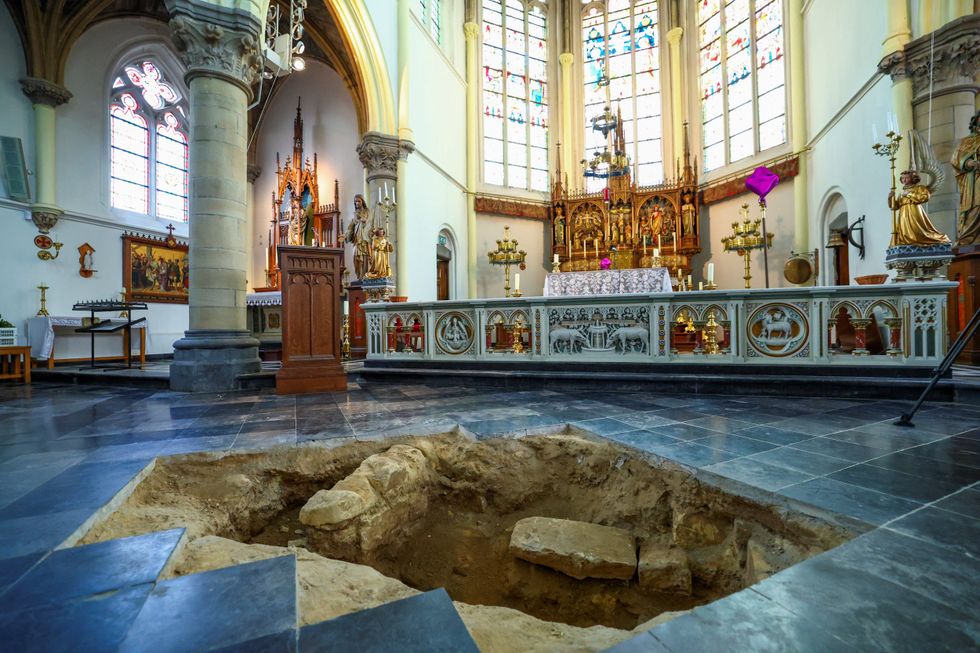
The site where the skeleton, believed to belong to d'Artagnan, was found
|REUTERS
Although the Dumas novel fictionalises the musketeers to take on Cardinal Richelieu and Milady, all four were based on real life figures.
The real d'Artagnan was King Louis XIV's right-hand man and a member of his elite royal bodyguard who engaged in secret missions, known as the Musketeers of the Guard.
He was killed on June 25, 1673 after being shot in the chest or throat during the siege of Maastricht.
Rather than being taken back to Paris, it was decided he should be buried on the spot, with the French army setting up near the St Pater and Paul church.
ARCHAEOLOGY BREAKTHROUGHS - READ MORE:
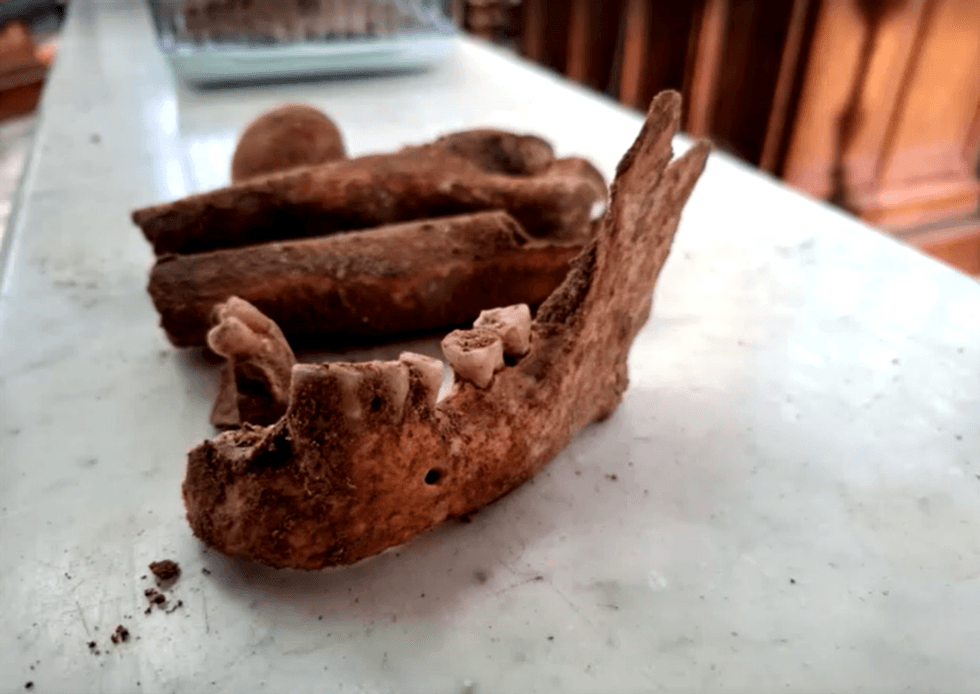
A DNA sample taken from the tooth will be compared against a living relative of d'Artagnan
|REUTERS
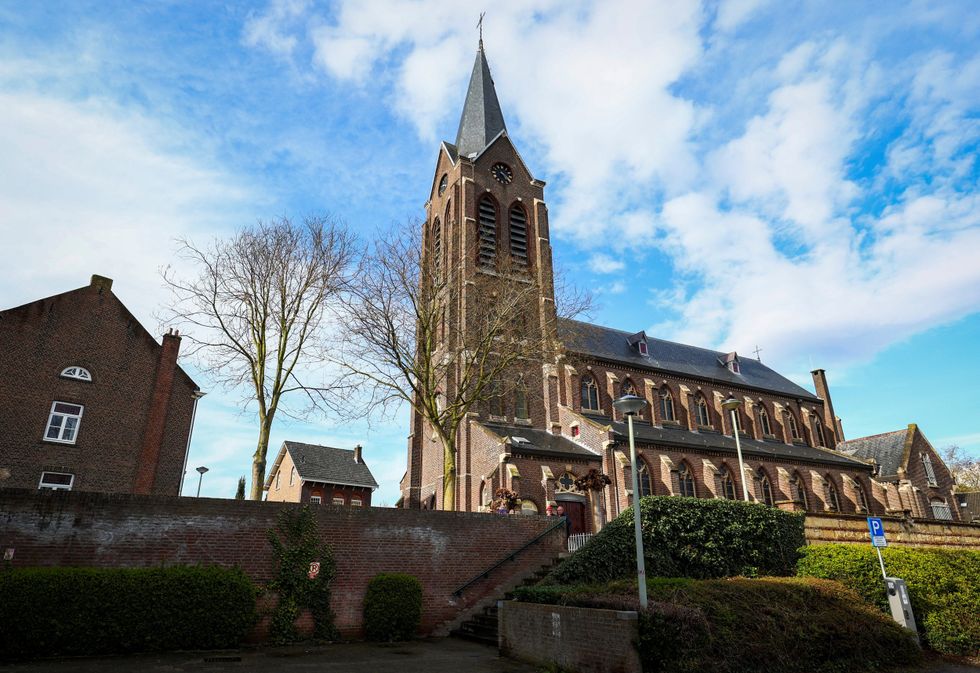
PICTURED: St Peter and Paul church, where Deacon Jos Valke found d'Artagnan's skeleton
|REUTERS
King Louis wrote to the Queen that he had "lost d'Artagnan, in whom I had every confidence".
A DNA sample was taken from the skeleton's teeth on March 13.
It will be analysed in Munich and compared to the DNA from of the musketeer's living descendants.
The skeleton and the items in the grave have been removed from the church and placed at an archaeological institute in Deventer, with an alarm system installed in the church.
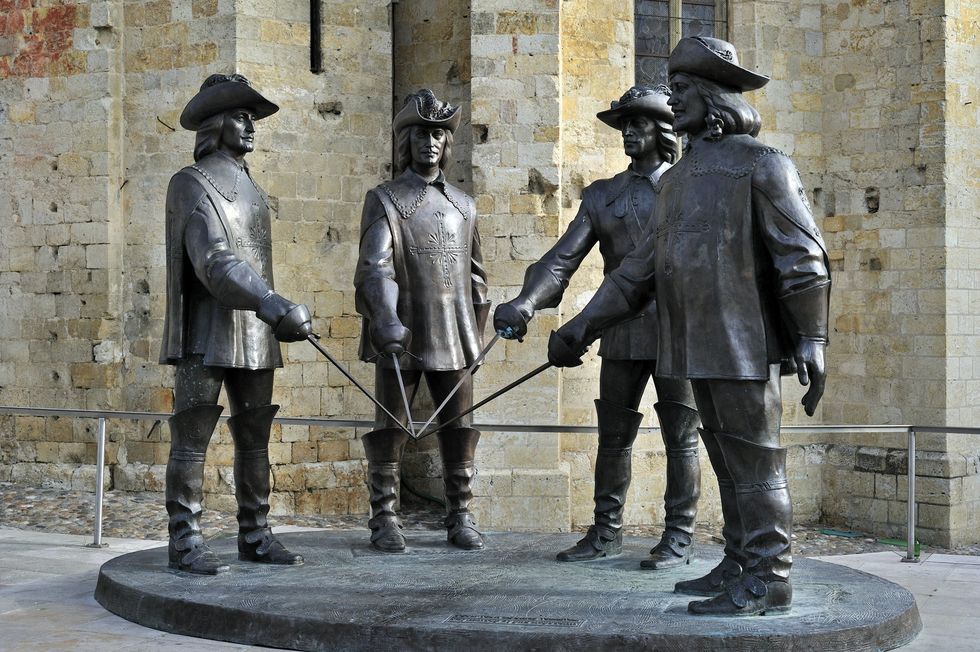
PICTURED: A statue of Three Musketeers and d'Artagnan in France
|GETTY
Wim Hillenaar, the mayor of Maastricht, told L1Nieuws that if the DNA analysis confirms it is d'Artagnan, "it would be a remarkable discovery within an important chapter in the history of Maastricht".
However, he encouraged restraint while the investigation and DNA analysis is ongoing to make sure it can be conducted properly.
D'Artagnan took inspiration from earlier 1700 novel Memoires de M d'Artagnan, written by Gatien de Courtilz de Sandras.
The French hero has been portrayed by Hollywood actors such as Logan Lerman, Douglas Fairbanks, and Gene Kelly, and French actors Francois Civil and Jean-Pierre Cassel.