









Archaeologists believe they may have solved the mystery of Britain's largest-ever Iron Age metal hoards thousands of years after the ancient items were used.
Researchers believe the two enormous treasure troves unearthed in Yorkshire could have formed part of a royal funeral ceremony for a Celtic queen.
A metal detectorist made the discovery in 2021 near Melsonby - and promptly contacted archaeological experts.
A subsequent excavation revealed two distinct deposits containing more than 950 objects in total, forming the legendary Melsonby Hoard.
Among the finds were iron rims designed for wooden wheels, a cauldron, an elaborately decorated bowl for mixing wine, and spearheads used in ceremonies.
The combined deposits rank among the largest Iron Age hoards ever unearthed in Britain.
Research published last week in the journal Antiquity proposes that these items may have been employed during the funeral of an Iron Age ruler.
The artefacts appear to have been intentionally set alight, damaged and then interred in the ground.
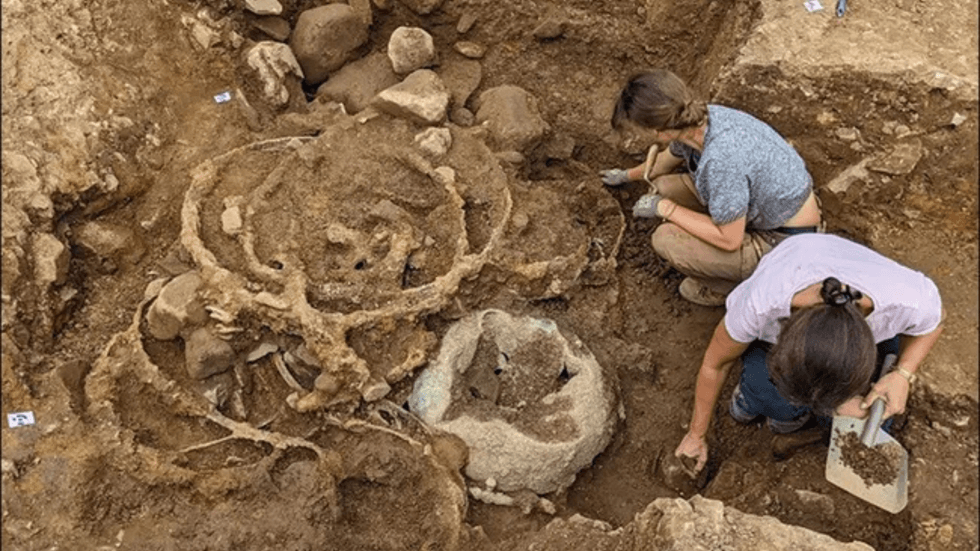
The excavation revealed two distinct deposits containing more than 950 objects in total
|UNIVERSITY OF DURHAM
Study co-author Tom Moore, an archaeologist at Durham University, said: "It is clear that Melsonby was not a burial [because] we have no evidence of a body, so our question is why deposit this material?"
The researchers believe the sheer scale of the hoards and the abundance of costly objects point towards an elite funeral conducted by the Brigantes.
This powerful tribe of Iron Age Britons had predominantly Celtic origins.
The Brigantes controlled the Stanwick royal site, situated merely a few hundred feet from where the hoards were found.
REMARKABLE FINDS - READ THE LATEST:
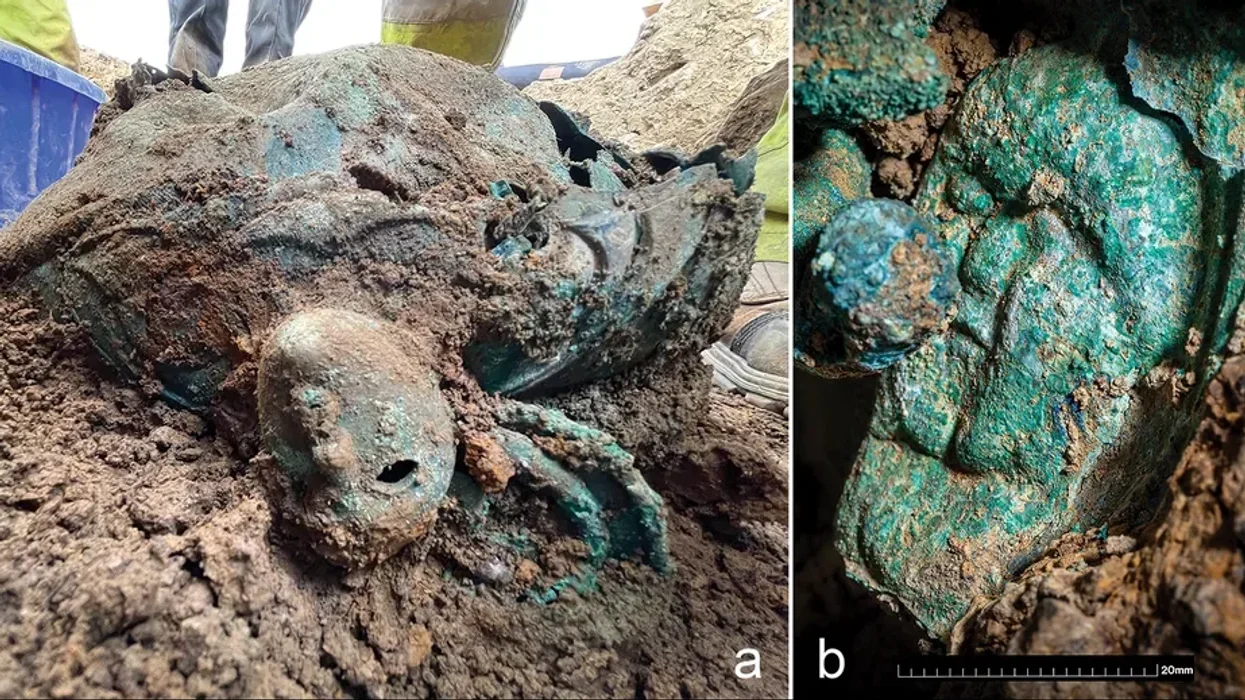
Researchers believe the sheer scale of the hoards costly objects point towards an elite funeral
|ALEXANDER JANSEN/UNIVERSITY OF DURHAM
Stanwick functioned as a fortified settlement that Romans termed an "oppidum", a type of defensive structure typically constructed by Celts on elevated or strategically advantageous terrain.
"Much of the material was burnt to high temperatures enough to melt copper alloy and silver," Mr Moore explained.
"At this time, cremation was becoming a popular funerary rite for elites in parts of Britain."
Although no burial evidence has emerged in the vicinity, human remains may have been placed elsewhere.
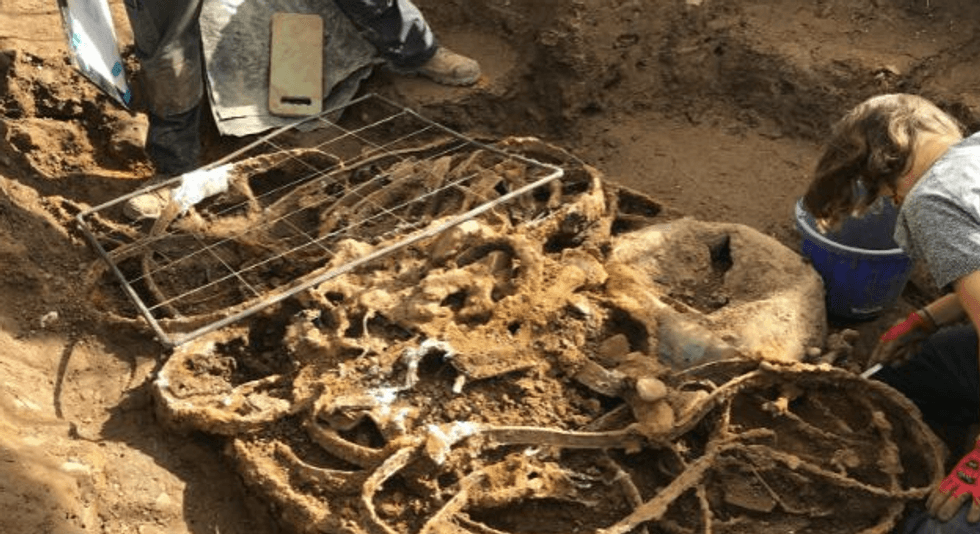
The precise motivation behind burying these hoards might remain forever unknown
|UNIVERSITY OF DURHAM
The precise motivation behind burying these hoards might remain forever unknown.
"There are several possibilities for that event," Moore noted, "but a funeral of an important leader seems one of the most likely."
Radiocarbon analysis dated the objects to the first century BC.
Their design and ornamentation, featuring coral sourced from the Mediterranean, suggest the Stanwick elite maintained links with mainland Europe.
Following the Roman conquest of much of Britain after AD 43, the Brigantes became Roman allies.
Roman records from after AD 69 describe a queen called Cartimandua ruling the tribe as a "client ruler" and ally.
However, researchers believe the hoards predate this period by several generations and may relate to a funeral for one of Cartimandua's royal predecessors.
Royal authority among the Brigantes apparently transferred from mother to daughter, making it probable that some of Cartimandua's ancestors were themselves ruling queens.
Our Standards: The GB News Editorial Charter