









Energy Secretary Ed Miliband must stop "trotting out myths” about natural gas and take a more “rational” approach to issues such as the North Sea, a leading economist argues.
Sir Dieter Helm said gas will play a key role in our energy mix for years to come — and producing it in the North Sea would have advantages for Britain's security and economy.
North Sea oil has been in the spotlight since the war in Iran began, with voices from industry leaders and trade unions calling for production to be increased.
Conservative leader Kemi Badenoch raised the issue with Sir Keir Starmer at a heated Prime Minister's Questions, saying banning all new drilling was “reckless” when it was promised before the election and “catastrophic” in the middle of a global energy crisis.
TRENDING
Stories
Videos
Your Say
The Labour leader told MPs “oil and gas is part of the mix for many years to come, but we do need to get onto renewables”.
Mr Miliband’s Department for Energy Security and Net Zero maintains the only way to shield the UK from future crises is “to get off the rollercoaster of fossil fuel markets”.
But Sir Dieter, professor of economic policy at Oxford University, said gas would play a key role in our energy mix “whether we like it or not”.
He said ministers must “get away from simplistic slogans and start to think seriously about our gas situation”.
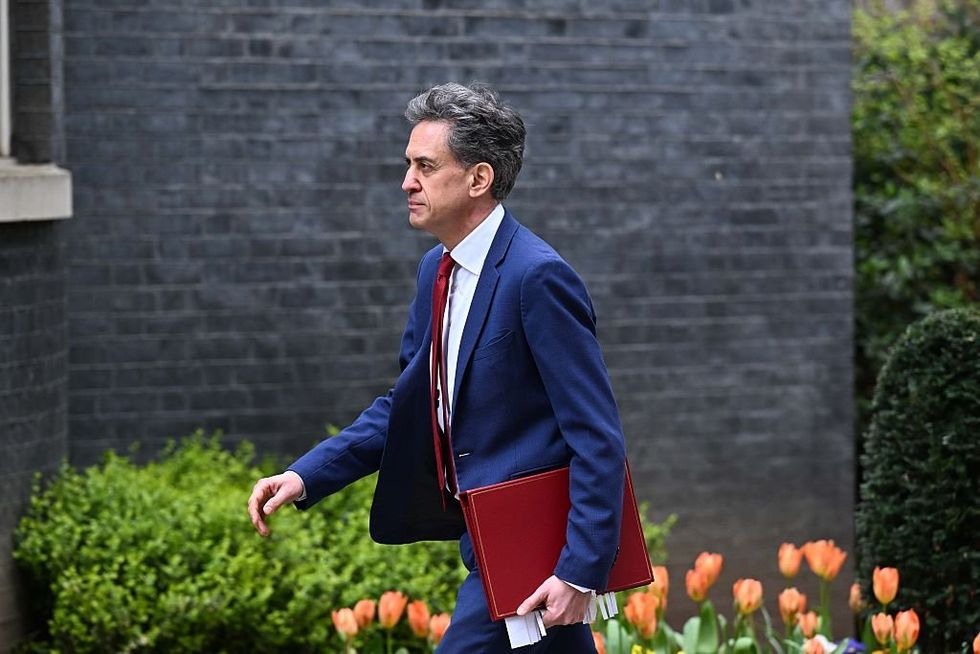
Experts said Ed Miliband must stop 'trotting out myths'
|GETTY
“We should stop trotting out myths about gas, gas markets, home grown and all that stuff and start to take seriously what confronts our economy so we can address decarbonisation in a sensible and rational way, rather than as a kind of Orwellian story of four legs good, two legs bad,” he said. “Gas is going to be there whether we like it or not. Let’s do it responsibly, let’s do it securely and let’s do it in an environmentally benign way.”
The North Sea still had a key role to play, he said in his podcast, Helm Talks. However, the current investment situation was dire, he said, adding: “We have an energy policy designed to get us out of North Sea gas, in the initial phase to stop issuing any new licences and to squeeze the gas companies really hard with a very burdensome windfall tax. Basically, we have put up the sign, 'No, we don’t want you to produce in the North Sea and we will put up with it for as long as we have to, but we are going to pressurise you downwards.'"
This means the nation is importing North Sea gas from Norway, as well as liquefied natural gas (LNG) from abroad – which carries a larger carbon footprint.
“So we are not using our own gas and as a result we are less secure than otherwise would be the case,” said Sir Dieter.
LATEST DEVELOPMENTS
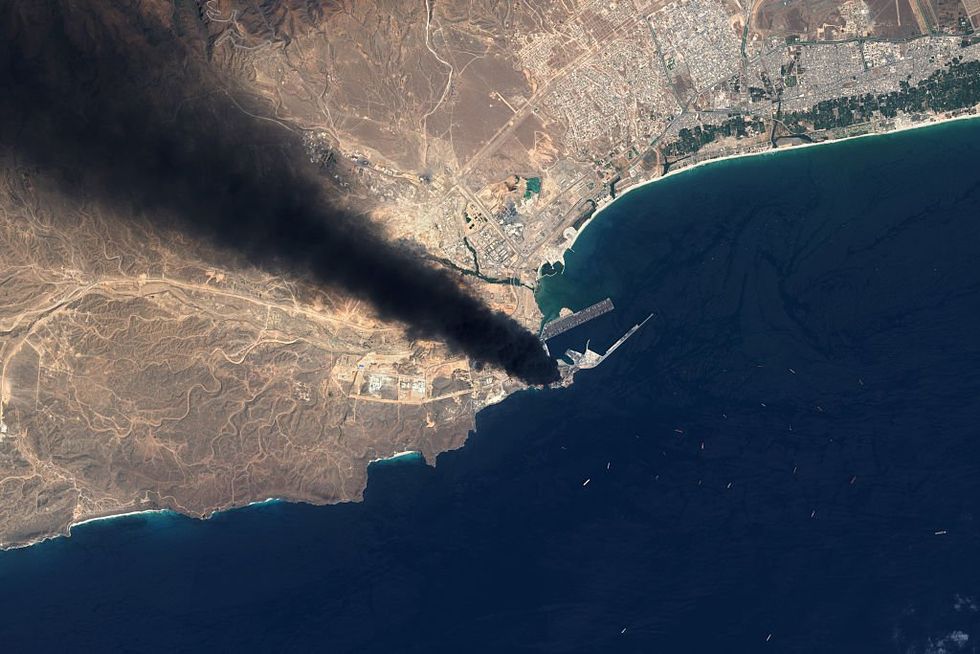
North Sea oil has been in the spotlight since the war in Iran began
|GETTY
Mr Miliband has argued because gas prices are set on the international market, issuing new licences “will not take a penny off bills”.
Nevertheless, Sir Dieter points out when British Gas was the sole buyer, long-term contracts and prices had been agreed.
He suggested, with “imagination”, similar deals could be engineered.
“Since the Government controls the offshore licences, there is nothing to prevent it from entering new fixed-price long-term contracts going forward,” he says. “Given, too, that there are new licences at stake, there is a contractual bargain to be struck here in exchange for new licences.”
Although gas and oil prices were currently high as war rages in Iran, this was a spike, rather than a trend, said Sir Dieter.
Sir Dieter pointed out prices had fallen after the initial shock of Russia's invasion of Ukraine in 2022. Yet UK industrial energy prices remained stubbornly high, he said.
“Ministers have been making this assertion about gas prices being high and volatile to argue that we just need to get out of gas – if only we could not use gas at all and we could rely on wind and solar, then hey presto, it would all be fine, plus a few nuclear power stations as well," he said. "After more than a decade, indeed almost two decades, of building substantive wind generation and quite a lot of solar as well, are we really getting out of gas, is it working? Are our prices lower because we have got more renewables compared to our European partners and compared with prices more generally across the world? No – the UK is 35 per cent dependent for its energy on gas and there’s no sign whatsoever that that 35 per cent is going to go down a lot any time soon.”
He called for slogans to be replaced with reasoned debate.
He went on: “The three myths that are trotted out are that we are getting out of gas – we are not; that we are using our own gas – no; and that the price of our own gas has to be tied to the world price and follow wherever the world price goes – well, no, actually, it doesn’t. We need to take a much more sensible balanced and rational view about where we are going to go on gas into the future.”
A Government spokesperson said: Issuing new licences to explore new fields cannot give us energy security and will not take a penny off bills. Regardless of where it comes from, oil and gas is sold on international markets, which set the price for British billpayers – making us a price taker. “The only way to truly protect ourselves from these price spikes is to get off the rollercoaster of fossil fuel markets.”
Our Standards: The GB News Editorial Charter