









Volunteers excavating a cave system in North Yorkshire have unearthed the jawbone of a wolverine thought to have died more than 90,000 years ago.
The ancient remains were discovered at Stump Cross Caverns, located near Pateley Bridge.
Members of the Craven Pothole Club made the find while carrying out ongoing work at a newly-accessible section of the site.
Tom Thompson, one of the first to identify the jaw among the freshly disturbed mud, called the Ice Age discovery "incredibly rare".
"I couldn't believe it - we had been hoping for something like this but when I washed it and looked at it, I was really rather taken back," he said.
Mr Thompson said he had been clearing buckets of mud alongside fellow caver Rowan Worsman when they noticed something gleaming in the dirt.
"I thought: 'That looks like a tooth to me,'" he said.
"When I first saw it, I thought this is either a wolverine or a wolf."
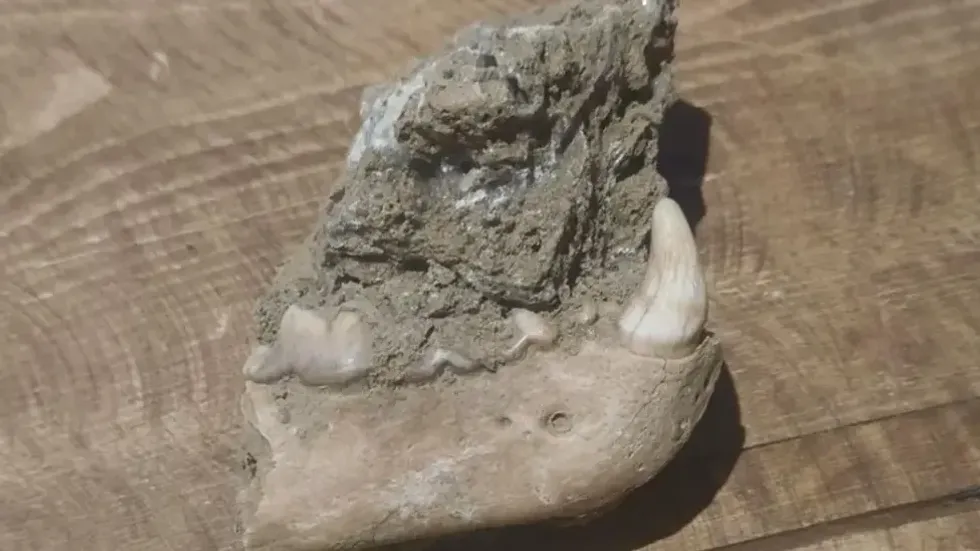
Tom Thompson said he had been clearing buckets of mud alongside fellow caver Rowan Worsman when they noticed something gleaming in the dirt: the wolverine jaw
|STUMP CROSS CAVERNS
The fossilised specimen comprises the lower portion of the creature's jaw, with several teeth remaining intact, including a prominent canine.
Wolverines belong to the weasel family and still inhabit Arctic and sub-Arctic territories today.
The species was last thought to have roamed wild across Britain thousands of years ago.
Wolverine bones had previously been found at Stump Cross during the 1980s - though that was the last such discovery at the site.
BRITISH BREAKTHROUGHS - READ MORE:
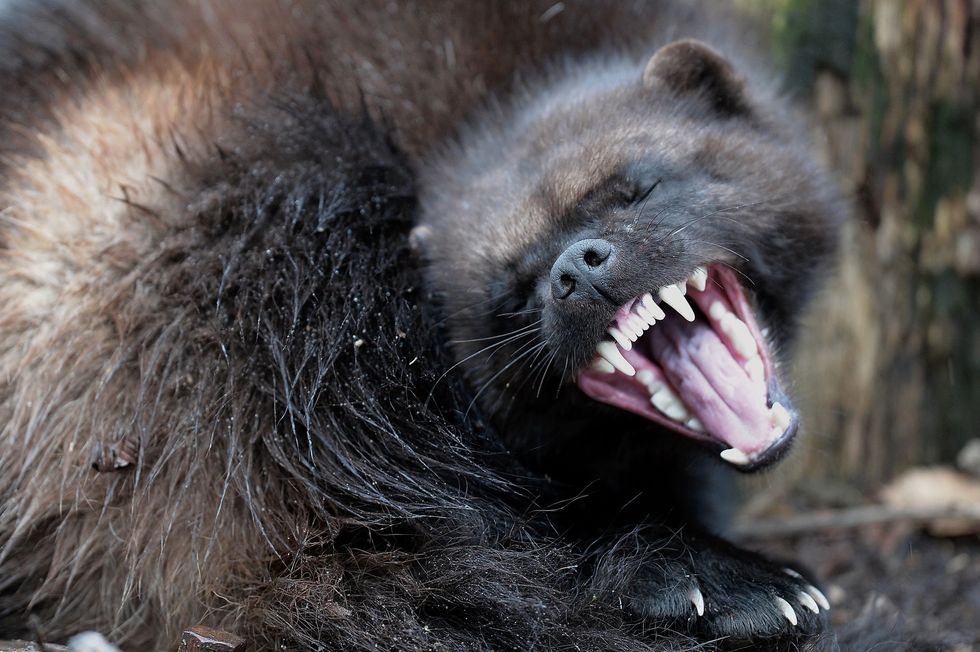
Wolverines belong to the weasel family and still inhabit Arctic and sub-Arctic territories today
|GETTY
"Since then, the stalagmites they are encased in have been dated several times," Mr Thompson said.
"The initial dating method put it down to about 70,000 years but the more recent research has put it to between 80,000 to 90,000 years old."
The caverns have yielded numerous other prehistoric animal remains over the years.
Bones from reindeer, bison and Arctic fox have all been recovered from various locations throughout the cave system.
Thompson suggested that Ice Age conditions may have exposed openings in the caverns, causing animals to fall into the underground chambers.
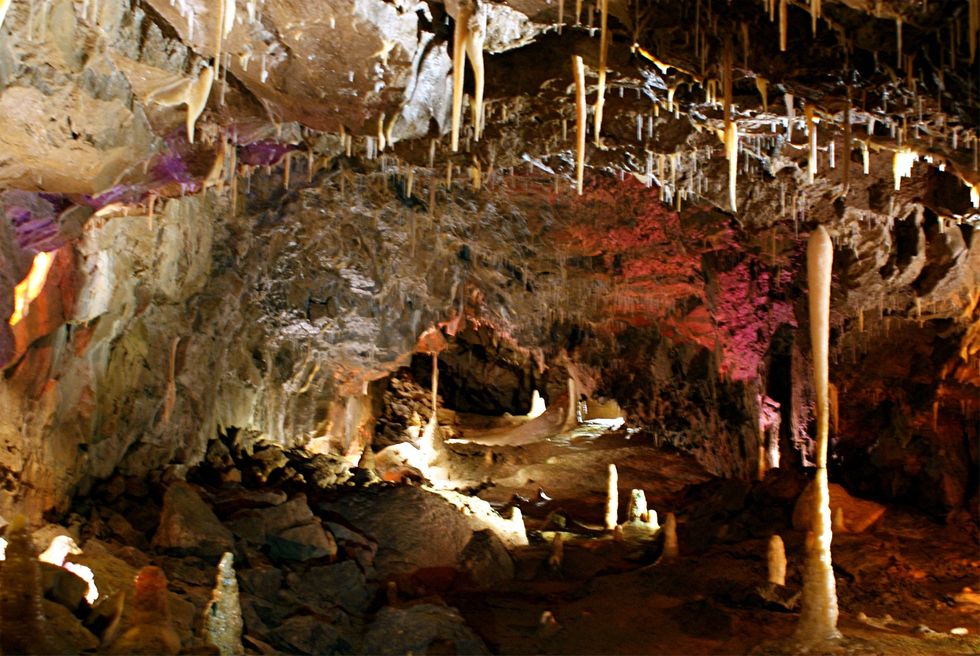
The ancient remains were discovered at Stump Cross Caverns (pictured), near Pateley Bridge
|WIKIMEDIA COMMONS
Victorian explorers first discovered the cave which is currently under excavation, though it has remained closed to visitors ever since.
Craven Pothole Club members and other volunteers are now working to open up the space.
Plans are in place for the cave to eventually form an extension of the main tourist attraction at Stump Cross.
Mr Thompson said he was optimistic that further breakthroughs would follow as the excavation continues.
"Everything of interest that we find will be part of a display which will eventually be mounted at the cave," he said.