








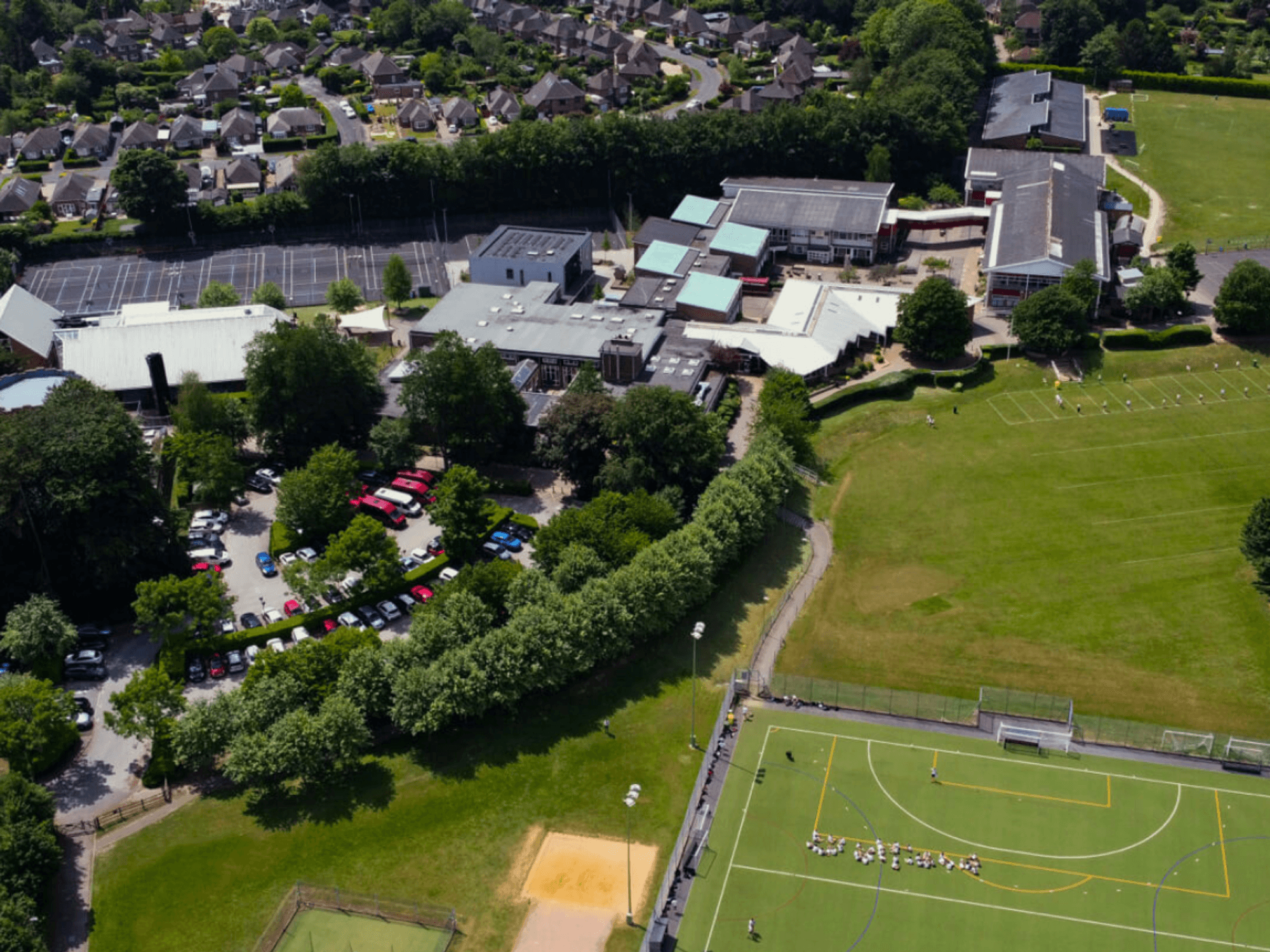


Archaeologists have discovered a Viking “execution pit” in Cambridge which holds the remains of 10 people.
The burial pit was uncovered by archaeologists from Cambridge University at Wandlebury Country Park, containing human remains dating to around the 9th century AD.
Containing dismembered remains of at least 10 people, the mass grave contains mostly young men.
Olivia Courtney, an archaeology undergraduate from Bath, now in her third year at Cambridge University said: “Before we uncovered the first remains, our best find was a 1960s Smarties lid.
“I had never encountered human remains on a dig, and I was struck by how close yet distant these people felt.
“We were separated by only a few years in age, but over a thousand years in time.”
Some skeletons remain intact, whilst others were piles of bones which have been tied up and thrown in, which suggests they were not killed in battle but likely executed in an unusual way.
Notable remains belong to a man who measures approximately 6ft 5inches tall - abnormally tall for this period in time.
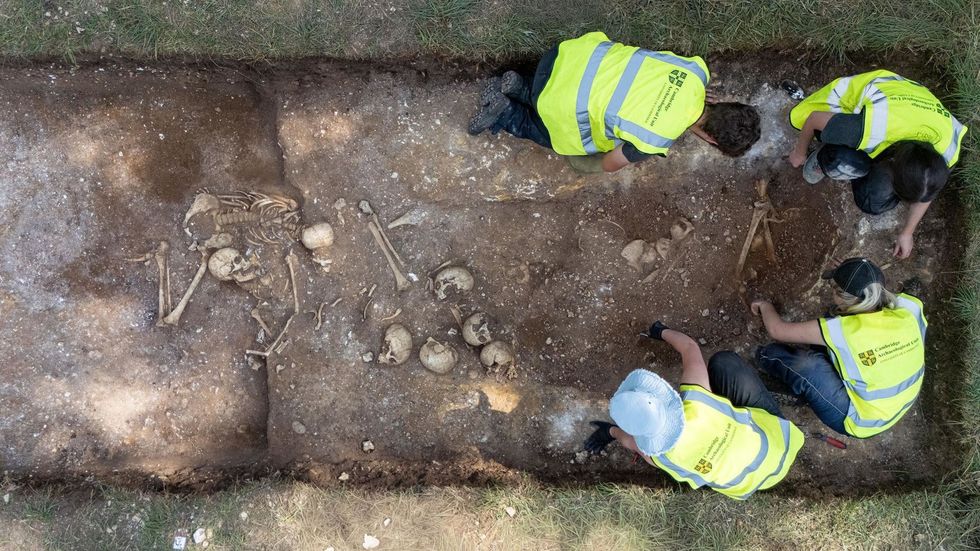
Carbon dating and context suggest the mass grave dates to around the 870s AD
|UNIVERSITY OF CAMBRIDGE
The tall Viking man has a 3cm hole in his skull, believed to be from trepanation (an ancient surgical procedure where a hole is made into the skull).
Showing signs of healing, the small hole in the man’s skull suggests he did not die from the trepanation.
Archaeologists believe the man’s height may have resulted in a growth condition which impacted his pituitary gland.
Dr Trish Biers, curator of the Duckworth Collections at the University of Cambridge, where the remains have been taken for further analysis, said: “The individual may have had a tumour that affected their pituitary gland and caused an excess of growth hormones.
LATEST DEVELOPMENTS:
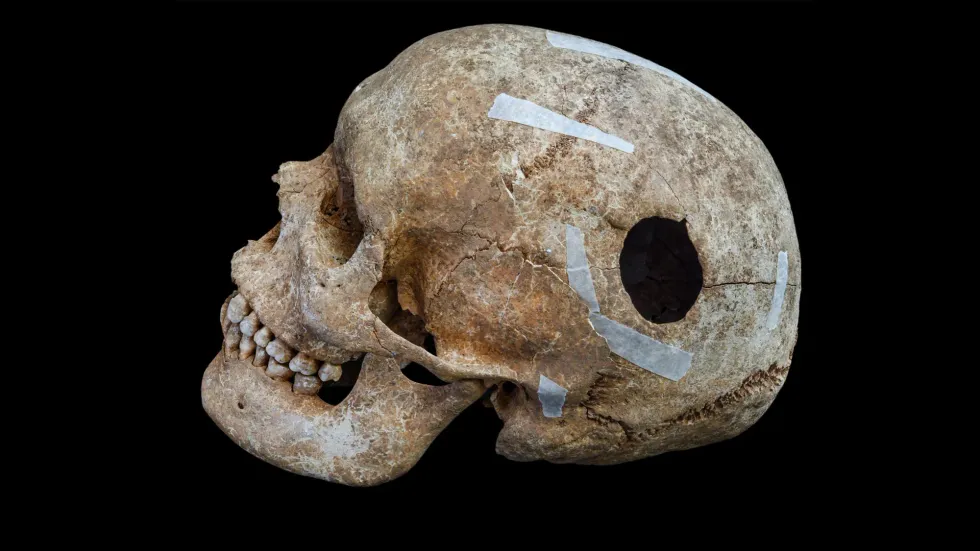
The skull of an abnormally tall man with a 3cm hole in his head
|UNIVERSITY OF CAMBRIDGE
“Such a condition in the brain would have led to increased pressure in the skull, causing headaches that the trepanning may have been an attempt to alleviate.
“Not uncommon with head trauma today.”
Carbon dating and context suggest the mass grave dates to around the 870s AD, a period of intense Viking-Saxon conflict.
However, the researchers at Cambridge University have speculated that, due to the arrangement of the bodies and lack of battle injuries of that time, the burial site is an execution pit, where the men were ritually killed.
Some of the remains show signs of trauma, including at least one decapitation.
Dr Oscar Aldred, Cambridge Archaeological Unit, said: “Those buried could have been recipients of corporal punishment, and that may be connected to Wandlebury as a sacred or well-known meeting place.
“It may be that some of the disarticulated body parts had previously been displayed as trophies, and were then gathered up and interred with the executed or otherwise slaughtered individuals.”
This incredible discovery near Cambridge has prompted further research into the remains, including DNA and chemical testing) to uncover more about the individuals, where they came from and what kind of lives they lived.
The dig was led by Dr Aldred at Wandlebury Country Park, located south east of the East Anglican city.
The park is best known for its ringwork - an arrangement of banks abd ditches forming an Iron Age hillfort, built about a millenia before the Viking period.
Archaeologists note that the prominent Iron Age earthworks would have made Wandlebury a well-known social place in the early Medieval period.
Now, the park is a popular destination for school trips and family outings.