








DNA analysis has revealed that what was believed to be northern England's earliest "caveman" was in fact a young girl who died more than 11,000 years ago.
The child, who has been given the name "Ossick Lass" in tribute to the local Cumbrian dialect, represents the oldest human remains ever unearthed in the north of Britain.
Her bones were initially discovered in 2023 at Heaning Wood Bone Cave near Great Urswick on the Furness peninsula, dating back to the Mesolithic era.
This remarkable find provides evidence of some of the earliest human presence in Britain following the retreat of ice sheets at the conclusion of the last Ice Age.
Researchers at the University of Lancashire successfully extracted sufficient DNA from the skeletal remains to determine that the individual was female and between two-and-a-half and three-and-a-half years of age at the time of death.
Scientific examination indicates her body was placed intact in the cave shortly after she passed away.
Evidence suggests the young girl was likely interred alongside shell beads, pointing to a ceremonial burial practice.
Such ancient discoveries are uncommon in northern Britain due to the destructive impact of previous glacial periods, though older remains have been found in southern England and Wales.
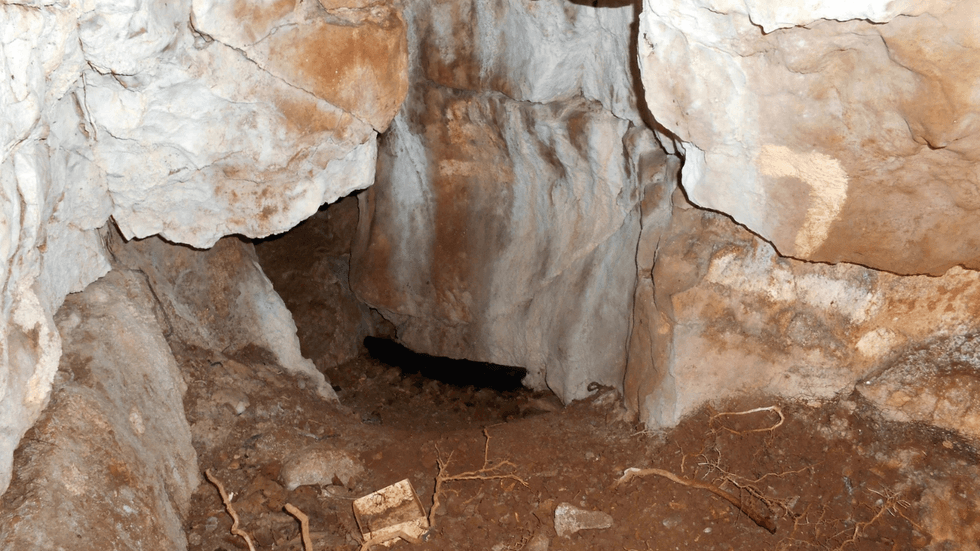
Her bones were initially discovered in 2023 at Heaning Wood Bone Cave near Great Urswick
|MARTIN STABLES / UNIVERSITY OF LANCASTER
"It is the first time we have been able to be so specific about the age of a child whose remains are so old and be certain that they are from a female," said Dr Rick Peterson.
The discovery offers clear proof that Mesolithic communities engaged in deliberate burial of their dead.
Dr Peterson explained that these nomadic groups probably inhabited forested areas, surviving on wild vegetation, hazelnuts and hunted meat.
"These people took a spiritual approach to nature and saw animals as spiritual beings. This may be why they chose to bury their dead in caves as a gateway to a spiritual world," he said.
ARCHAEOLOGY - READ THE LATEST:
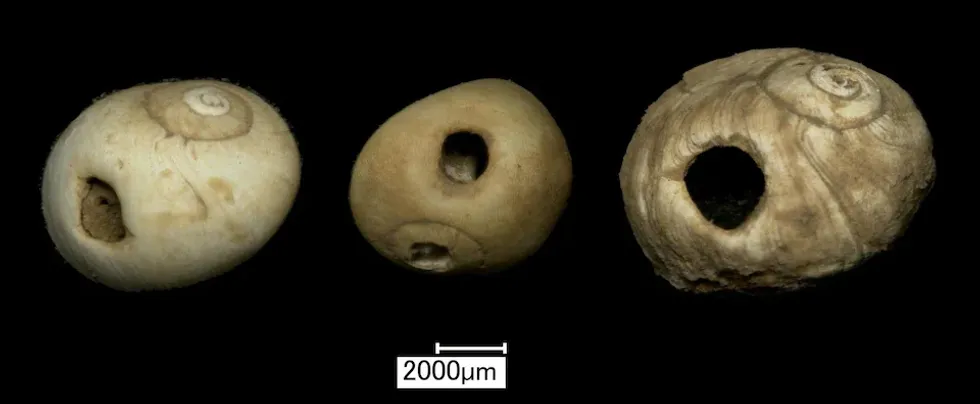
Evidence suggests the young girl was likely interred alongside shell beads, pointing to a ceremonial burial practice
|UNIVERSITY OF LANCASHIRE
According to Dr Peterson, humans from this period were physically identical to modern people and possessed equivalent speech abilities, though their language remains unknown.
He noted that extensive travel during this era meant they likely encountered numerous different tribal groups.
The site where Ossick Lass was found ranks as the third oldest Mesolithic burial location in northern Europe.
Local archaeologist Martin Stables made the initial discovery of her remains.
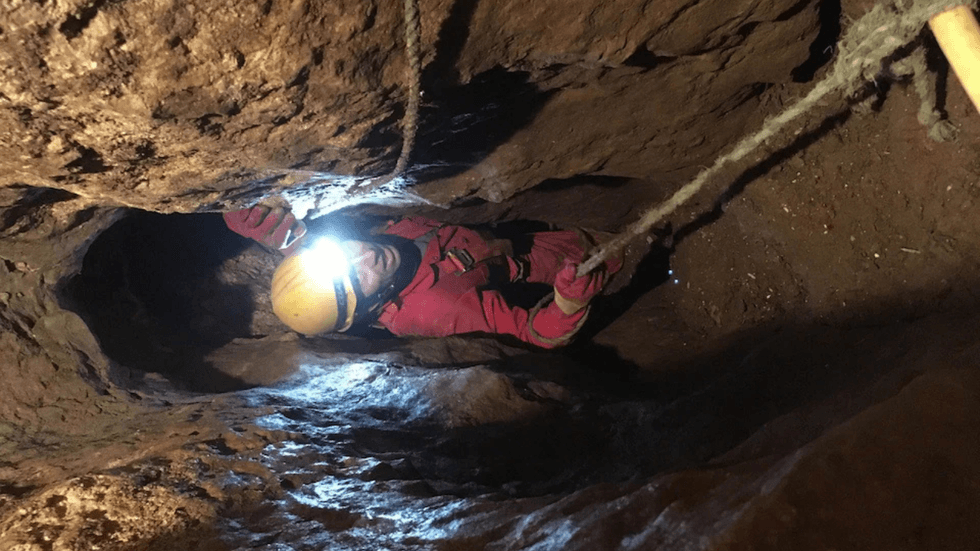
Local archaeologist Martin Stables made the initial discovery of her remains
|UNIVERSITY OF LANCASHIRE
Beyond the young girl's bones, researchers established that a minimum of eight male individuals were also interred within the cave, all showing signs of intentional burial.
These burials span three distinct prehistoric periods: roughly 4,000 years ago during the Early Bronze Age, approximately 5,500 years ago in the Early Neolithic, and around 11,000 years ago in the earliest Mesolithic.
Additional jewellery recovered from the site includes a pierced deer tooth and further beads, all carbon dated to 11,000 years old.
The team said that matching the jewellery's age to the remains strengthens the case for deliberate burial practices.
Prior to this discovery, the previous "earliest northerner" was a leg bone fragment excavated in 2013 from Kent's Bank Cavern, dated to 10,000 years ago.
The findings have been published in the Proceedings of the Prehistoric Society journal.