










Roman treasures, Saxon settlements and even prehistoric sea creatures have been found beneath a new bypass in Leicestershire.
Archaeologists excavating the route of Melton Mowbray's new road have illuminated life in the area spanning millions of years.
Experts identified what they described as a "dynamic prehistoric and Roman farming landscape" beneath the planned road.
The dig covered 11 distinct locations across 62 acres surrounding the town.
Ancient marine creatures transported by glaciers were also unearthed during the investigation.
Archaeological Research Services Ltd has now shared images of its discoveries as the road prepares to open in the coming months.
The £134million bypass took three years to build under Leicestershire County Council's supervision.
Two ichthyosaur fossils emerged from the excavation site.
One specimen included vertebrae from the large marine reptile, while a second find initially appeared to be an ordinary boulder - but contained one of the sea-dwelling lizards' snouts.
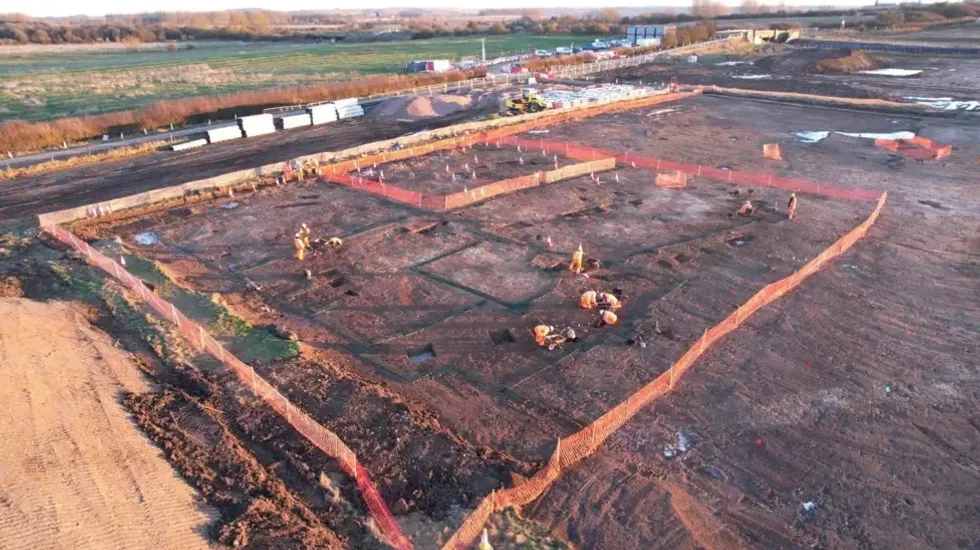
Researchers uncovered settlements in the area dating back thousands of years
|ARCHAEOLOGICAL RESEARCH SERVICES
The nose proved so weighty that two workers were needed to remove it from the ground.
According to ARS, these fossils likely date back to the Lower Jurassic period, and were moved to Melton Mowbray by glaciers approximately 200 million years ago.
Both ichthyosaur specimens will go on public display at Leicester Museum and Gallery on New Walk in Leicester.
Flint tools, blades and vessels were also recovered from the area, as well as the bones of two aurochs.
ARCHAEOLOGY BREAKTHROUGHS IN BRITAIN - READ MORE:
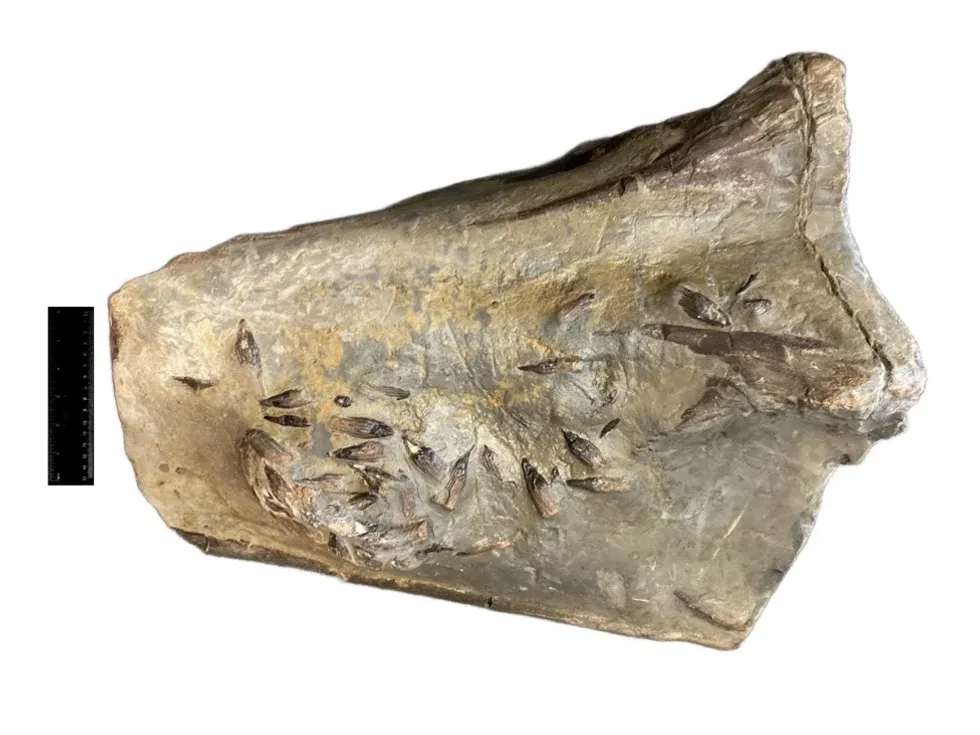
PICTURED: One of two ichthyosaur snouts recovered from the site
|ARCHAEOLOGICAL RESEARCH SERVICES
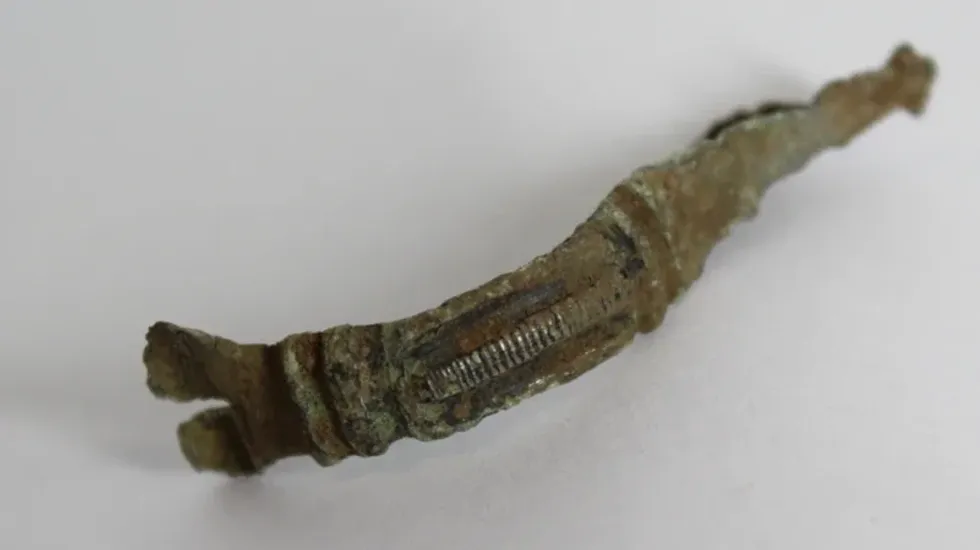
PICTURED: An ancient Roman brooch, one of many treasures to have been recovered from below the new bypass
|ARCHAEOLOGICAL RESEARCH SERVICES
These ancient large cattle once roamed across Europe before habitat destruction and hunting drove them to extinction in the 17th century.
Near the River Eye, archaeologists found evidence of six cremations in pits dating to the late Neolithic and early Bronze Age.
A substantial late Roman farmstead was also discovered.
This site showed signs of Mediterranean-style farming practices, including vineyards and orchards.
Roman roundhouses and burial trenches were identified alongside the agricultural remains.
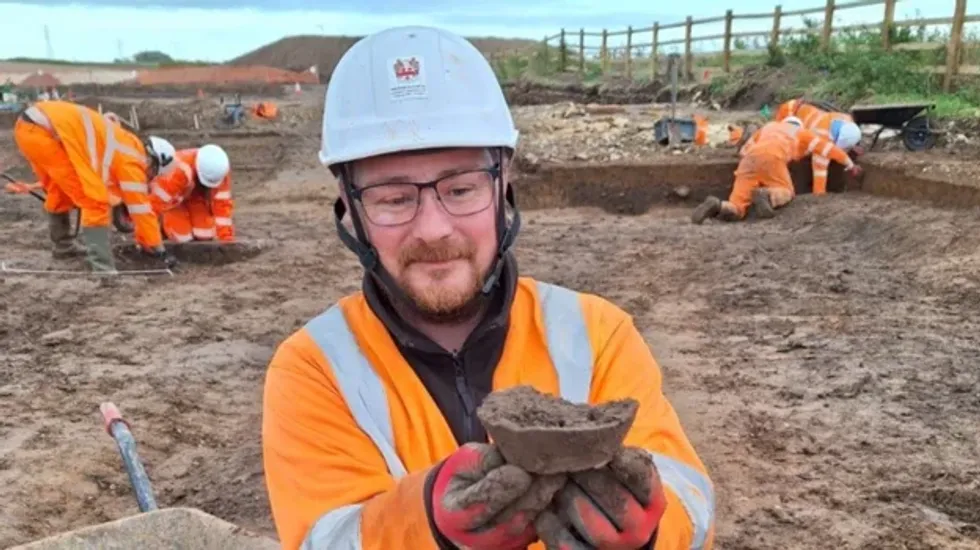
Archaeologists uncovered Roman pottery near the Melton Mowbray site
|ARCHAEOLOGICAL RESEARCH SERVICES
The finds extended into later periods, revealing an Anglo-Saxon settlement featuring sunken buildings, ditches and pits.
Many artefacts have been transferred to Leicestershire County Council's museums service.
Janna Walker, assistant director of highways and transport, said: "There was so much interesting archaeology and palaeontology. It is quite a rich archaeological area.
"That was one of the factors in making this a complex project, but the discovery of these settlements has helped us learn a lot about how people have lived in the Melton area over the ages.
"People will be able to see some of that come out in local museums."