










Bank of England Governor Andrew Bailey has warned that artificial intelligence (AI) is likely to displace British workers in a way comparable to the disruption caused by the Industrial Revolution.
Speaking to BBC Radio 4’s Today programme on December 19, Mr Bailey said the UK must be properly prepared for the scale of change AI could bring to the labour market.
He stressed the importance of investment in education, training and skills to help workers adapt.
"The really important element there is that we have training, education, skills in place, and that we positively encourage and foster that so that people can move into jobs that use AI."
TRENDING
Stories
Videos
Your Say
The Governor said people with AI-related skills would be better positioned in the jobs market.
He added that workers who understand how to use the technology would have improved employment prospects, and the pace of AI adoption raised questions about the future of traditional career pathways.
Mr Bailey highlighted particular concerns about younger and less experienced workers.
He said entry-level roles were becoming harder to secure as businesses increasingly deploy AI tools.
The Governor questioned how this shift could affect long-established professional progression models.

Bank of England Governor Andrew Bailey warns AI could displace UK workers like the Industrial Revolution
|GETTY
Mr Bailey said: "We still need people to rise up through that to be senior consultants, senior lawyers, senior accountants.
"I think we do have to think about, what is it doing to the pipeline of people?"
He said it was not yet clear whether artificial intelligence would fundamentally alter this pipeline, suggesting that if workers use AI alongside their roles rather than being replaced by it, traditional career structures could remain.
"I think we're right to have an eye on that point".
His comments come amid signs of weakening conditions in the UK labour market.
Official figures released this week show unemployment rising to 5.1 per cent in the three months to October.
This is the highest unemployment rate recorded in almost five years.
LATEST DEVELOPMENTS
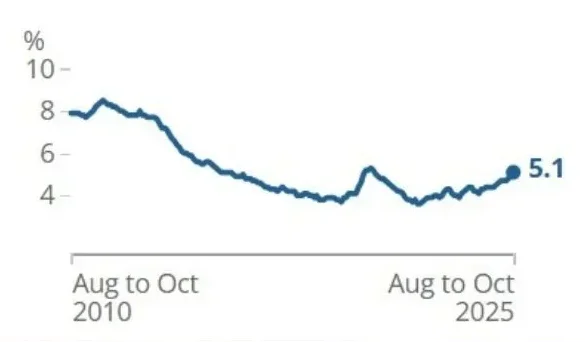
Unemployment rate UK
|ONS
Younger workers have been particularly affected by the downturn.
The Office for National Statistics (ONS) said the number of unemployed people aged 18 to 24 increased by 85,000 over the same period.
This marked the steepest rise in youth unemployment since November 2022.
Economists have attributed the deterioration to several factors.
These include recent Government decisions to increase payroll taxes and raise the minimum wage.
Some business groups have argued these changes have made employers more cautious about hiring junior staff.
Artificial intelligence is also increasingly cited as a factor reducing demand for entry-level roles.
Graduate and junior positions in professional services are seen as especially exposed.
Sectors such as law, accountancy and administration are considered particularly vulnerable to automation.
PwC global chairman Mohamed Kande recently confirmed the firm was cutting back on planned recruitment.
"Now we have artificial intelligence. We want to hire, but I don't know if it's going to be the same level of people that we hire - it will be a different set of people."
He said AI had changed the type of skills the firm now required, and tasks that once took weeks of consultancy work can now be completed in minutes using AI systems.
This has reduced the need for labour-intensive document analysis and data processing.
The shift is altering the traditional business model in which companies outsourced analytical work to large professional services firms.
Mr Bailey drew comparisons with previous technological disruptions.
The Governor referenced fears dating back to the reign of Queen Elizabeth I, when the invention of the knitting machine raised similar anxieties.
"As you saw in the Industrial Revolution, now over time, I think we can now sort of look back and say it didn't cause mass unemployment, but it did displace people from jobs and this is important."
Mr Bailey warned that productivity improvements from new technology often take time to materialise
|GETTY
Despite the risks, Mr Bailey said artificial intelligence could drive future economic growth, describing AI as a potentially powerful boost to productivity in the UK economy.
The Governor said the gains could be "pretty substantial".
However, he cautioned that productivity improvements from new technology often take time to materialise.
Mr Bailey also said policymakers should remain alert to financial risks linked to the sector, warning that valuations of AI companies would need close monitoring amid concerns about a potential bubble, similar to the dotcom crash of the early 2000s.
He said regulators and central banks would need to remain vigilant as investment in artificial intelligence continues to grow.
More From GB News