








A measles outbreak is sweeping through schools and nurseries across north-east London, leaving parents concerned about their children's health.
The UK Health Security Agency confirmed over the weekend the spread has resulted in some youngsters requiring hospital care, with unvaccinated children under 10 bearing the brunt of the illness.
More than 60 suspected cases have now been reported across seven schools and a single nursery in Enfield, according to the Sunday Times.
It's a worrying situation for families in the area, particularly as measles can easily be confused with other common childhood illnesses.
TRENDING
Stories
Videos
Your Say
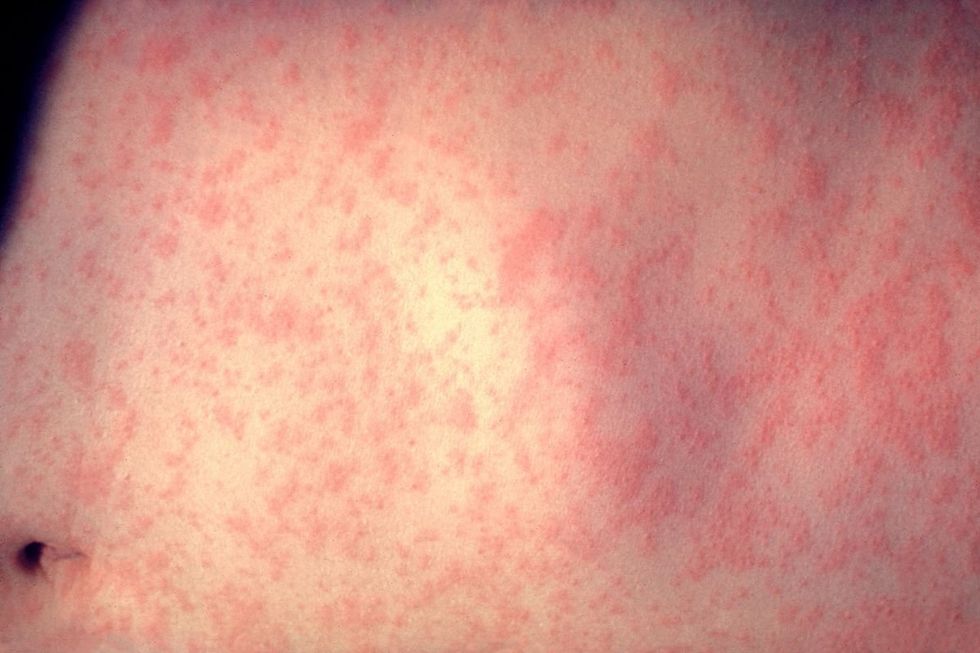
Unvaccinated children under 10 have a higher risk of catching measles
|GETTY
Dr Henrik Premasundaram, a GP at HCA Healthcare UK, has shared guidance on spotting the early signs and knowing when to seek help.
The first few days of measles often look remarkably similar to an ordinary cold, which makes it tricky to identify.
"In the early phase, usually between day one and day four, children with measles tend to have cold-like symptoms such as a cough, fever, runny nose and sore, red, watery eyes," says Premasundaram.
However, there are telltale differences that set measles apart from a standard winter bug.
"Colds are very, very common at this time of year, but children with measles tend to look more unwell, more tired and more miserable than they would with a typical viral infection," he explains.
Light sensitivity is another key indicator, particularly when accompanied by watery eyes.
A rising temperature over several days is also characteristic of the illness, along with children eating and drinking less than usual.
The distinctive measles rash typically emerges around day four or five of the illness.
"A lot of the time it starts on the face and behind the ears, then spreads down to the body, the trunk, the arms and to the legs," says Premasundaram. "The fever often peaks around the time that the rash appears."
LATEST DEVELOPMENTS:
These spots can be raised and merge into blotchy patches, though they're generally not itchy.
Before the rash develops, some children get small white spots inside their mouths called Koplik's spots, which are unique to measles.
The virus spreads incredibly easily through breathing, coughing and sneezing, remaining contagious from four days before the rash appears until four days after.
Parents should seek urgent medical advice if their child becomes increasingly drowsy, struggles to breathe, develops persistent wheezing, or has a fever that won't come down.
Measles can lead to severe health problems, including breathing difficulties, pneumonia, meningitis, blindness and seizures.
"Measles can lead to problems with breathing, infections and problems with the brain, so it can be very serious," says Premasundaram.
Unfortunately, there's no antiviral medication that targets measles directly, so treatment focuses on managing symptoms through rest, plenty of fluids, and using paracetamol or ibuprofen to bring down fevers.
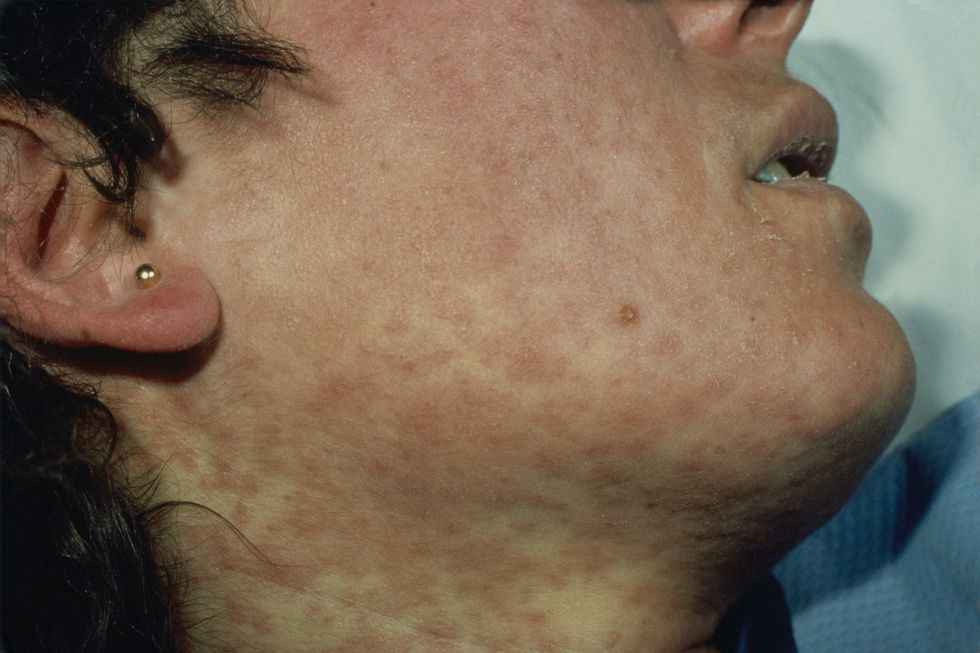
Measles can cause raised spots and merge into blotchy patches
|GETTY
The best defence remains the MMR vaccine, which protects against measles, mumps and rubella.
"Two doses of the MMR vaccine provide really strong protection," says Premasundaram.
Children typically receive their first jab after turning one, with a booster at around three years old.
Parents whose children haven't been vaccinated should speak to their GP, as high uptake is essential given how infectious the virus is.
Our Standards: The GB News Editorial Charter