










Getting a good night's sleep might be more important for your joints than you'd think, according to new research from the UK Biobank.
New findings, published in Arthritis Care & Research, found that those working night shifts and anyone regularly clocking fewer than six hours of sleep face a notably higher chance of developing osteoarthritis.
Scientists from Washington University in St. Louis wanted to determine the extent to which the body's daily rhythms are involved in joint cartilage health.
People who regularly got less than six hours of shut-eye each night showed a 41 per cent greater risk of developing knee osteoarthritis compared to those managing seven hours.
TRENDING
Stories
Videos
Your Say
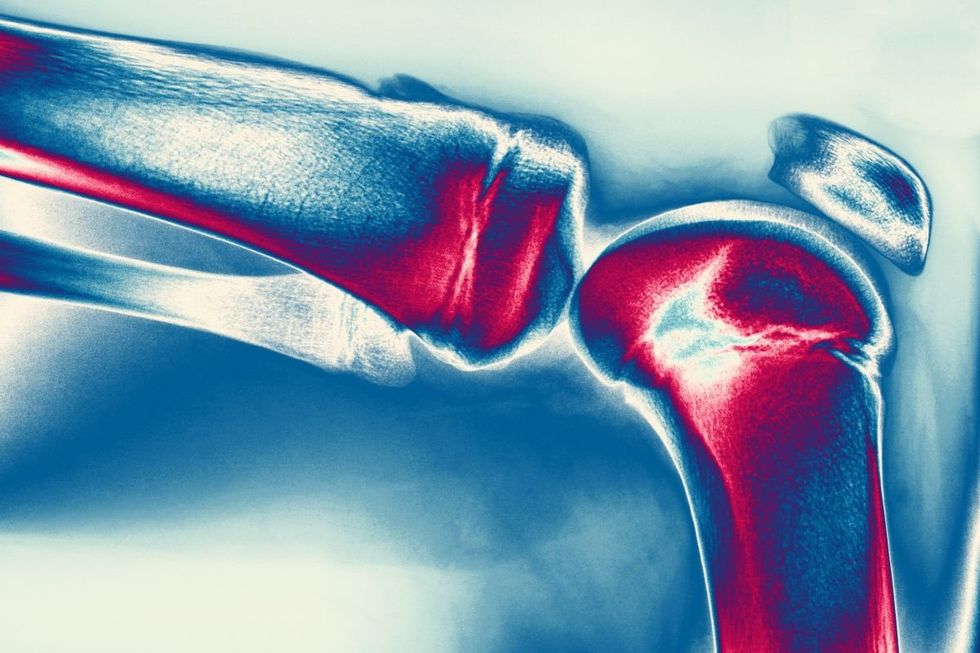
Those who get less than six hours of sleep a night may be at higher risk of osteoarthritis
|GETTY
They were also 31 per cent more likely to need a total knee replacement down the line.
It transpired that quality matters too, as those who typically struggle to drift off or find themselves waking during the night had a 34 per cent higher chance of knee osteoarthritis.
Their risk of needing knee replacement surgery jumped by 40 per cent.
LATEST DEVELOPMENTS:
In addition, people on night shifts had a 24 per cent greater likelihood of developing knee osteoarthritis compared to those working during the day.
Their chances of eventually requiring a knee replacement were 28 per cent higher.
However, the researchers did find that when they accounted for body weight, the links became somewhat weaker.
But even after adjusting for BMI and ruling out participants who already had chronic knee or hip pain, the connections between poor sleep, insomnia and joint problems remained clear across all the outcomes they measured.

'Sleep is a potentially modifiable risk factor for osteoarthritis'
|GETTY
Thankfully, better sleep habits can work hand in hand with other proven approaches to protect the joints.
"Sleep is a potentially modifiable risk factor for osteoarthritis that could be improved with lifestyle changes or sleep hygiene interventions," said Elizabeth Yanik, Assistant professor in the department of orthopaedic surgery at Washington University, St. Louis.
"Sleep can be addressed alongside established prevention strategies, such as physical activity and weight management, to help reduce osteoarthritis risk and delay the need for joint replacement."
Our Standards: The GB News Editorial Charter