










A groundbreaking immunotherapy treatment offers fresh hope for bladder cancer patients, potentially allowing them to avoid radical surgery that fundamentally changes their lives.
The drug durvalumab has demonstrated remarkable results in clinical trials by eliminating tumours and preventing their return while preserving patients' bladders.
Bladder cancer ranks as the ninth most prevalent cancer globally, and those diagnosed with advanced or aggressive forms typically face complete removal of the organ, leaving them dependent on alternative methods to pass urine permanently.
Research conducted by the Institute of Cancer Research in London has revealed that combining durvalumab with existing chemotherapy and radiotherapy treatments significantly reduces recurrence rates.
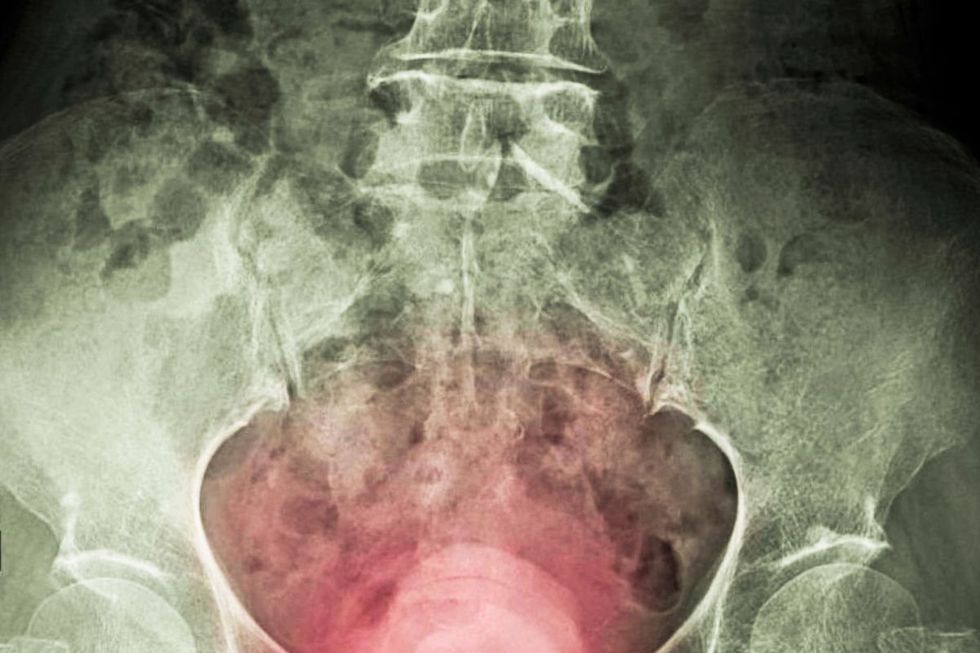
Bladder cancer ranks as the ninth most prevalent cancer globally
|GETTY
The findings were unveiled at the American Society of Clinical Oncology's annual meeting in Chicago, the world's premier cancer conference.
The phase-two trial, supported by AstraZeneca and the University of Birmingham, enrolled 54 patients who received the immunotherapy alongside conventional treatments.
Results proved striking: cancer failed to return in 46 participants, representing 85 per cent of those treated. Previous studies using only chemotherapy and radiotherapy achieved remission in just 60 per cent of cases.
Professor Nick James, who leads prostate and bladder cancer research at the ICR, described the implications as transformative.
"Now, we've shown that with the addition of immunotherapy, the combination of treatments has an even bigger improvement in outcomes, fewer cancers come back," he stated.
"Keeping the bladder means people can avoid major, life-changing surgery and maintain more of their normal daily function and independence.
"I expect this approach to be practice-changing offering bladder cancer patients improved outcomes whilst preserving their quality of life."
The human toll of current surgical approaches was laid bare by artist Tracey Emin, who revealed in 2020 that she had been diagnosed with a "really aggressive" form of the disease.
LATEST DEVELOPMENTS
She subsequently underwent bladder removal surgery, speaking candidly about the consequences in 2021.
"Having a urostomy bag is quite a disadvantage for lots of reasons, and it's something that most people would want to keep a secret," she explained.
"It's a very private thing because, basically, you've got part of your bodily function happening on the outside of your body. It leaks, and things happen. I could be out somewhere public, and it could happen, and people'd just think I've pissed myself or think I've been drinking."
Her testimony underscores precisely why preserving the bladder represents such a significant advance for patients.
The ICR's chief executive, Professor Kristian Helin, emphasised that developing gentler, more intelligent treatments remains central to cancer research priorities.
"These results are a significant step forward for people with aggressive bladder cancer. By adding immunotherapy to chemotherapy and radiotherapy, we may be able to spare patients the physical and psychological burden of having their bladder removed entirely and after one year, we're already seeing a meaningful reduction in the risk of the cancer returning."
Please write at least 4 paragraphs

Radical surgery can cause serious side effects for bladder cancer patients
|GETTY
Michelle Mitchell, chief executive of Cancer Research UK, welcomed the findings despite not being involved in the study.
"Radical surgery can cause serious side effects for bladder cancer patients. Finding kinder ways to treat the disease is incredibly important, and this trial has done exactly that," she said.
She noted that larger-scale research would be necessary to confirm the results, but described the potential as "life-changing" for patients.
Our Standards: The GB News Editorial Charter