










A revolutionary daily tablet has demonstrated the ability to extend survival times twofold for patients suffering from the world's most lethal form of cancer, according to groundbreaking clinical trial findings unveiled at a major international oncology gathering.
The medication, known as daraxonrasib, represents what specialists are describing as one of the most significant advances in pancreatic cancer treatment seen in recent decades.
Results from the study were presented at the American Society of Clinical Oncology's annual conference in Chicago, where the drug has generated considerable excitement among the medical community.
Pancreatic cancer remains notoriously difficult to treat, with existing therapies offering minimal benefit to most patients. Over half of those diagnosed only discover their condition after it has already metastasised.

The medication functions by targeting a protein that drives most pancreatic tumours
|GETTY
The medication functions by targeting a protein called Kras, which drives the vast majority of pancreatic tumours.
This particular protein belongs to the Ras gene family, responsible for sending growth signals to cancer cells even when such division should cease.
More than nine in ten patients with pancreatic ductal adenocarcinoma possess a mutation in the Kras gene, making it an ideal therapeutic target.
LATEST DEVELOPMENTS
Dr Julie Gralow, Asco's chief medical officer, who was not involved with the trial, described the findings as a "game-changer". She added: "I've heard this study described as a home run. I would actually say it's a grand slam."
Dr Rachna Shroff, chief of oncology at the University of Arizona Cancer Center, declared: "These results are landscape-changing. We are seeing unprecedented survival."
The clinical trial enrolled 500 individuals, all diagnosed with pancreatic cancer that had spread beyond the original site.
Those receiving daraxonrasib survived for an average of 13.2 months, compared with just 6.6 to 6.7 months for patients undergoing conventional chemotherapy treatment.
Crucially, the pill also produced fewer adverse effects than standard chemotherapy regimens.
Researchers at the Dana-Farber Cancer Institute in Boston led the investigation, which has been hailed as proof that targeting the Kras protein offers a viable path forward.
Dr Shroff, who has spent 16 years treating pancreatic cancer patients, revealed she was moved to tears upon reviewing the data. "Having treated pancreatic cancer for 16 years, I actually started crying in clinic. This is such an incredibly impactful study for our patients," she said.
Paula Hanford, chief executive of Pancreatic Cancer Action, described the discovery as among the most significant treatment developments she has witnessed.
"For far too long, people diagnosed with pancreatic cancer have had incredibly limited treatment options and survival rates that have remained devastatingly low," she said.
"To see a trial showing the potential to nearly double survival time in advanced pancreatic cancer is hugely encouraging and gives real hope to patients and families facing this disease."
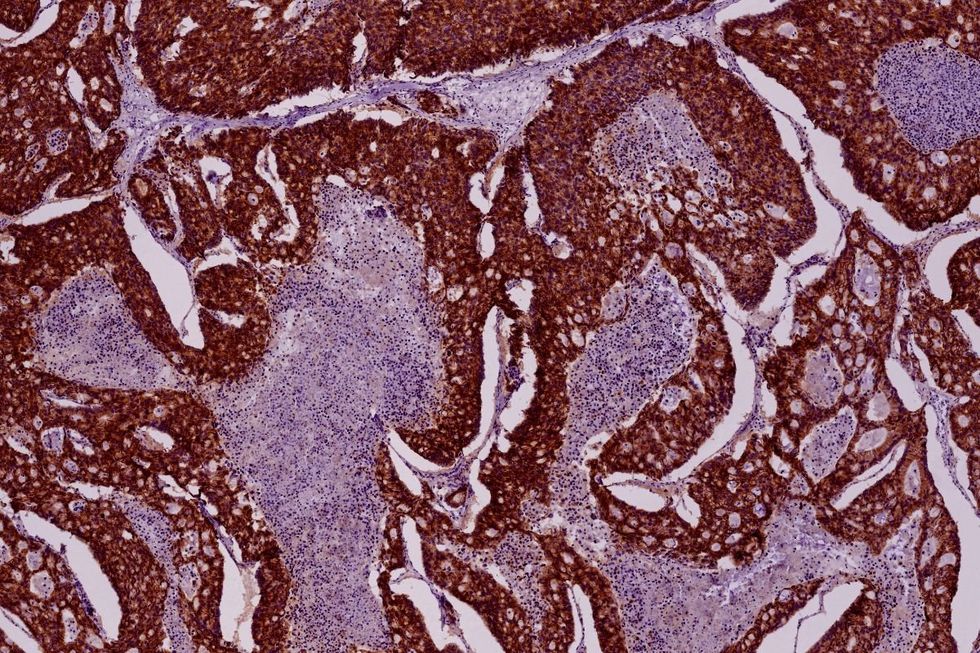
Pancreatic cancer remains notoriously difficult to treat
|GETTY
Anna Jewell, director of services, research and innovation at Pancreatic Cancer UK, emphasised the urgency of making such treatments accessible, noting that half of all pancreatic cancer patients die within three months of diagnosis.
Specialists at the Chicago conference indicated that comparable medications are currently being trialled for lung and colon cancers, raising hopes of further breakthroughs.
Our Standards: The GB News Editorial Charter