










Ed Miliband's announcement that the UK will legislate for an 87 per cent reduction in greenhouse gas emissions by 2040 has been greeted today with enthusiasm in some quarters.
But for North Sea oil and gas producers like me, I must ask the inevitable: is this Net Zero target grounded in engineering and economic reality, or is it simply another political slogan detached from how energy systems actually function? Do not get me wrong; I do not oppose the target. I oppose the fantasy that Britain can regulate, tax and moralise its way to prosperity while dismantling the very industries that keep the country functioning.
I am referring to the Energy Profits Levy (EPL), the so-called windfall tax, of course.
The EPL has done more to hinder progress towards emission targets than any other policy, in my opinion. At one stage, the UK imposed an effective marginal tax rate on North Sea producers so punitive that investing in British energy assets became economically irrational for any serious international operator with alternatives elsewhere.
This matters for the 2040 target in ways that go beyond the obvious. The UK's clean energy ambitions – offshore wind, carbon capture, hydrogen, electrification of industry and transport – are entirely dependent on infrastructure such as pipelines, compression terminals, subsea systems, storage facilities and offshore engineering capability.
Much of that infrastructure already exists in the North Sea because the oil and gas sector built it, financed it and continues to maintain it. Destroying that ecosystem before viable alternatives are operational is not climate leadership. It is strategic vandalism.
If the EPL were repealed or fundamentally restructured, capital would return to the UK Continental Shelf almost immediately. Life-extension projects currently deemed uneconomic would once again become viable. The platforms stay operational. The terminals remain open. The pipelines remain pressurised. And once those assets survive, they can realistically be repurposed for carbon storage, hydrogen systems and offshore electrification.
And just as traditional energy and renewables are not opponents, the transition of infrastructure is part of the bigger conversation on the energy transition.

Ed Miliband legislated yesterday for an 87 per cent reduction in greenhouse gas emissions by 2040
|PA
The Government points to its £15billion warm homes plan and renewable ambitions as evidence of progress. But this avoids the central question: who is going to pay for the physical industrial backbone required to support an 87 per cent decarbonised economy by 2040?
Today, that gap is still being bridged by domestic gas. Gas produced in the UK under British environmental regulation, British methane standards and British oversight is categorically preferable to importing LNG from overseas with higher lifecycle emissions, greater shipping intensity and far weaker environmental accountability. And let us stop pretending Britain is somehow saving the planet alone.
The UK accounts for less than one per cent of global emissions. Even if Westminster achieved absolute net zero tomorrow by some miracle of engineering, the impact on global emissions would be marginal unless the rest of the world follows.
But look at what much of the world is actually doing. Countries are prioritising affordability, industrial competitiveness and energy security.
Even Governments publicly championing Net Zero targets continue simultaneously expanding hydrocarbon production and investing billions into long-term oil and gas capacity.
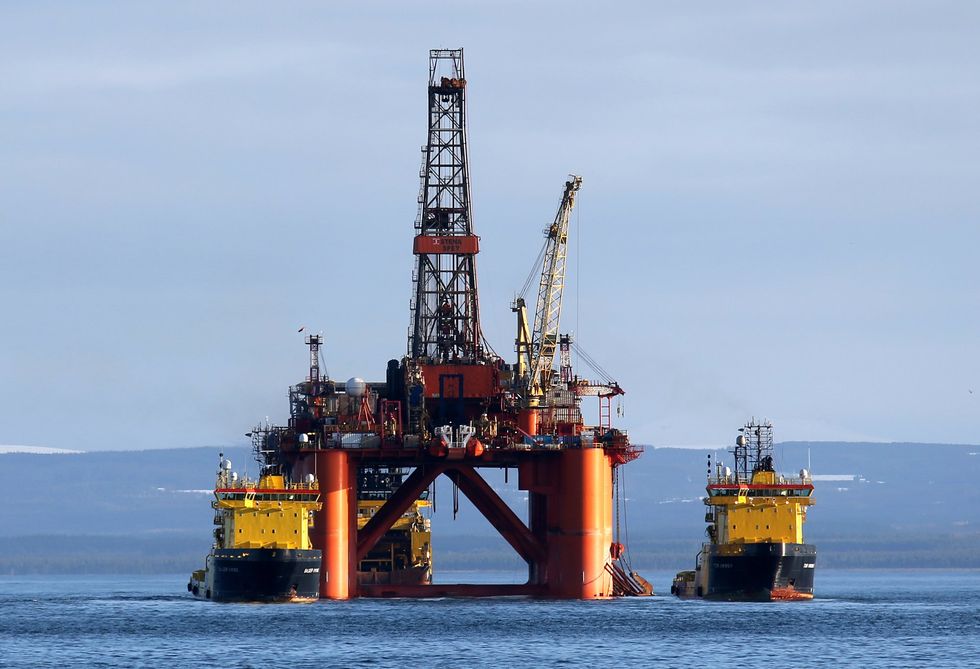
Gas produced in the UK under British environmental regulation, British methane standards and British oversight is categorically preferable to importing LNG from overseas, writes Francesco Mazzagatti
|PA
Britain seems uniquely determined to move in the opposite direction: weakening domestic production, increasing import dependence and driving investment overseas while pretending this constitutes leadership.
The Climate Change Committee has said the seventh carbon budget is deliverable. But even if taken at face value, the questions remain: Deliverable under what assumptions? Deliverable with what level of investment? Deliverable with what grid infrastructure? Deliverable with what storage capacity? Deliverable with what industrial base left standing in the current tax environment? These are not rhetorical questions. They are the engineering questions that any serious delivery plan must answer.
As a member of the European Board of IOGP, I fully support credible emissions reduction measures, particularly around methane reduction, operational efficiency and infrastructure modernisation.
The industry has already made substantial progress in reducing operational emissions intensity. But there is a major difference between pragmatic decarbonisation and ideological deindustrialisation.
Britain still has an opportunity to lead, but only if it abandons performative policymaking in favour of industrial realism. The best way forward? Repeal the EPL. Create a stable, long-term fiscal framework that rewards investment in domestic energy production and transition infrastructure. Support the North Sea not because the country is opposed to renewables, but because renewables without reliable backup, infrastructure and industrial capability are simply not enough. Stop treating the oil and gas industry as an enemy to be politically exploited while quietly depending on it to keep the lights on. And let us North Sea producers be part of the transition conversation.
North Sea producers are not obstacles to the transition. We are the only reason the transition remains technically achievable at all.