


All products and promotions are independently selected by our experts. To help us provide free impartial advice, we will earn an affiliate commission if you buy something. Click here to learn more


"Millions of UK households" could lose access to traditional terrestrial television in the next five years, UK debt expert Maxine McCreadie warned GB News. Under current UK Government policy, traditional over-the-air television is only guaranteed until 2034, although regulator Ofcom is reviewing whether this cut-off date should be extended.
While streaming can be more convenient — and unlocks Sky Glass-like features like the ability to pause or rewind live television – there are downsides. Aside from the BBC licence fee, there is currently no cost when tuning into linear TV channels via an aerial. Likewise, if your home has a satellite dish fitted, Freesat lets you watch dozens of free-to-air channels at no cost.
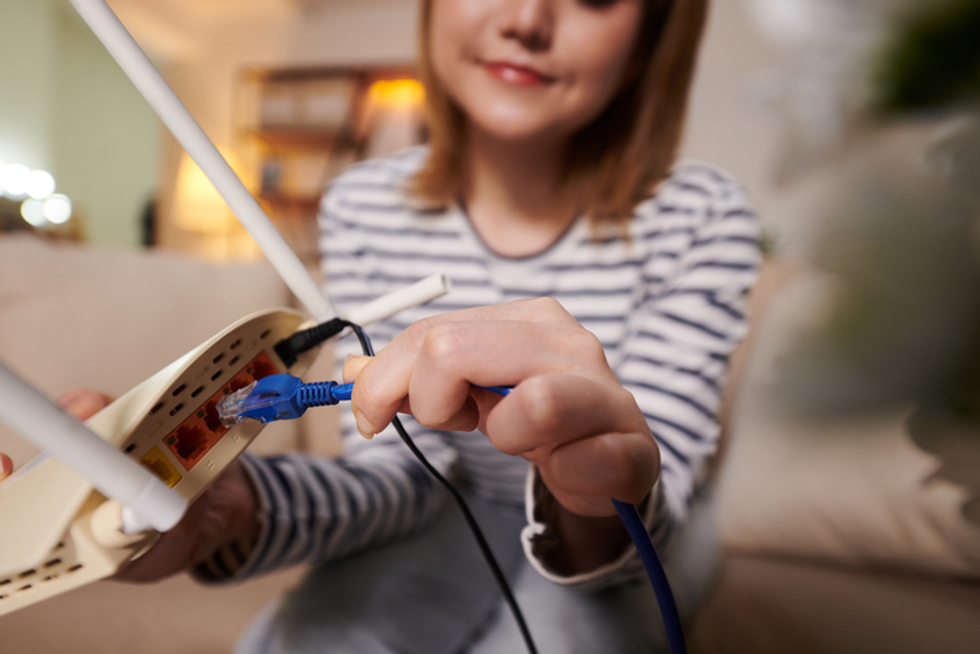
But that isn't the case for broadband-based television, which requires an internet connection in your home.
You'll need a minimum connection speed of 10Mbps for Freely, with most broadband companies charging at least £10–£15 a month for the sort of speed you'll need to watch.
While that might seem reasonable, these costs add up over time – adding a £120 bill to your Direct Debit that would've necessarily have been there if you watched via Freeview.
A spokesperson for the Broadcast 2040+ campaign, which hopes to safeguard broadcast TV and radio, told GB News: "Broadband coverage is not the same as take-up. Reliable streaming of live TV in the home, particularly across multiple devices, typically requires high broadband speeds, with around a quarter of households not taking 30 Mbps services and the overall broadband market flat.
It should be noted that 94% of existing UK household connections are 30Mbps or greater, as per a recent report from Ofcom.
However, there are further challenges with adequate reception on sets around the home.
"Forcing households onto broadband simply to watch basic TV would impose new costs and create new exclusions. If the Government were to underwrite the cost for those who cannot pay, it could easily cost £1billion per year – an ongoing liability, with people losing their TV if it were ever withdrawn."
 | BROADBAND GENIE PRESS
This shake-up could set back 'millions' of UK households financially.
Maxine McCreadie, a personal finance expert at UK Debt Expert, told GB News: "With news that Freeview could be 'turned off' as soon as 2030, many people are concerned about the rising cost of TV and entertainment. Switching off Freeview wouldn't just change how we watch TV, it would force millions of households into paying for new broadband and streaming services just to access what is currently free.
"At a time when many are already cancelling their broadband and subscriptions due to rising cost pressures, this feels like a step backwards. Any move away from free terrestrial TV also risks deepening financial and digital exclusion for older people and those on low incomes."
There have been additional concerns that several groups, including the elderly or disabled, as well as rural and low-income communities, will miss out on free-to-air television if it switches over to broadband-only television.
That's because vulnerable members of society are more likely to face barriers to uptake of newer technologies, like cost, location, or digital literacy ― dramatically increasing the risk that they're excluded from essential TV programming like live sports coverage, news, and entertainment.
LATEST DEVELOPMENTS
According to a recent study commissioned by Sky dubbed Stream On: The Future of UK TV – which reinforces the possibility of internet-delivered TV in the next few years — a vast number of us have already made the switch, with 94% of UK adults having access to the internet at home and 92% of us relying on one video-on-demand (VOD) service, like Netflix, Prime Video, BBC iPlayer, ITVX, and others.
The Broadcast 2040+ campaign spokesperson said: "Sky’s report confuses interest in connected TV features with consent to scrap universal free-to-air television. The public is clear they do not want to be forced to pay for a fixed broadband connection to watch TV. Nearly eight in 10 say terrestrial TV should continue beyond 2034 and more than seven in ten support extending government protections."
Thousands don't want to see Freeview TV retired. There's an active online petition circulating across the UK to save Freeview TV, by the non-profit organisation Silver Voices.
In 2022, five organisations came together to launch the Broadcast 2040+ campaign over a shared concern that there was no Government commitment to keeping broadcast TV and radio available beyond 2034
|BROADCAST 2040+ PRESS OFFICE
The Broadcast 2040+ campaign spokesperson stated: "Over 100,000 people have now signed a petition, launched only recently, by Silver Voices calling for Freeview to be protected, highlighting the strength of feeling from viewers.
"The forecasts in the report can also be disputed. Independent analysis by Mathew Horsman shows around 5.4 million households are still expected to rely on Freeview on their main set in 2034, and 2.9 million even in 2045. That is millions of homes, not a marginal rump."
These figures are disputed. Data from the Department for Digital, Culture, Media & Sport estimates that by 2035, only 1.9 million households will still only be using an aerial to access TV, with 700,000 of those not having broadband at all.
Based on the figures in the Sky-backed study, by the start of the 2030s, just 330,000 (2.2%) UK households will still need help to make the switch to broadband-powered broadcasts.
This would be quite the decrease from prior numbers. As recently as 2023, there were a total of 3.9 million households not using internet-delivered TV.
Broadband expert Alex Tofts told GB News, "Current broadband infrastructure gaps are still significant. 44,000 UK homes cannot access decent broadband speeds. These homes represent some of the hardest to reach areas. Without addressing these challenges, a move to internet-only TV could risk cutting off some of the most vulnerable households."
In addition to the concerns over the digital migration, Freeview TV's broadcast licence is set to expire in 2034.
Downing Street is reviewing the future of television distribution in the UK. For free-to-air broadcasts to continue beyond the current deadline, the UK Government will need to extend multiplex licences to allow television channels to leverage the Digital Terrestrial Television (DTT) platform, more commonly known as Freeview, to broadcast over the airwaves nationwide.
A spokesperson from the Future TV Taskforce, a group made up of the public service broadcasters and Everyone TV, said in a statement: “The way viewers are watching television is changing and so is the way it’s delivered into our homes. With DTT licences due to expire in 2034, the Government is reviewing how free TV will be provided in the future. No decisions have been made, and 2034 is not a ‘switch-off date’. The debate is about how to protect free television for the long term, not whether it should continue.
"Free TV is an essential public service for millions of people and the focus now is on ensuring it can be delivered in the most effective and sustainable way in the years ahead. A transition to delivering TV over the internet as part of wider digital inclusion strategy, has the potential to close the digital divide once and for all. With under a million homes not online today, we should ensure that everyone can continue to access trusted UK content as technology and viewing habits evolve.”
There's no set deadline for the latest UK Government review, but the last time the DTT licences were up for renewal, the consultation ended in February 2021 ahead of an early 2022 deadline. In other words — we're unlikely to find out the outcome for a few years.
Broadcast 2040+ campaign spokesperson said: "No decision has been taken to switch off terrestrial television. Ministers should give this vital public service the certainty and protection it deserves into the 2040s. Viewers enjoy the benefits they get from a hybrid viewing environment. We should innovate without dismantling the only platform that guarantees universal, resilient access to public service broadcasting.”
However, the industry is already pivoting towards a streaming-only future in the UK.
As well as major changes to BBC iPlayer, rival Channel 4 has shuttered five of its Freeview channels and told staff to consider streaming before approving any new commissions.
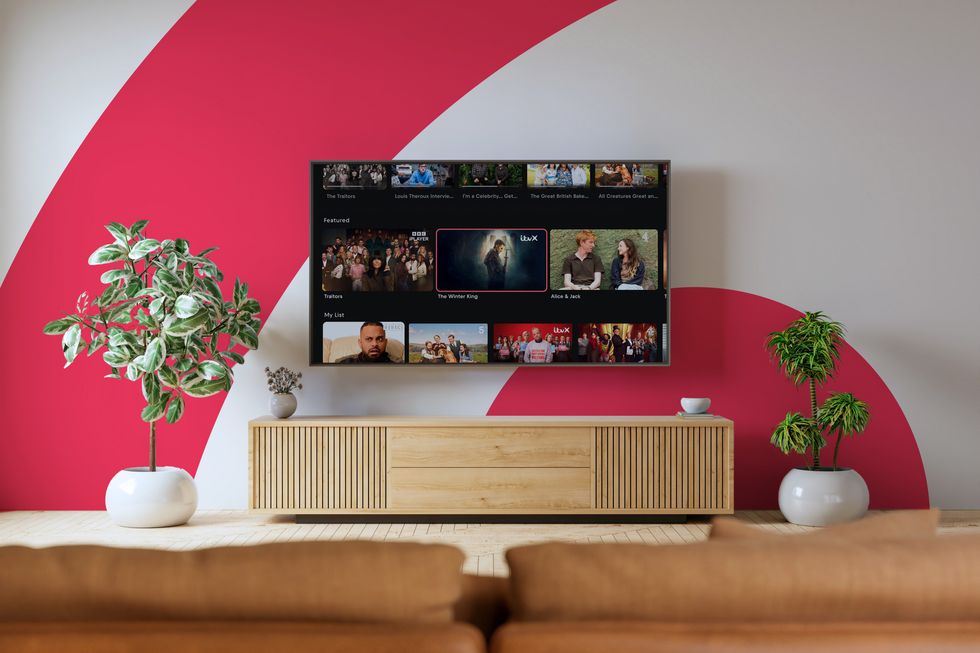 Freely is the successor to Freeview, offering access to an unrivalled selection of free-to-air channels and on-demand catalogues over a Wi-Fi connection — with no aerial needed | EVERYONE TV PRESS OFFICE
 But the biggest shake-up that could enable an internet-only television experience arrived relatively recently from Everyone TV, a joint effort between the UK's biggest broadcasters ― the BBC, ITV, Channel 4, and Channel 5 ― to replicate the experience of watching Freeview and Freesat with only a Wi-Fi connection.
Live free-to-air channels are streamed over broadband, so there's no need to connect your TV to an aerial, meaning it can be positioned anywhere in the home. Everyone TV also runs Freeview and Freesat, although its newest invention is expected to overtake both by the end of the decade.
At launch, Freely was only available on new Smart TVs built from the ground up to support the IP-based platform, there's no pathway to upgrade a Freeview-compatible television to the newer system. But late last year, French manufacturer Netgem launched the first dedicated set-top box to bring Freely to any television.
British brand Manhattan has followed up with its Aero 4K Streamer, which brings internet-based live television for a cheaper £69 price tag. Clearly, this is a winning formula, as the new box sold-out within hours.
Stay tuned to GBN Tech as we continue to monitor the switch-off.