









Nasa's Voyager 1 is about to hit a remarkable milestone that puts the vastness of space into perspective nearly 50 years on since it left Earth.
Come November 2026, the probe will become the first spacecraft to reach one light-day from Earth – a staggering 16 billion miles away.
This means that any command sent to Voyager 1 will take a full 24 hours to arrive, travelling at the speed of light. It will then take another 24 hours for a response.
"If I send a command and say, 'good morning, Voyager 1,' at 8am on a Monday morning, I'm going to get Voyager 1's response back to me on Wednesday morning at approximately 8am," explained Suzy Dodd, Voyager project manager at Nasa's Jet Propulsion Laboratory.
In order to keep in touch to Earth, the probes transmit data at just 160 bits per second, roughly comparable to dial-up internet speeds.
"The distance that we are away from the Earth takes much longer to get a signal there, and the signal strength just dissipates," Ms Dodd said. "It takes multiple antenna arrays to gather that signal back."
This slow data rate means the team receives only limited information about how each spacecraft is doing, and quick fixes simply aren't possible.
However, both Voyagers were built to look after themselves.
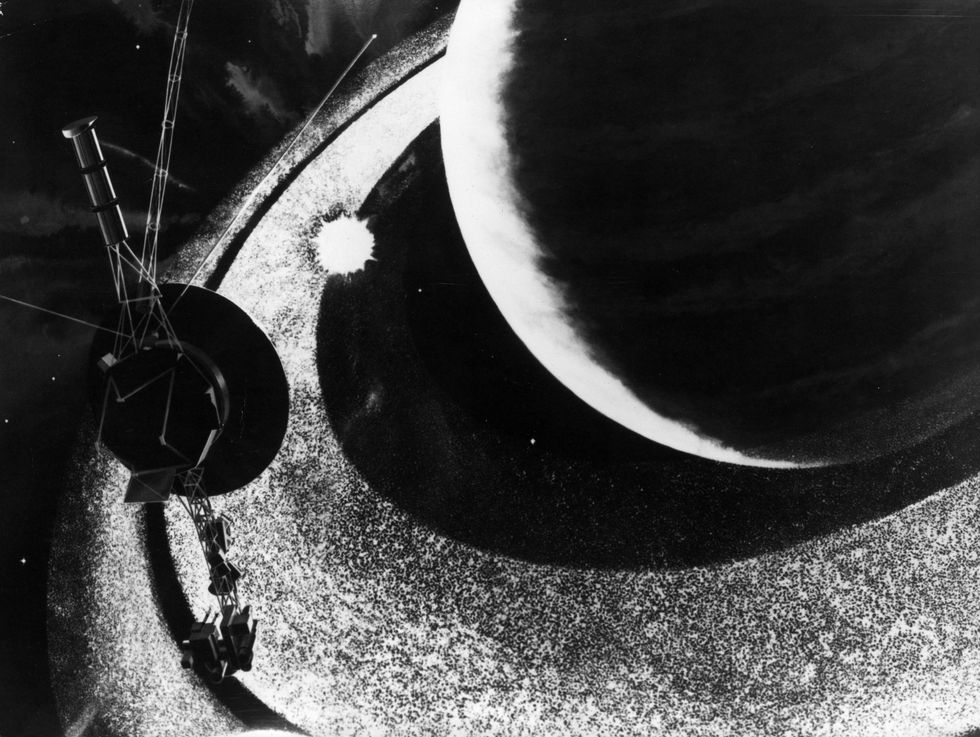
Nasa's Voyager 1 is about to reach a light day away from Earth, nearly 50 years on since it left Earth
|GETTY
"If they get something going wrong, they can put themselves in a safe state so that they can wait until we're able to talk to the spacecraft and figure out what the problem is and resolve that issue," Ms Dodd said.
The team has been making difficult choices for years to keep these spacecraft going as long as possible, switching off engineering systems and instruments to save precious power.
The mission began in the late 70s, when Jupiter, Saturn, Uranus and Neptune happened to line up in a way that occurs only once every 175 years or so.
Such alignment made it possible for a spacecraft to visit every planet, gaining "slingshot" momentum from gravitational pulls - the result made for spectacular and groundbreaking results.
LATEST DEVELOPMENTS:
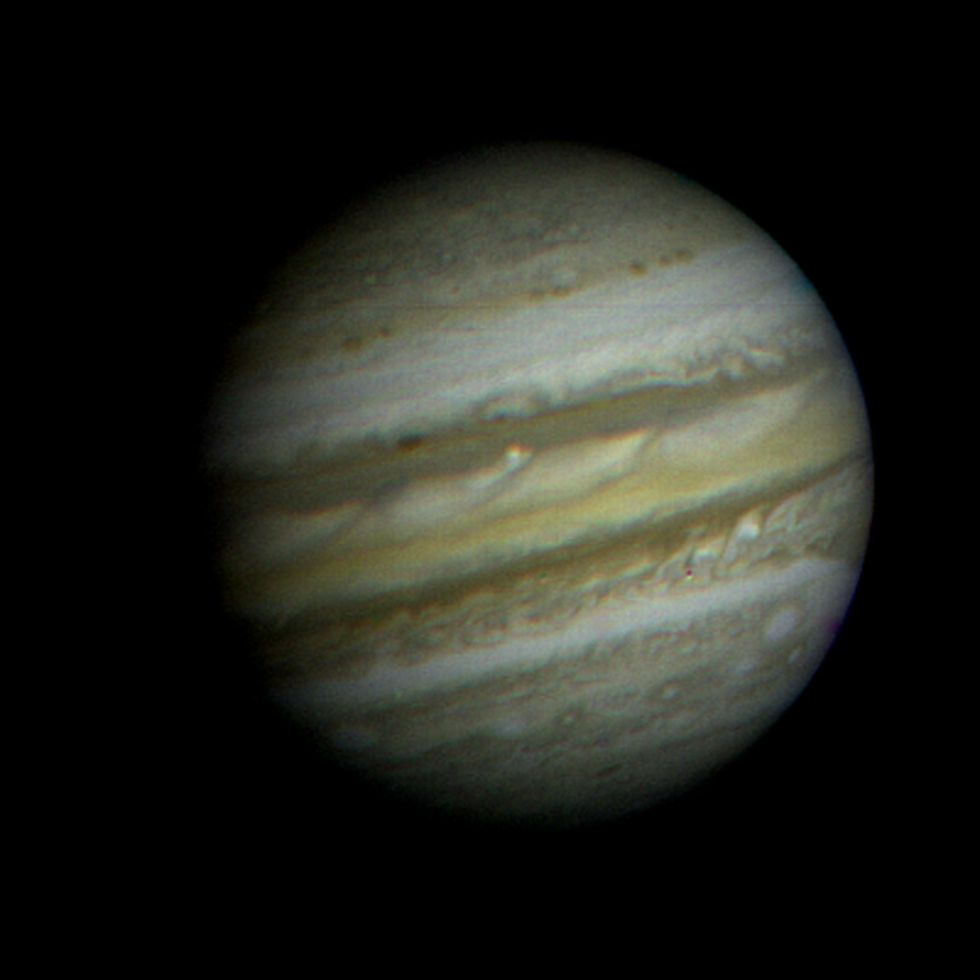
Voyager 1 took this photo of Jupiter in 1979
|GETTY
Reaching Jupiter in 1979, the Voyagers revealed the planet’s violent and complex atmosphere for the first time.
Voyager 1 provided the first detailed images of Saturn’s atmosphere and its rings, while Voyager 2, following behind shortly after, flew even closer.
Voyager 2 remains the only spacecraft to have studied the four outer planets at close range.
Both spacecraft bear a golden record that is engraved with diagrams on where the sun is located and how to decode its signals into pictures. When played, the record includes sounds of children speaking, a baby crying, waves and thunder.
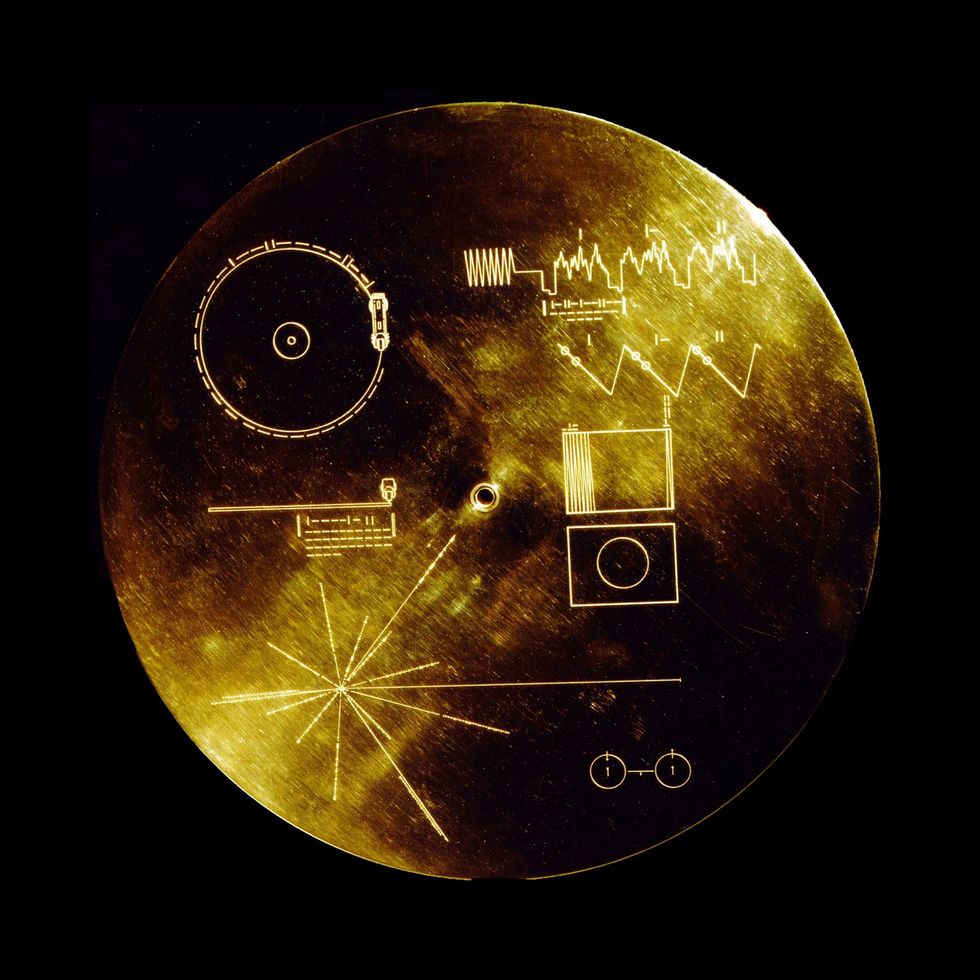
Both voyagers bore a golden record that included sounds of children speaking and a baby crying
|GETTY
The team behind the Voyager missions spans generations – Nasa retirees in their 80s still advise on specific subsystems, while some of the youngest team members have parents who weren't even born when the probes launched in 1977.
"That kind of intergenerational effort on Voyager is really rewarding to see," Ms Dodd said.
She reckons at least one spacecraft can keep going for another two to five years, though she admits the job gets tougher with each passing year.
"I love these spacecraft. They're ambassadors for us here on Earth," she said.
Our Standards: The GB News Editorial Charter