









Archaeologists working on one of Britain's biggest ever digs have found a remarkable Anglo-Saxon burial ground which experts have described as being of "national importance".
The discovery was made during preparatory work for the Sizewell C nuclear power station near Leiston in Suffolk.
The high-status grave contains two people buried alongside a fully harnessed horse, complete with weapons and personal belongings.
The burial dates back to between the 6th and 7th centuries, placing it firmly in the same era as the famous ship burials at Sutton Hoo.
TRENDING
Stories
Videos
Your Say
Oxford Cotswold Archaeology, the team behind the excavation, identified at least 11 burial mounds arranged across a prominent landscape point near Theberton.
The sandy Suffolk soil means that, instead of preserved bones, the acidic ground left behind what archaeologists call "sand silhouettes", which capture the outlines of the bodies in striking detail.
Len Middleton, the project officer leading the site for Oxford Cotswold Archaeology, said: "One barrow, containing a horse and two individuals buried with weapons and personal items, stands out as a 'princely' burial part of the same elite tradition seen at Sutton Hoo, Snape and Prittlewell.
"Discoveries like this are of national importance because they deepen our understanding of power, belief, and identity in early medieval England, and how those ideas were expressed along the East Anglian coast."
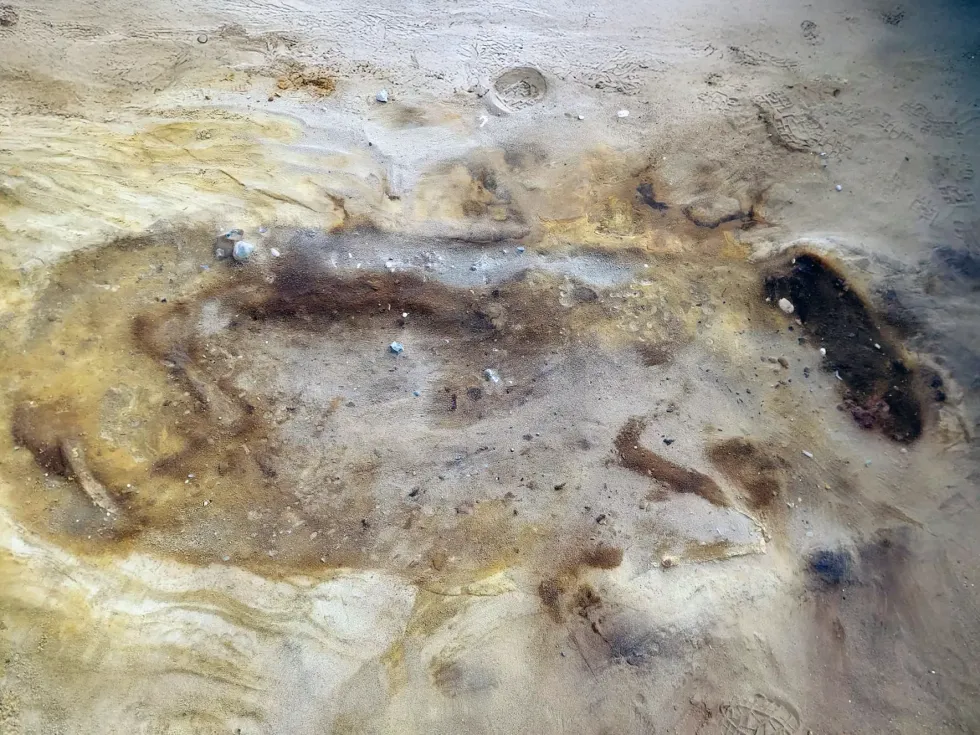
Due to the acidic ground, bones and flesh melt away into 'sand silhouettes'
|OXFORD COTSWOLD ARCHAEOLOGY
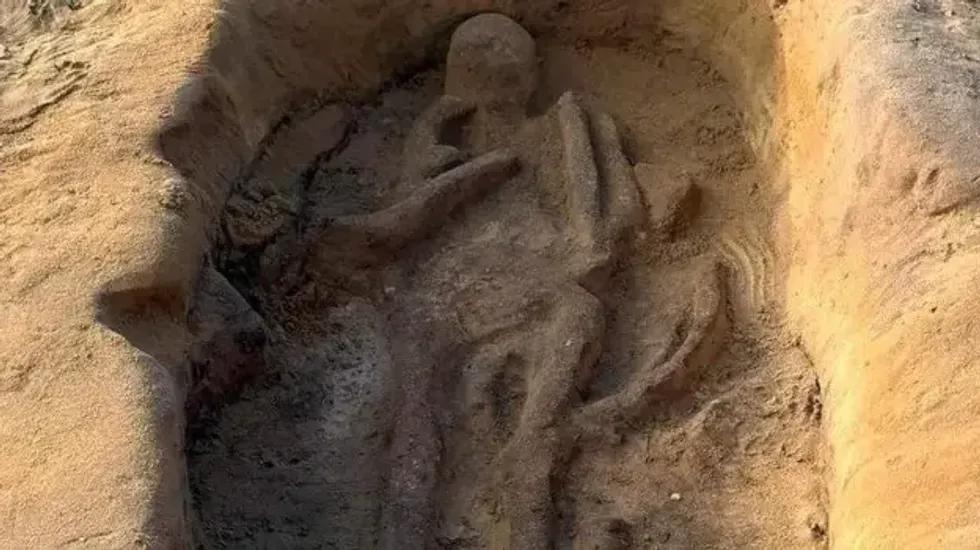
The outlines of the bodies were captured in striking detail
|OXFORD COTSWOLD ARCHAEOLOGY
The cemetery contained both cremation and inhumation burials, many furnished with weapons, jewellery and vessels.
Around 200 archaeologists are working across 70 different sites, excavating roughly 2 million square metres of land, making it the largest and most complex archaeological project of a generation.
Back in 2023, the team also discovered a hoard of 321 silver coins from the 11th century, wrapped in lead and cloth. They nicknamed it "the pasty" because of its shape.
Other finds span an incredible 40,000 years of human history – including a Neanderthal hand axe, arrowheads dating to 4,000BC, and an extremely rare Iron Age oak ladder.
LATEST DEVELOPMENTS:
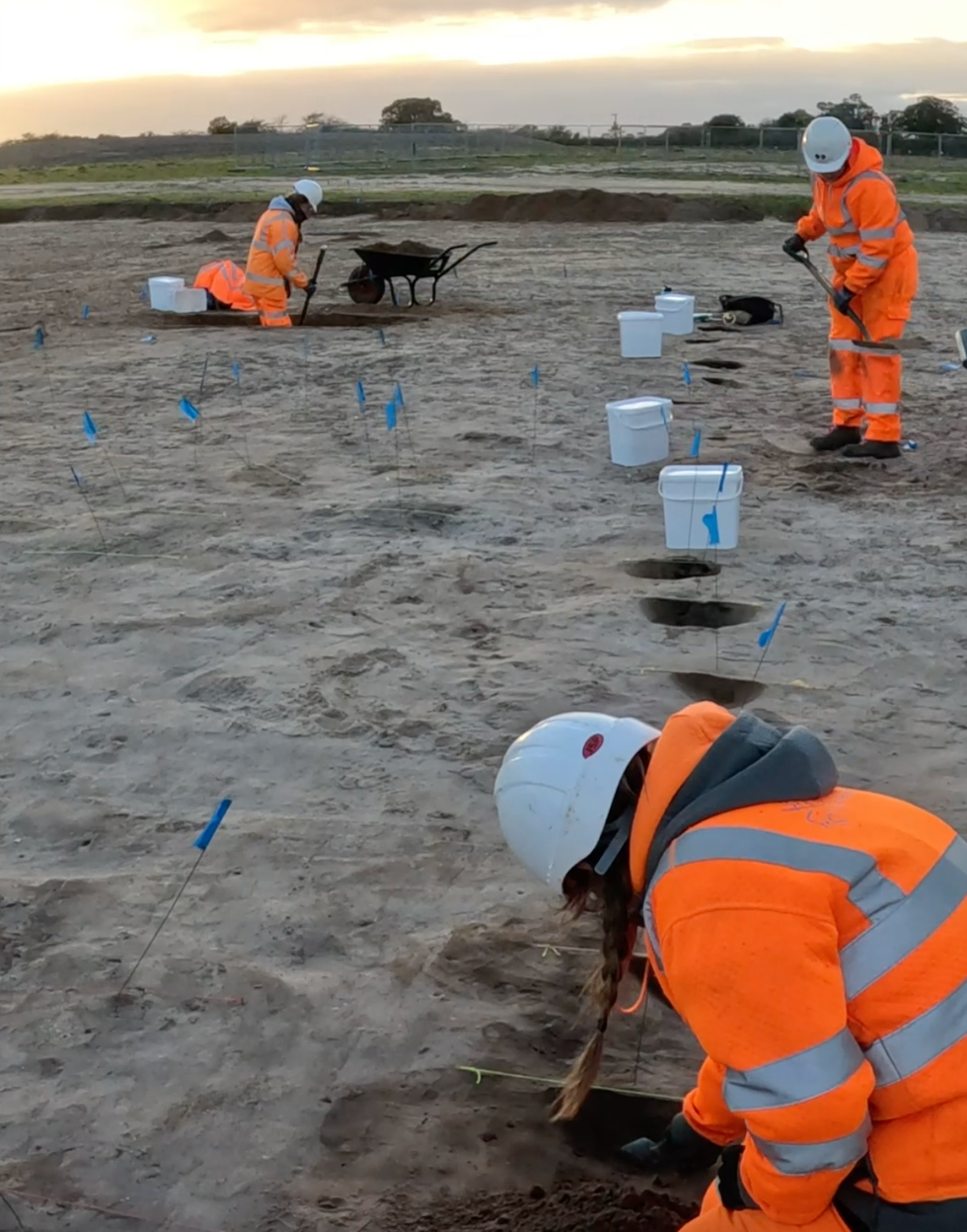
Archaeologists working on one of Britain's biggest ever digs have found a remarkable Anglo-Saxon burial ground that's being described as nationally important
|OXFORD COTSWOLD ARCHAEOLOGY
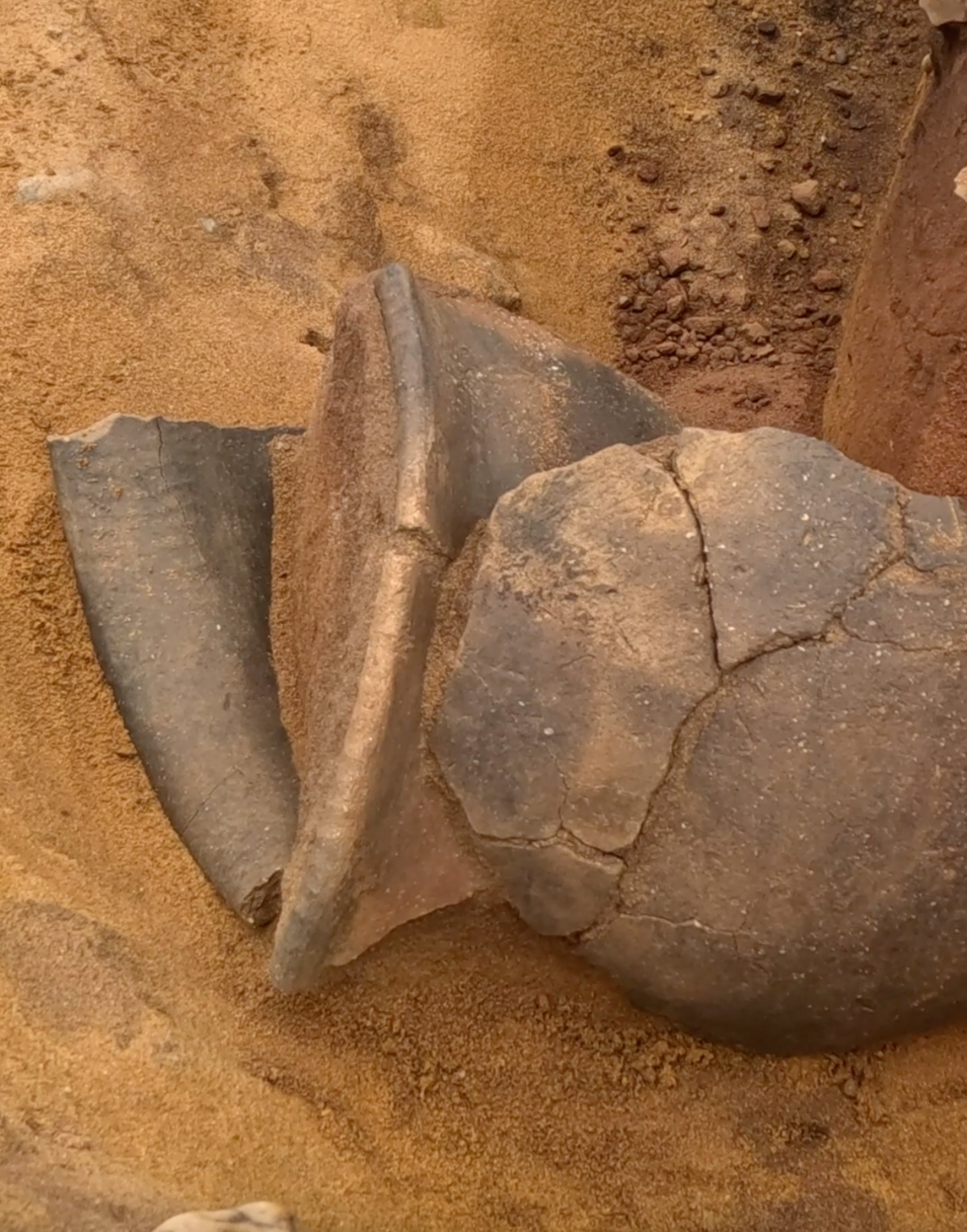
The team have made numerous discoveries at the site
|OXFORD COTSWOLD ARCHAEOLOGY
There's even a sealed bottle of beer from a Second World War site, still capped after all these decades.
The discoveries will feature on BBC Two's Digging for Britain this Wednesday at 9pm, with Rosanna Price from Oxford Cotswold Archaeology appearing throughout the programme.
Ms Price, who grew up in Suffolk, said: "I cannot overstate the privilege of watching my county's expansive and epic history be revealed through the hard work of everyone in the OCA team."
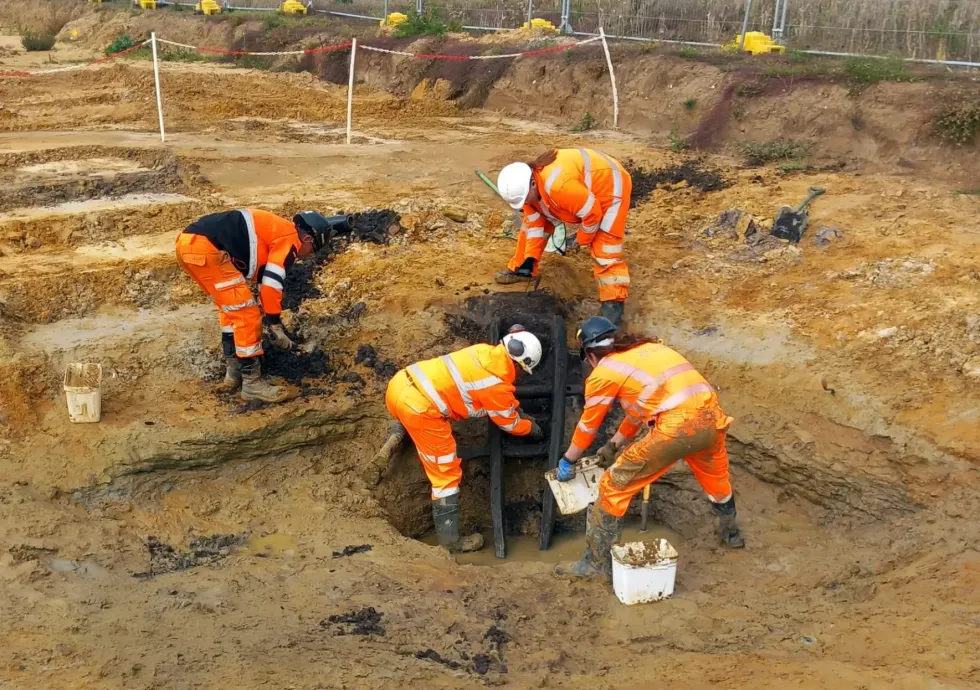
One of the finds at the site was an intact Iron Age ladder made from oak
|OXFORD COTSWOLD ARCHAEOLOGY
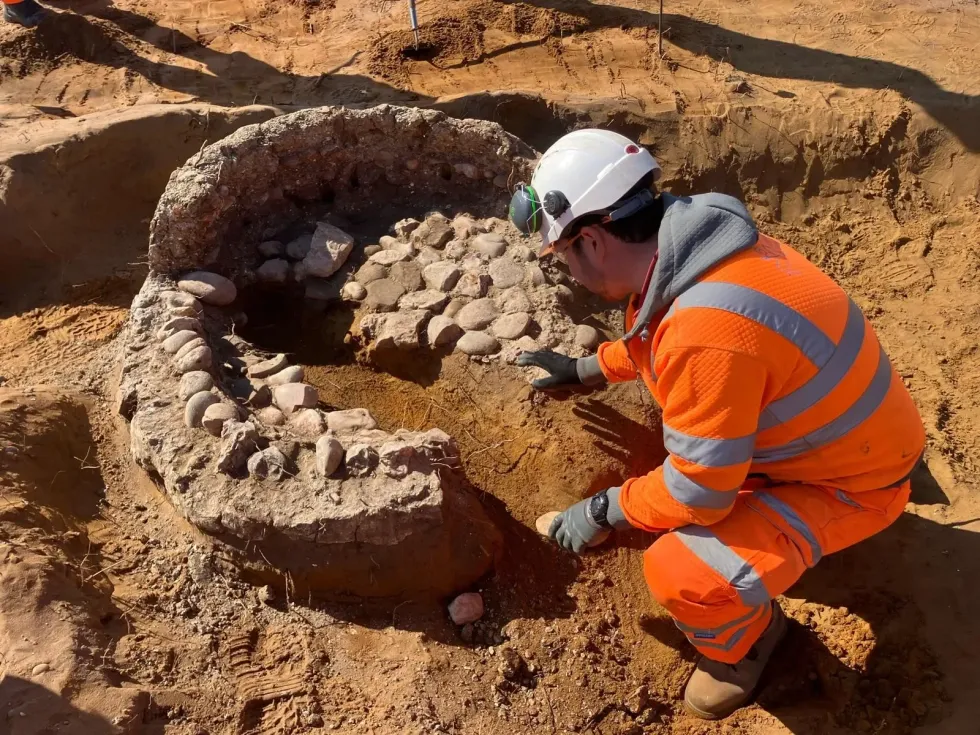
Len Middleton described it as 'a once-in-a-career type of excavation'
|OXFORD COTSWOLD ARCHAEOLOGY
There's an open weekend at Yoxford Village Hall on February 21 and 22, running from 10am to 4pm with family activities and archaeologists on hand.
Suffolk County Council's deputy cabinet member for archaeology, Debbie Richards, said: "Suffolk continues to reveal its stunning past, and the magnitude of these discoveries should not be underestimated."
All the artefacts will eventually be deposited in the council's archive for future research and museum display.
Our Standards: The GB News Editorial Charter