










Scientists have urged space agencies to set up guidelines around sex before "things get out of hand" as we enter a "new era of space exploration".
With long-duration missions to the Moon and the growth of commercial space tourism, experts argue there is an "urgent" need to look more closely around human reproduction beyond Earth.
In a new study published in the journal Reproductive BioMedicine Online, the scientists argue the "question of human fertility in space is no longer theoretical but urgently practical".
Despite more than 65 years of human spaceflight activities, "little is known" about its effect on reproductive systems during longer missions.
TRENDING
Stories
Videos
Your Say
Giles Palmer, a clinical embryologist and one of the authors of the paper, said guidelines are required before "things get out of hand", The Times reports.
The study notes: "As access to space expands beyond elite astronauts and cosmonauts to include wealthy tourists, civilian crews, and commercial clients, there is an urgent need to reassess existing physiological, medical and bioethical frameworks.
"National space agencies, such as the National Aeronautics and Space Administration (NASA), European Space Agency (ESA), and the Japan Aerospace Exploration Agency (JAXA), have historically upheld an applied research-driven, safety-first ethos.
"Conversely, commercial enterprises are motivated by innovation, market competition, and profitability, and private companies plan long-duration missions and future extraterrestrial settlements."

Experts argue that 'little is known' about the effect of human spaceflight activities on reproductive systems during longer missions
|GETTY
While shorter missions such as Apollo 14 posed "minimal reproduction risk", the researchers "highlighted the hazards that astronauts would face during extended lunar or Martian exploration".
However, they noted "at least two Apollo astronauts fathered children following spaceflight, perhaps suggesting that this relatively minimal radiation exposure did not affect their future fertility".
Meanwhile, a mission to Mars could involve more radiation exposure, potentially compromising "testicular function, future fertility, and the health of offspring".
The report concludes: "While Nasa's Reach framework has acknowledged the general risks, detailed reproductive planning, especially for long-duration and commercial missions, is lacking.
LATEST DEVELOPMENTS
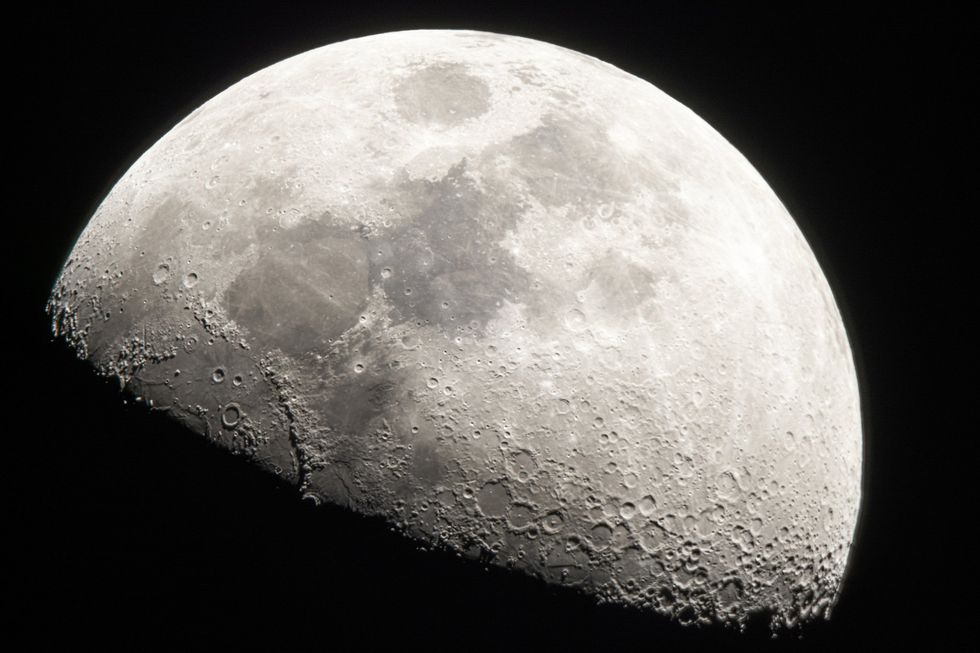
Nasa is currently planning the first manned moon mission in half a century
|GETTY
As non-professional and untrained individuals are accessing space increasingly, opportunities to collect essential biological data risk being overlooked.
"To confront these ethical challenges responsibly and prepare for the reality of human reproduction in space, there is a need to establish guidelines to form an International Framework and Collective Industry Ethics Review Board.
"To accelerate progress, responsible dedication into evaluating all reproduction-related research is needed to ensure comprehensive oversight."
Nasa is currently planning the first manned moon mission in half a century.
The 10-day Artemis II mission was due to launch this week, but has been pushed back to March after issues were uncovered with the Space Launch System rocket's fueling process.
Our Standards: The GB News Editorial Charter