










The European Space Agency's billion-dollar Jupiter Icy Moons Explorer has shifted its focus to an extraordinary cosmic intruder, a comet originating from beyond our solar system.
Juice, which launched in 2023 on an eight-year voyage to study Jupiter and its potentially life-harbouring moons, found itself ideally positioned to observe the rare visitor.
The comet, designated 3I/Atlas, is hurtling through our solar system at approximately 220,000 kilometres per hour relative to the sun.
Scientists quickly recognised the spacecraft's advantageous vantage point and devised a plan to capture observations of the object, which follows a path no comet native to our system would take.
Estimated to span 2.6 kilometres in width, the comet was initially identified in July last year when astronomers noticed its unusual trajectory.
Its path revealed it was not gravitationally tethered to our sun, confirming it had formed around a distant star.
This makes 3I/Atlas just the third interstellar object ever observed passing through our solar system.
The comet's flight path points to remarkably ancient origins, potentially tracing back to the Milky Way's "thick disk" — an older, more diffuse stellar region surrounding the flatter galactic plane where our sun sits.
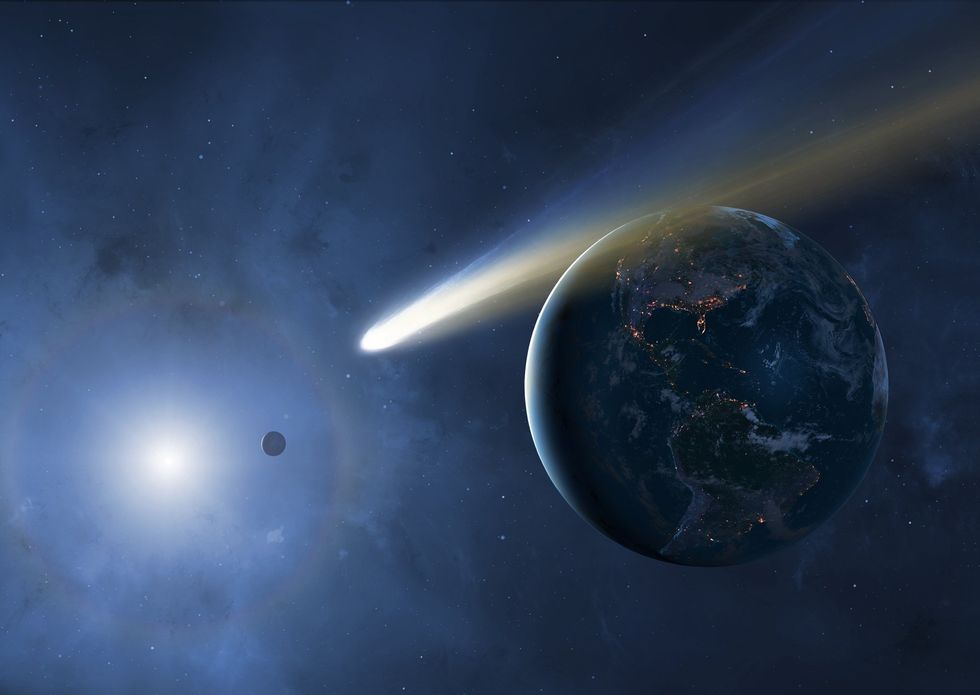
The European Space Agency's Jupiter Icy Moons Explorer is now investigating a comet originating from beyond our solar system
|GETTY
This thick disk serves as something of a galactic retirement community, containing stars and material billions of years older than our cosmic neighbourhood.
Should 3I/Atlas's origins be verified, it would represent a messenger from a far earlier epoch of galactic history.
Comets function as cosmic time capsules, their ice preserving chemical signatures from when their parent systems were born.
By analysing an interstellar comet's composition with sufficient precision, researchers can begin addressing whether our own solar system is typical compared to others.
LATEST DEVELOPMENTS
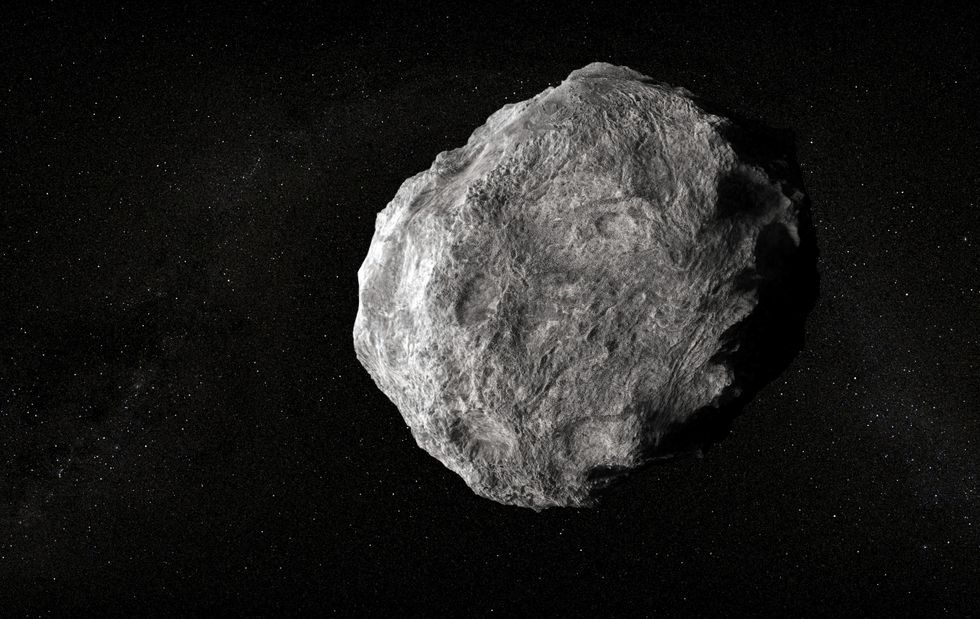
The mysterious interloper is 2.6 kilometres in width
|GETTY
When the comet made its closest approach to the sun, passing within roughly 210 million kilometres in late October 2025, the ESA activated five of Juice's instruments to study it from different angles.
However, the spacecraft faced challenges operating nearer to the sun than intended, using its 2.5-metre high-gain antenna as an improvised sunshield to protect sensitive equipment from intense solar radiation.
Information from the observations is currently filtering back and should be made public in the near future.
Paul Hartogh, principal investigator of Juice's Submillimetre Wave Instrument and a comet specialist, described the opportunity as wholly unexpected.
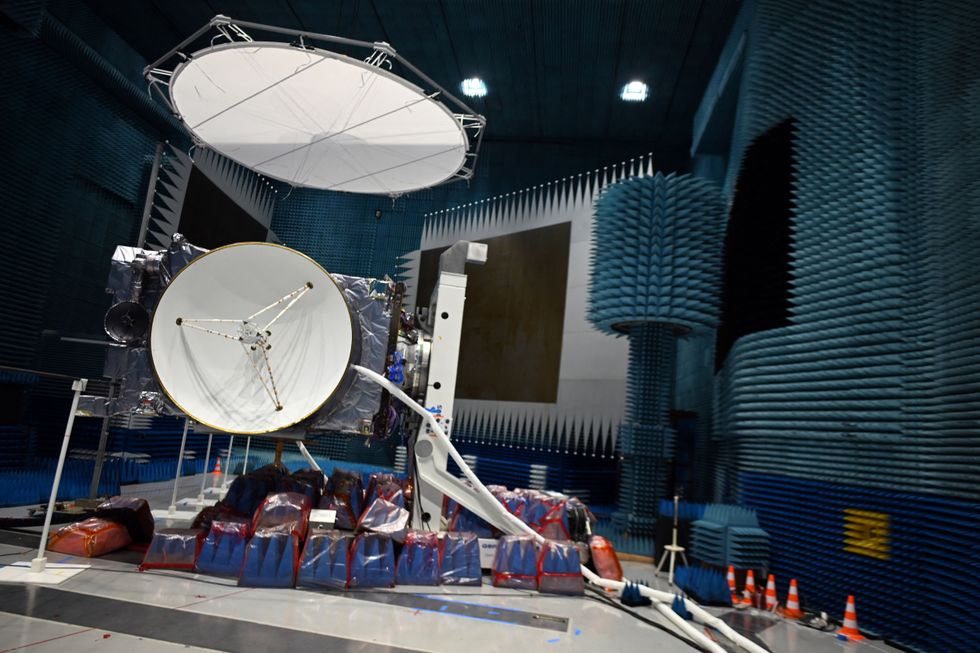
'Juice' was launched in 2023 on an eight-year voyage to study Jupiter and its potentially life-harbouring moons
|GETTY
"We never expected anything like this," he says, calling it a kind of gift.
The broader significance extends beyond this single encounter. Three interstellar objects have now been identified in under a decade, suggesting astronomers are entering a new era of detection.
Improved robotic surveys and automated tracking software now catch faint anomalies that would previously have gone unnoticed.
Asked whether such visitors might become routine, Hartogh told The Times: "Probably."
Our Standards: The GB News Editorial Charter