










Astronomers believe they may have solved an "impossible" space mystery through a new study of a black hole.
The black hole sits at the heart of the Circinus Galaxy, approximately 13 million lightyears from our planet.
This cosmic giant continuously emits radiation into the surrounding space.
Clouds of intensely hot gas encircling the black hole have previously made detailed observation nearly impossible due to their extreme brightness.
But now, Nasa's James Webb Space Telescope (JWST) has delivered the most detailed view ever obtained of a supermassive black hole's edge
The fresh imagery reveals the powerful forces at work right at the black hole's edge.
Scientists have long seen energy blasting from active black holes - but lacked instruments sensitive enough to pinpoint its origin.
Earlier theories suggested the majority of this radiation came from the black hole's "outflow", a jet of superheated material expelled from its core.
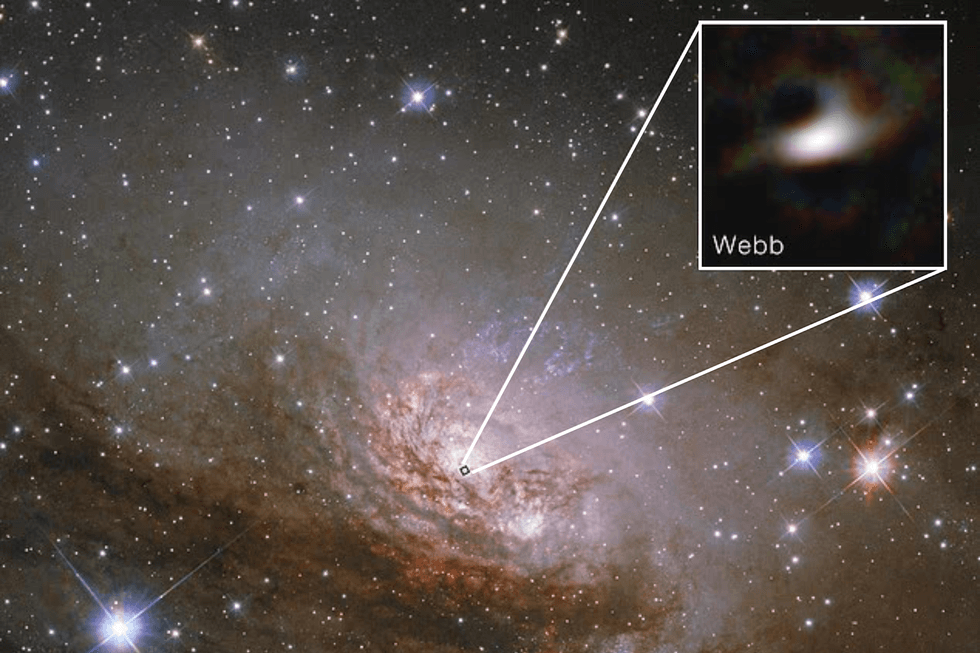
The new images are the clearest ever from an edge of the black hole
|NASA
But the JWST's findings have completely overturned this assumption.
Data now shows that roughly 87 per cent of infrared emissions from hot dust in Circinus come from the areas closest to the heart of the black hole.
The outflow, previously thought to be the dominant source, actually contributes less than one per cent.
The data marks a complete reversal of predictions made by astronomers' leading models for supermassive black holes.
The breakthrough relied on a technique called aperture masking interferometry, which essentially converts the Webb telescope into multiple smaller instruments working together.
SPACE - READ MORE:
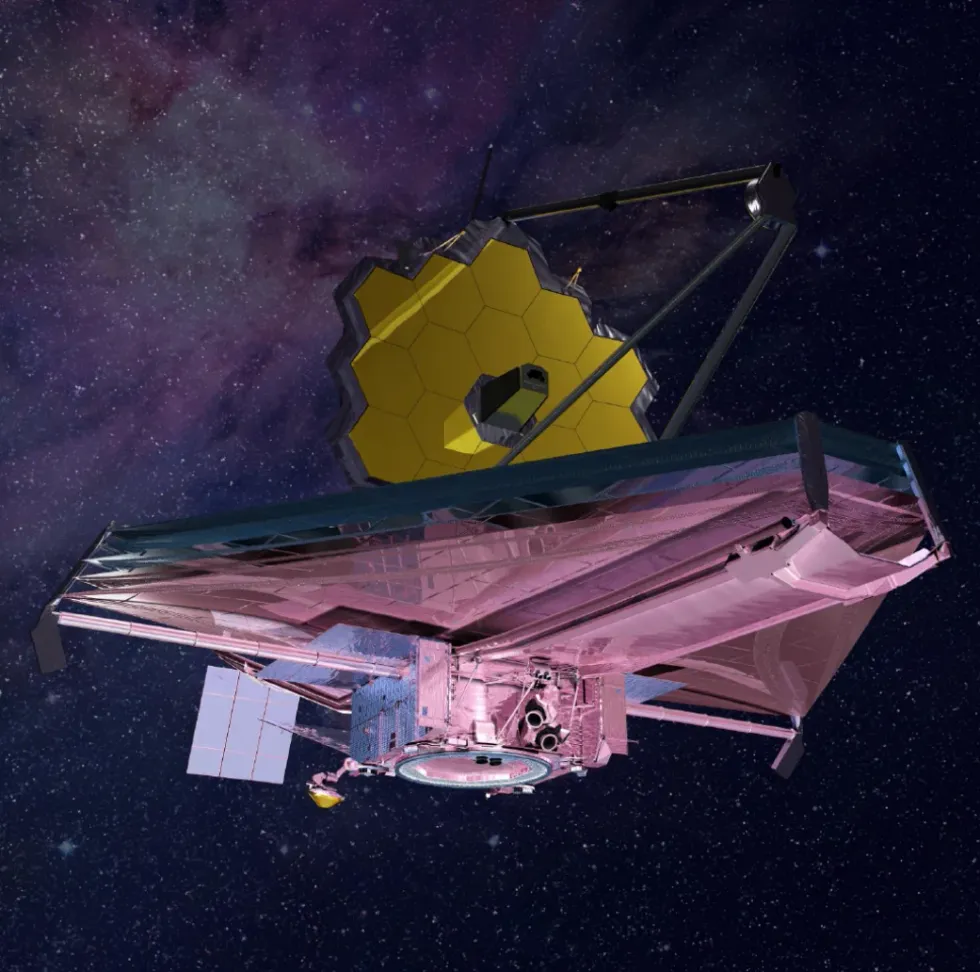
The James Webb Space Telescope may have blown a hole in the 'impossible' space mystery
|NASA
A special cover featuring seven hexagonal holes enables this capability.
This approach marks the first time an infrared interferometer in space has captured observations from outside our own galaxy.
On Earth, interferometers typically consist of numerous radio or optical telescopes functioning as a single massive observatory.
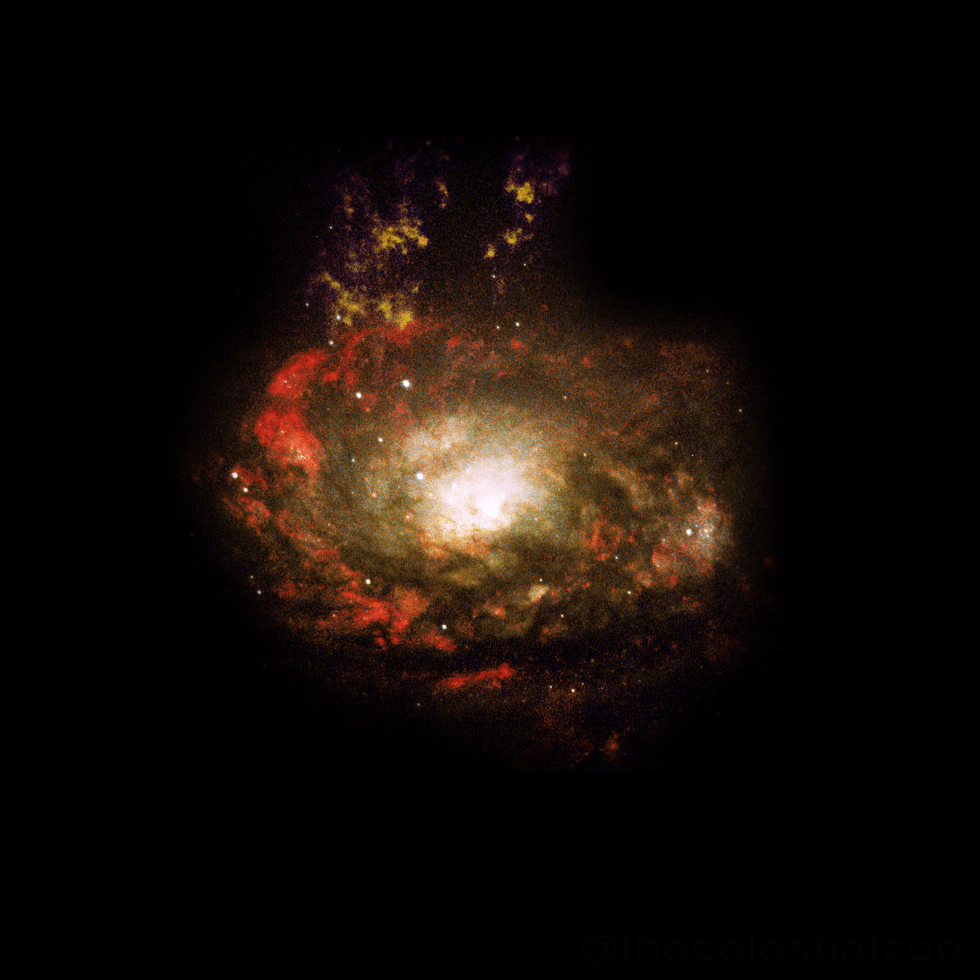
The black hole sits at the heart of the Circinus Galaxy, approximately 13 million lightyears from our planet
|HUBBLE SPACE TELESCOPE
Dr Enrique Lopez-Rodriguez, lead author from the University of South Carolina, said: "Using aperture masking interferometry with the JWST is like observing with a 13-metre space telescope instead of a 6.5-metre one.
"Since the 90s, it has not been possible to explain excess infrared emissions that come from hot dust at the cores of active galaxies, meaning the models only take into account either the torus or the outflows, but cannot explain that excess."
Dr Lopez-Rodriguez added: "We need a statistical sample of black holes, perhaps a dozen or two dozen, to understand how mass in their accretion disks and their outflows relate to their power."