









Astronomers have identified what they describe as "something the universe wasn't supposed to have" in a find that may rewrite humanity's understanding of the cosmos.
Scientists have identified a galaxy cluster known as SPT2349-56 that formed just 1.4 billion years after the Big Bang - yet burns at temperatures five times higher than current scientific models predict.
The finding, published in Nature and obtained through observations using the Atacama Large Millimeter/submillimeter Array (ALMA), challenges established theories about how the early cosmos developed.
Previously, researchers believed such extreme thermal conditions could only exist within older, more stable galaxy clusters that emerged much later in universal history.
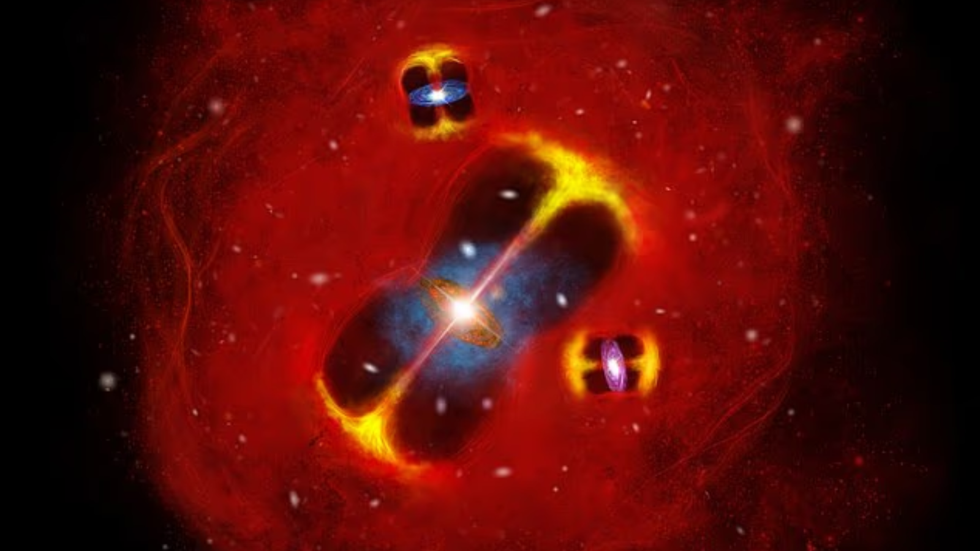
Scientists have identified a galaxy cluster known as SPT2349-56 that formed just 1.4 billion years after the Big Bang
|LINGXIAO YUAN
This scorching "baby cluster" indicates the universe's formative period may have been considerably more violent and energetic than scientists had assumed, potentially requiring a fundamental reassessment of cosmic evolution.
Galaxy clusters rank among the most colossal structures in existence capable of remaining bound by their own gravitational forces.
These vast assemblages comprise individual galaxies, invisible dark matter, and intensely heated gas clouds.
Between the galaxies themselves, gas becomes superheated into plasma reaching temperatures of hundreds of millions of degrees, emitting powerful X-ray radiation.
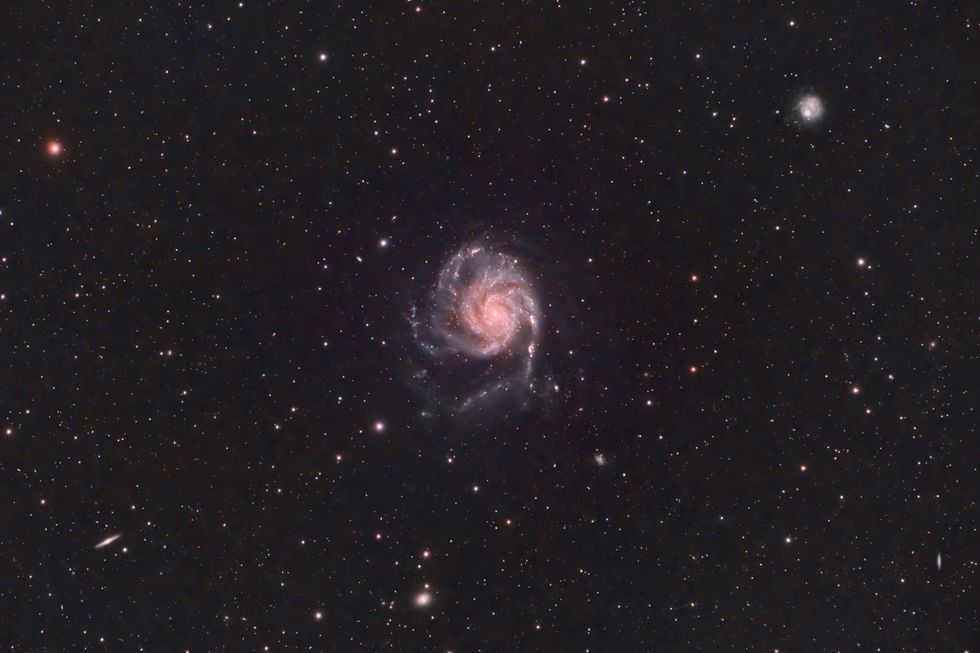
Galaxy clusters rank among the most colossal structures in existence
|GETTY
Scientists refer to this superheated material as the "intracluster medium".
Until now, the prevailing theory held that gravitational interactions between galaxies generated this heat as young, unstable clusters gradually matured and collapsed inward toward equilibrium.
The SPT2349-56 discovery upends this understanding entirely.
By peering 12 billion years into the past using ALMA, researchers observed a cluster that was remarkably immature yet already displaying thermal characteristics that should only appear in far older cosmic structures.
The cluster's core spans more than 500,000 light-years - comparable to the enormous halo of matter and dark matter encircling our own Milky Way.
SPACE - READ THE LATEST:
Within this structure, over 30 highly active galaxies churn out new stars at rates exceeding 5,000 times that of our home galaxy.
Researchers suspect three supermassive black holes lurking within the cluster are responsible for the anomalous temperatures.
Dazhi Zhou, a PhD candidate at the University of British Columbia and study co-author, said: "We didn't expect to see such a hot cluster atmosphere so early in cosmic history. In fact, at first I was sceptical about the signal as it was too strong to be real."
Professor Scott Chapman of Dalhousie University noted these black holes were "already pumping huge amounts of energy into the surroundings and shaping the young cluster, much earlier and more strongly than we thought".
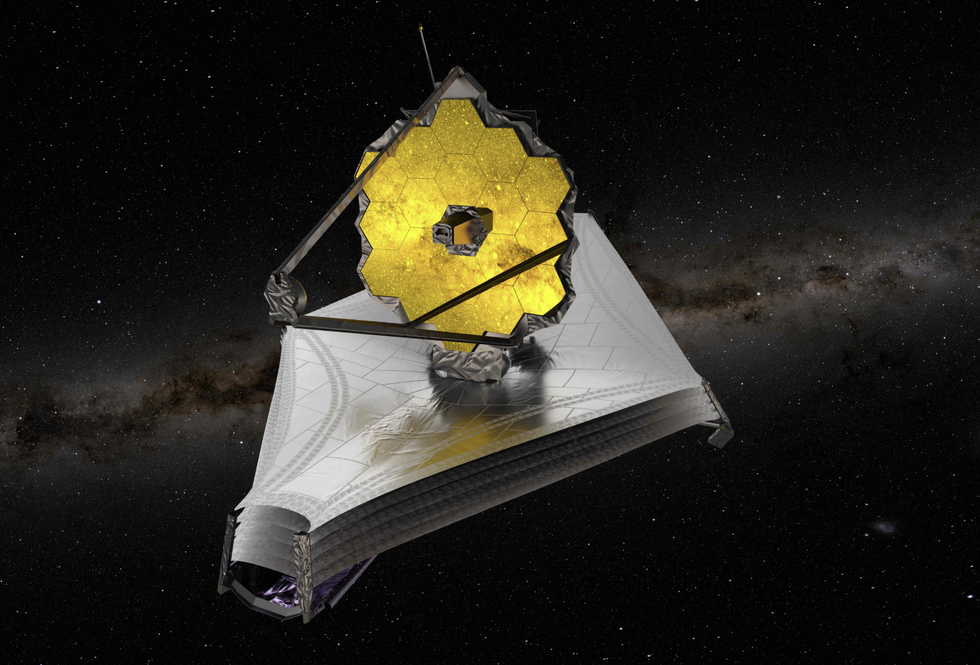
James Webb Space Telescope observations revealed a supermassive black hole actively growing within a galaxy just 570 million years after the Big Bang
| ESAMr Zhou added that following months of verification, the team confirmed the gas registers "at least five times hotter than predicted, and even hotter and more energetic than what we find in many present-day clusters."
This discovery aligns with a broader pattern emerging in astronomical research, as scientists increasingly detect supermassive black holes in the early universe that appear to have expanded far more rapidly than theoretical models suggested.
Last year, James Webb Space Telescope observations revealed a supermassive black hole actively growing within a galaxy just 570 million years after the Big Bang - significantly larger than its host galaxy's size would indicate.
Prof Chapman emphasised the significance of the findings: "Understanding galaxy clusters is the key to understanding the biggest galaxies in the universe.
"These massive galaxies mostly reside in clusters, and their evolution is heavily shaped by the very strong environment of the clusters as they form, including the intracluster medium."