










Scientists have calculated our universe may meet a violent end "trillions of years sooner than expected".
New studies suggest it will collapse in on itself approximately 19.5 billion years from now, in a catastrophic event known as the "Big Crunch."
Research conducted at Donostia International Physics Centre in Spain shows the cosmos has already completed 41 per cent of its existence.
Rather than being a cosmic infant, the universe has effectively reached its thirties when measured against an average human lifespan.
The study, published in pre-print form, proposes that everything we know will cease to exist when the universe reaches 33.3 billion years of age.
This finding upends the long-held assumption the cosmos would continue expanding indefinitely before eventually fading into a frozen void over countless trillions of years.
The Big Crunch theory had largely fallen out of favour among scientists because observational evidence indicated the universe's expansion was actually speeding up.
Researchers attributed this acceleration to dark energy, a mysterious force thought to be driving galaxies apart at an ever-increasing rate.
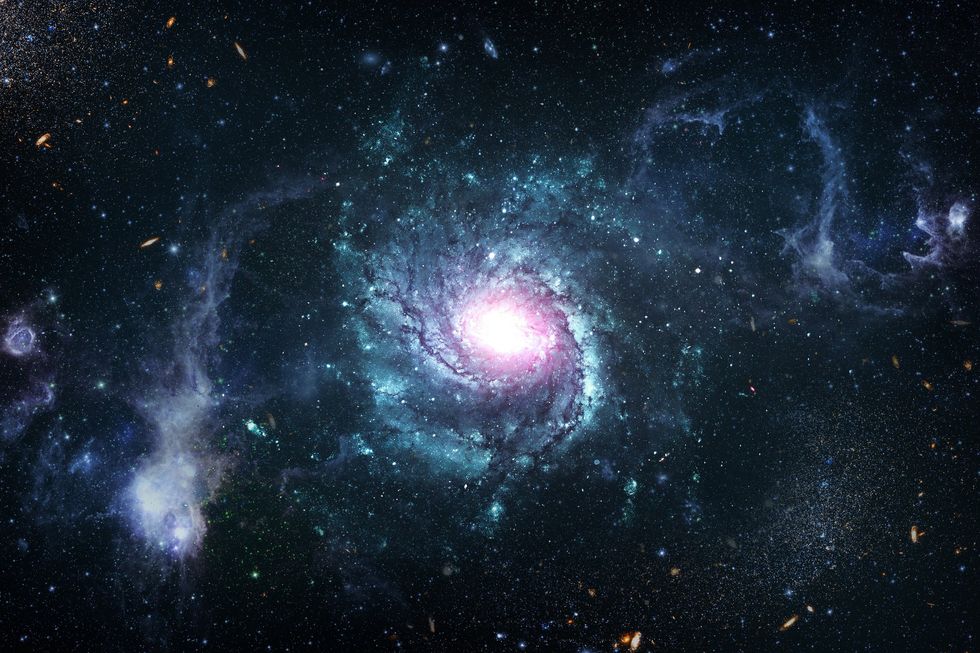
Scientists have calculated that our universe may meet a violent end 'trillions of years sooner than expected'
|GETTY
The prevailing view held that dark energy maintained a consistent density regardless of how much the universe stretched.
However, fresh data from instruments, including the Dark Energy Survey Instrument, now indicate this enigmatic force may not behave as scientists once assumed.
The international team of researchers from Spain, China and the United States based their calculations on the "axion dark energy model," which relies on theoretical ultra-light particles called axions that have yet to be detected.
Their work also proposes the cosmological constant, previously believed to maintain the universe at a stable size, could in fact be negative.
LATEST DEVELOPMENTS:
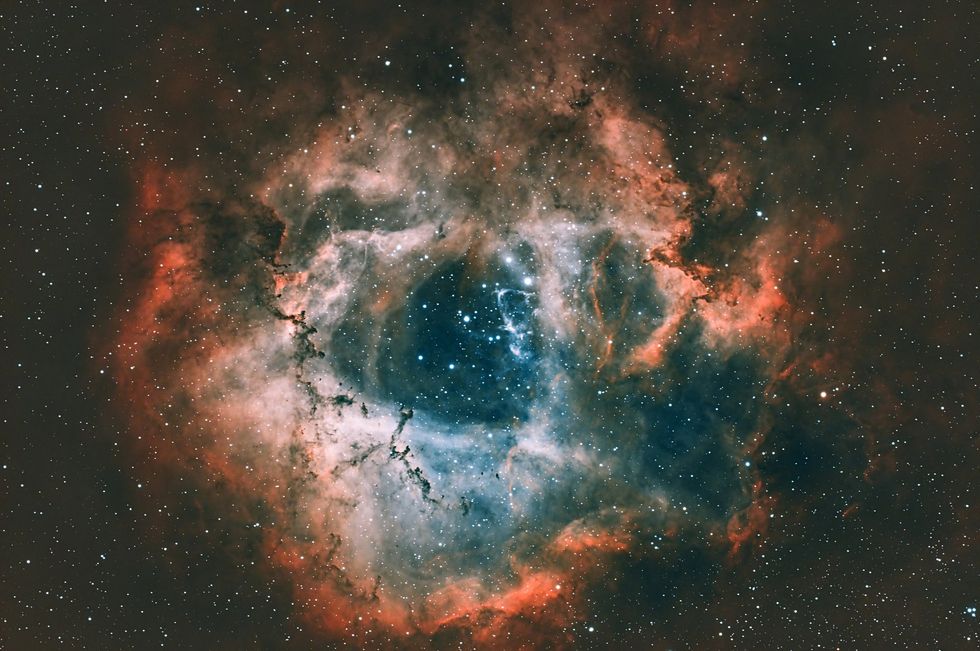
New studies suggest the universe will collapse in on itself approximately 19.5 billion years from now
|GETTY
The researchers concluded: "Using the best-fit values of the model as a benchmark, we find the lifespan of our universe to be 33 billion years."
Some cosmologists have expressed scepticism about the remarkable precision of this predicted date.
Ed Macaulay, a cosmologist at Queen Mary University of London who was not involved in the study, described cosmology as being on an exciting "knife-edge" between competing theories about whether the universe will expand eternally or eventually collapse.
He described the research as "an interesting piece of work".
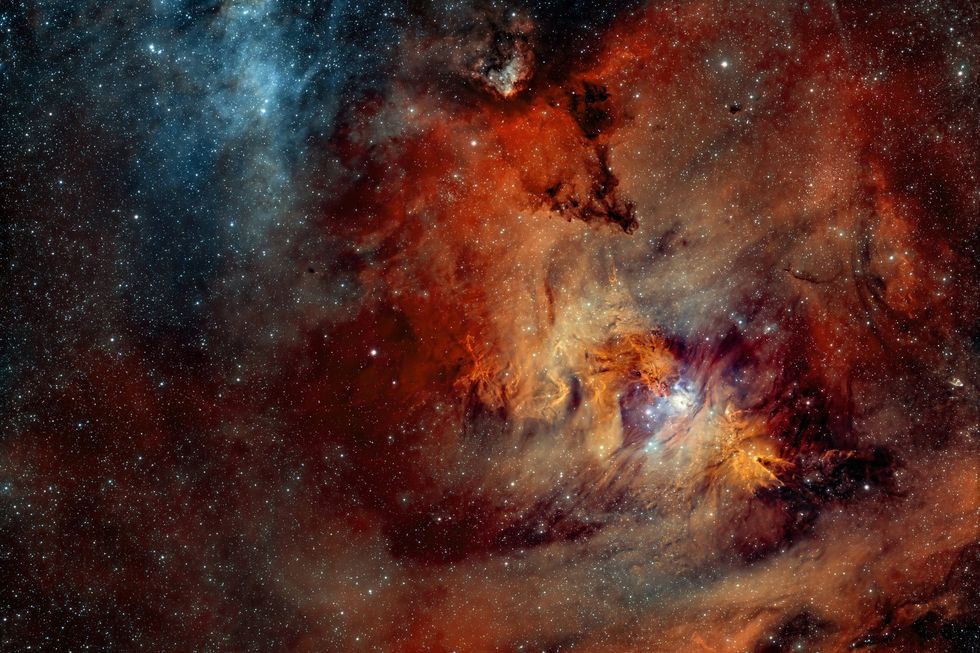
Rather than being a cosmic infant, the universe has effectively reached its thirties when measured against an average human lifespan
|GETTY
Mr Macaulay noted the Nancy Grace Roman Space Telescope, due for launch within the next year, could yield valuable new insights.
Willem Elbers, a cosmologist at Durham University, cautioned "the specific value of the lifespan, and whether a Big Crunch will happen at all, is still subject to enormous uncertainty."
Regarding any immediate concerns, Mr Macaulay told the Times: "If you've got plans for the bank holiday, proceed as usual."