










Nasa is preparing to light a fire on the Moon for the first time in history as part of a groundbreaking experiment ahead of sending astronauts back to the lunar surface.
The space agency has said it will oversee a controlled fire on the Moon to understand how flames might behave during emergencies on future crewed missions.
Fire ranks among the most frightening hazards for space travellers, despite the many other perils of venturing beyond Earth's atmosphere.
Flames behave in fundamentally different ways when gravity is reduced, whether aboard the International Space Station (ISS) or on the lunar surface.
Materials considered non-flammable under terrestrial conditions can burn - in some cases, for much longer than on Earth.
Researchers are planning to carry out the first flammability experiment on the Moon before the end of this year.
The test will involve four fuel samples in a sealed chamber, transported to the moon aboard an uncrewed Commercial Lunar Payload Service (CLPS) flight.
Once on the surface, these materials will be set alight whilst cameras and sensors record the flame's behaviour and oxygen consumption.
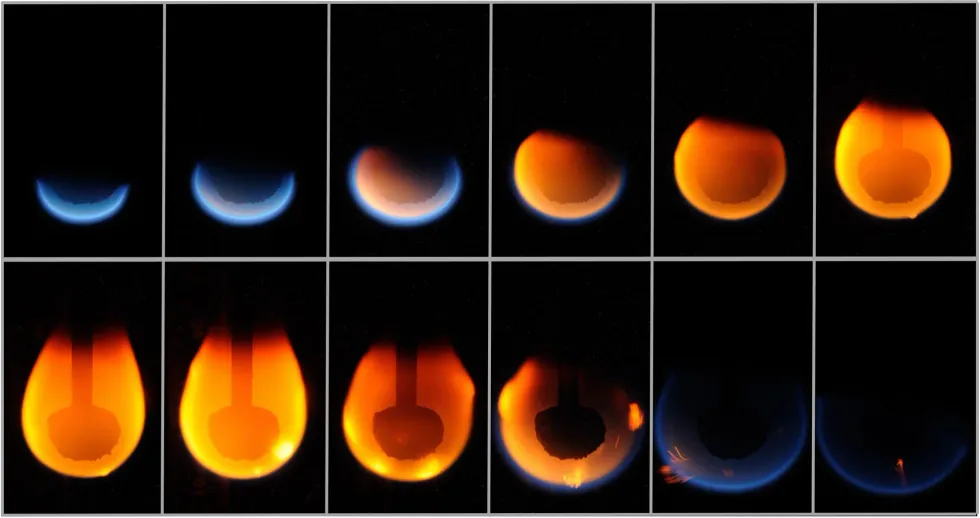
PICTURED: A series of images from the International Space Station showing how flames behave in zero gravity
|NASA
With Nasa targeting 2028 for the Artemis IV mission that will return humans to the Moon, researchers say the fire research is essential for its future crew's safety.
Terrestrial fires are shaped by gravity and the movement of the air, but these forces operate entirely differently beyond our planet.
Under normal gravity, heated air becomes less dense and rises, pulling fresh oxygen-rich air towards the base of the flame.
This airflow can sometimes produce what scientists call "blowoff", where the current snuffs out a weak flame entirely.
SPACE - READ THE LATEST:
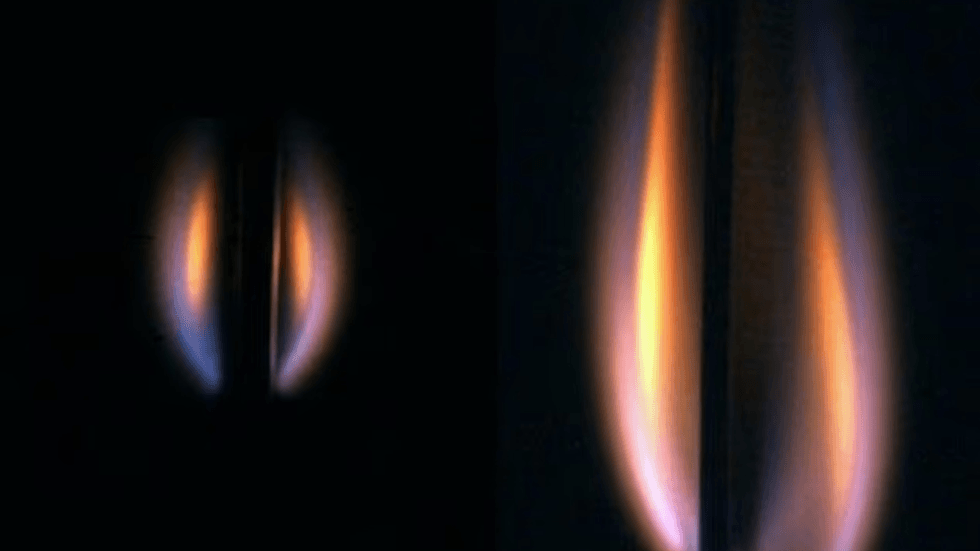
Terrestrial fires are shaped by gravity and air movement, but these forces operate entirely differently beyond our planet
|NASA
The Moon's gravity measures just one-sixth of Earth's, meaning this convection process happens much more slowly.
On the lunar surface, oxygen can reach flames just quickly enough to keep them burning - without being strong enough to extinguish them.
Research indicates that the moon's gravitational conditions may represent near-ideal circumstances for fire ignition, requiring minimal oxygen concentrations.
Future lunar inhabitants will occupy habitats with oxygen levels and pressures similar to Earth, making fire a serious threat in outposts and landing craft.
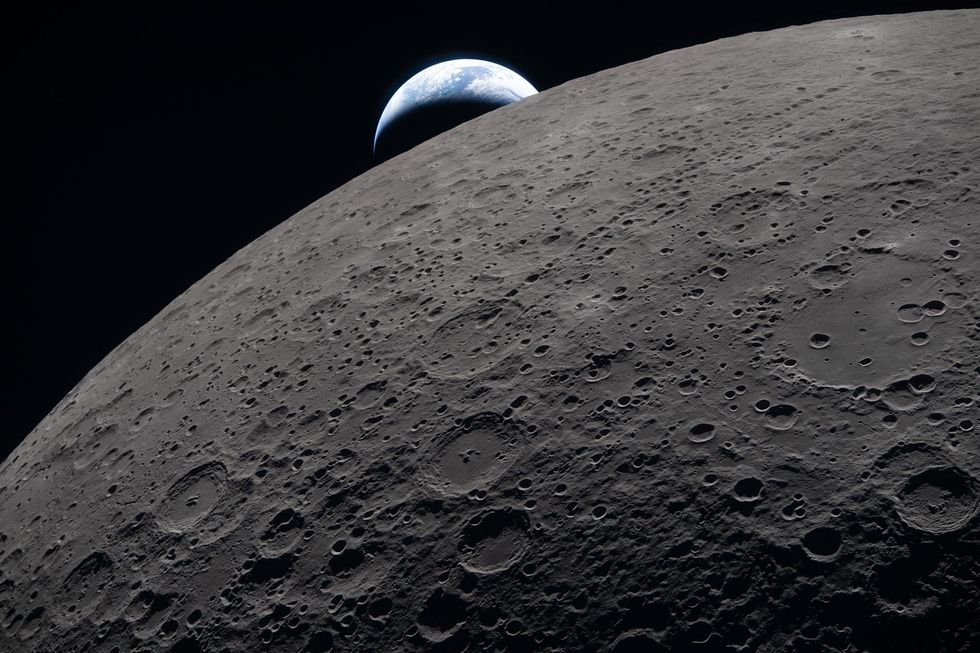
The Moon's gravity measures just one-sixth of Earth's, meaning the burning process happens much more slowly
|NASA
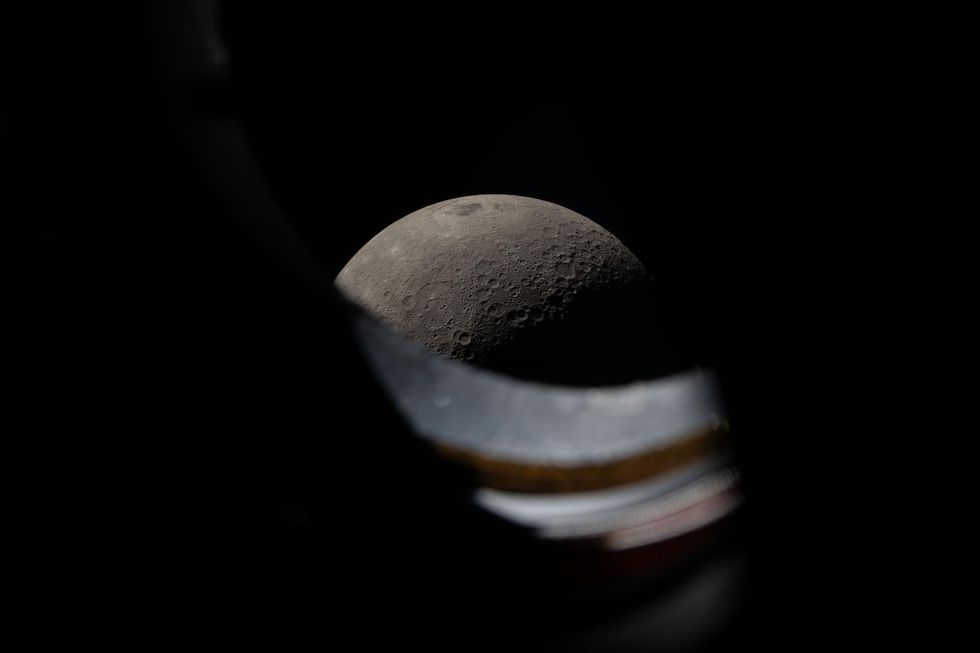
Nasa scientists have admitted that a fire on the Moon is a 'real hazard'
|NASA
Dr Paul Ferkul of Nasa Glenn Research Center and his colleagues wrote in their research paper: "Early numerical and experimental evidence suggested that lunar gravity could be more hazardous, since flame spread rate as a function of gravity peaks there.
"Consequently, partial-g fire in an extraterrestrial habitat is a real hazard that is expected to be substantially worse than in 0g and potentially worse than even 1g."
On Earth, simulations involve dropping burning materials from towers or conducting tests during parabolic flights - where a plane drops down mid-air, giving its passengers a brief glimpse of zero-gravity.
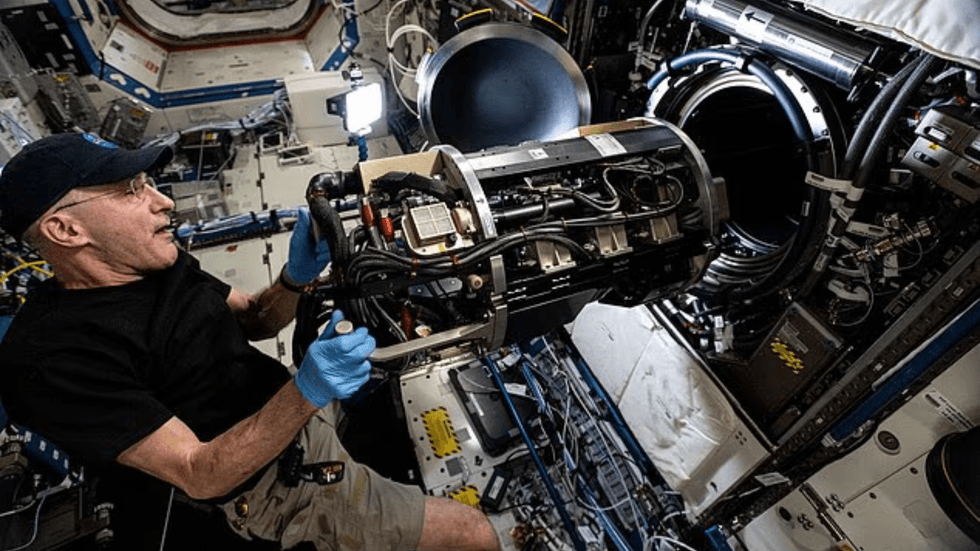
ISS crew members have conducted more than a thousand small-scale fires using the Combustion Integrated Rack
|NASA
But on the ISS, crew members have conducted more than a thousand small-scale fires using the Combustion Integrated Rack, though safety constraints limit the size of the flames.
The most comprehensive test to date was the Spacecraft Fire Safety experiment, which burned cotton, fibreglass and acrylic sheets inside an unmanned Cygnus cargo vessel before it was destroyed on re-entry.
This experiment produced unexpected findings, including flames travelling against the direction of airflow, and burning more intensely on thinner materials.
These surprising results convinced Nasa that better understanding of lunar fire behaviour was necessary.
The Flammability of Materials on the Moon test launching this year will provide the first extended observation of a substantial fire in space and mark humanity's first deliberate ignition on another world.
Our Standards: The GB News Editorial Charter