








Scientists have identified a new species of ancient crocodile dating back 215 million years.
The slender and fast-moving predator, which has officially been given the name Galahadosuchus jonesi, would have roamed what is now classed as the south of the UK.
The discovery is based on a fossil from the Late Triassic period that was unearthed in southwestern England in 1969.
It had been sat in the Natural History Museum's collections for more than 50 years before its significance was identified.
Experts have described the ancient species as looking like a "reptilian greyhound" due to its quick pace and elongated limbs.
It is understood the animal would have lived on land and stalked the undergrowth in search for small reptiles, amphibians and early mammals.
The creature's name draws from two distinct sources of inspiration.
Its first part references Galahad, the Arthurian knight renowned for his virtue, acknowledging the animal's upright stance and posture.
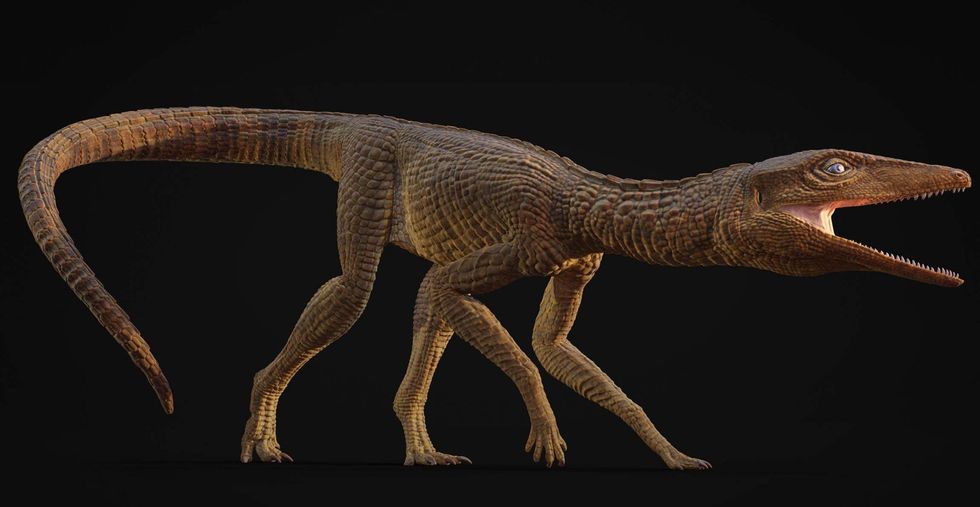
The species dates back more than 200 million years
|MATT DEMPSEY/NATURAL HISTORY MUSEUM
The second element pays tribute to David Rhys Jones, a physics teacher at Ysgol Uwchradd Aberteifi in Cardigan, Wales, who taught PhD student Ewan Bodenham, the lead author of a study on the predator.
Mr Bodenham said: "We named it after my secondary school physics teacher.
"Mr Jones was just such a good teacher, not only in being able to explain things well, but you could tell that he was genuinely interested in the sciences. I think that really inspired me.”
“He also didn’t let me settle. He was very good at challenging people and helping students be the best they can be.
LATEST DEVELOPMENTS
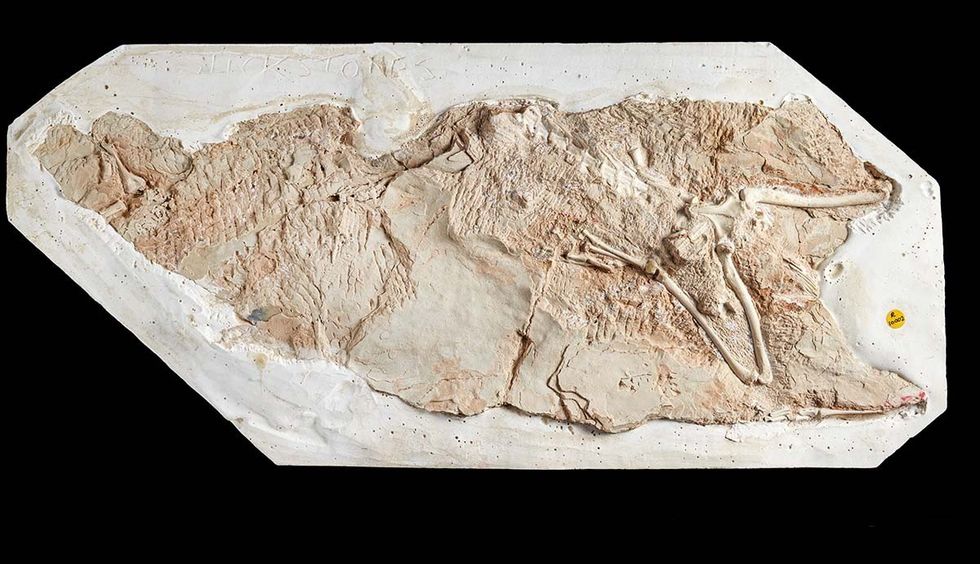
The fossil of the new species has been in the Natural History Museum's collections for more than five decades
|BODENHAM ET AL/NATURAL HISTORY MUSEUM
"Above all, he’s a very funny, genuine, nice guy."
The remains of the ancient crocodile came from a series of geological features known as the fissure deposits, which are found on both sides of the Bristol Channel in southern Wales and southwest England.
These natural geological formations functioned as traps, capturing animals that perished on the surface before sediment gradually entombed their remains over millions of years.
Among specimens previously recovered from these sites was Terrestrisuchus, another early crocodylomorph with similarly elongated limbs adapted for land-based existence.
Upon studying multiple fossils of Terrestrisuchus researchers discovered one of the specimens differed from the others.
"My PhD project is looking at the evolutionary relationships of these early crocodiles," Mr Bodenham explained.
"So we conducted a detailed anatomical description of this specimen, making comparisons to other early crocodiles to determine if it was another specimen of Terrestrisuchus or if it was something new."
The researchers identified 13 differences between the fossils significant enough to name the specimen an entirely new species.
Several of these related to the wrists of the animal, with the new species having wrist bones that are shorter and stockier when compared to the known species.
Our Standards: The GB News Editorial Charter