










Demolition work at a Neolithic monument steeped in Arthurian legend will commence in April, following council approval granted last November.
Wiltshire Council has permitted Marlborough College to remove 20th-century structures that were built into the side of the 4,000-year-old man-made hill, known as Marlborough Mound.
The structures earmarked for removal include a carpentry workshop, toilet facilities, a plant room, and water infrastructure that were partially excavated into the nationally significant site.
According to folklore, the wizard Merlin lies buried within the mound, a tradition that inspired Marlborough's Latin motto: "ubi nunc sapientis ossa Merlini" or "where now are the bones of the wise Merlin".
TRENDING
Stories
Videos
Your Say
The Marlborough Mound Trust, which is collaborating with the college on the restoration project, has confirmed the buildings will be "taken down slowly, with an archaeologist present."
An archaeological assessment from 2024 concluded that significant discoveries beneath the structures are unlikely.
Demolition will provide researchers with an opportunity to examine a cross-section of the ancient monument.
It could also uncover remnants of medieval and post-medieval water channels, according to project documentation.
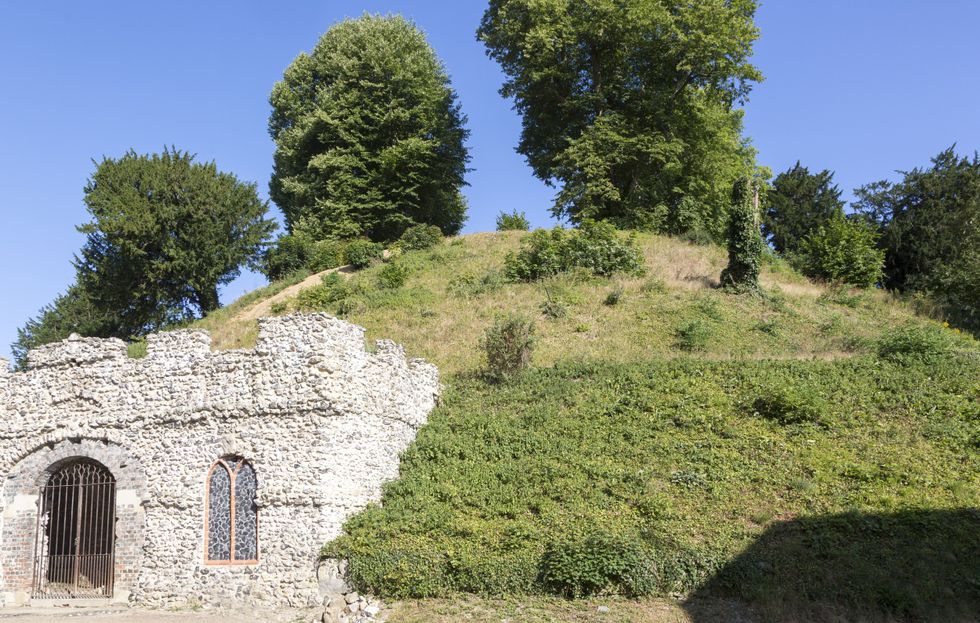
Demolition work is set to begin at the Marlborough Mound
|GETTY
Beyond the archaeological benefits, removing these modern additions is expected to restore a more aesthetically appropriate setting for the prehistoric landmark.
Standing at 60 feet tall, Marlborough Mound ranks as the second-highest monument of its type in Britain, surpassed only by Silbury Hill in the surrounding area.
The site's history extends well beyond its prehistoric origins. William the Conqueror commissioned a castle to be constructed atop the mound following the Norman invasion.
Conservation efforts have been ongoing for a quarter of a century, with the Marlborough Mound Trust established in 2000 to preserve and restore the monument.
LATEST DEVELOPMENTS

The Neolithic structure is said to hold the remains of the wizard Merlin
|GETTY
The Trust will celebrate its 25th anniversary on April 15 with a conference at the Society of Antiquaries in London. Attendees will examine the site's significance and the preservation work undertaken over the past two and a half decades.
Veneration of the site is no surprise as archaeological marvels are regularly found, sometimes by accident, around the UK.
Last week, dog walkers discovered 2,000-year-old footprints on a Scottish beach, which were briefly uncovered by recent storms.
Locals Ivor Campbell and Jenny Snedden were walking their dogs at Lunan Bay in Angus last month when they noticed storm damage to the dunes had revealed a fresh layer of clay, spotting "distinct markings".
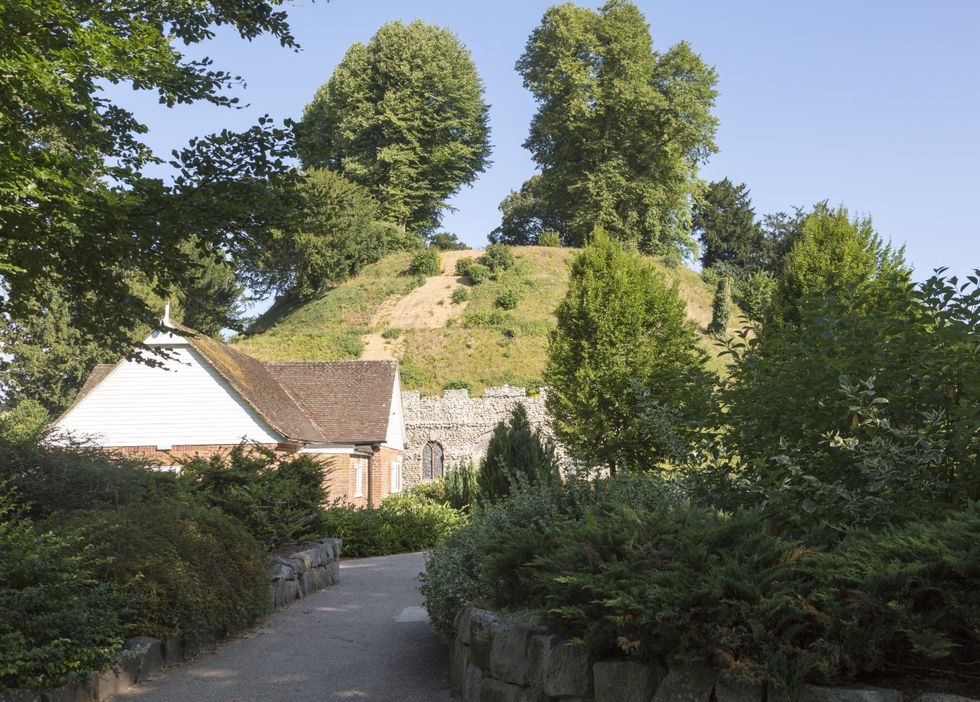
The site is also home to a Norman castle built by William the Conqueror
|GETTY
Archaeologists called to the scene found the prints were of human and animal feet, and had been made around 2,000 years ago at the height of the Roman Empire.
A team of University of Aberdeen archaeologists faced a race against time to capture data from the site before it was reclaimed by the sea.
They worked in winds of more than 55mph to preserve the finds.
Similar markings have been previously identified at Formby in Merseyside, Happisburgh in Norfolk, and the Severn Estuary in the South West.
Our Standards: The GB News Editorial Charter