










A remarkable archaeological find during road construction work in Israel has brought to light two previously unknown biblical names from approximately 2,700 years ago.
The discovery centres on a small personal seal belonging to an individual named Makach, whose father was called Amihai, both figures from the Kingdom of Judah during the late eighth century BCE.
The late archaeologist David Amit, who helped decipher the inscription, said: "The importance of the seal derives both from its contribution to the treasury of biblical names, and from the fact that, unlike most seals of its type, the origin of the seal is in an organized archaeological excavation and not from antique collectors."
Crafted from a pale brown gemstone, the seal features a distinctive three-part design that reveals both artistry and administrative purpose.
TRENDING
Stories
Videos
Your Say
The uppermost band displays an ornamental pattern of four pomegranates.
Below this decorative element, two additional sections bear an ancient Hebrew inscription reading "Belonging to Makach (son of) Amihai."
A hole drilled through the top of the stone indicates it was designed to be suspended from a cord and worn around the owner's neck.
Researchers from the Israel Antiquities Authority believe Makach held a senior administrative position, though his precise role within the governmental structure remains uncertain.
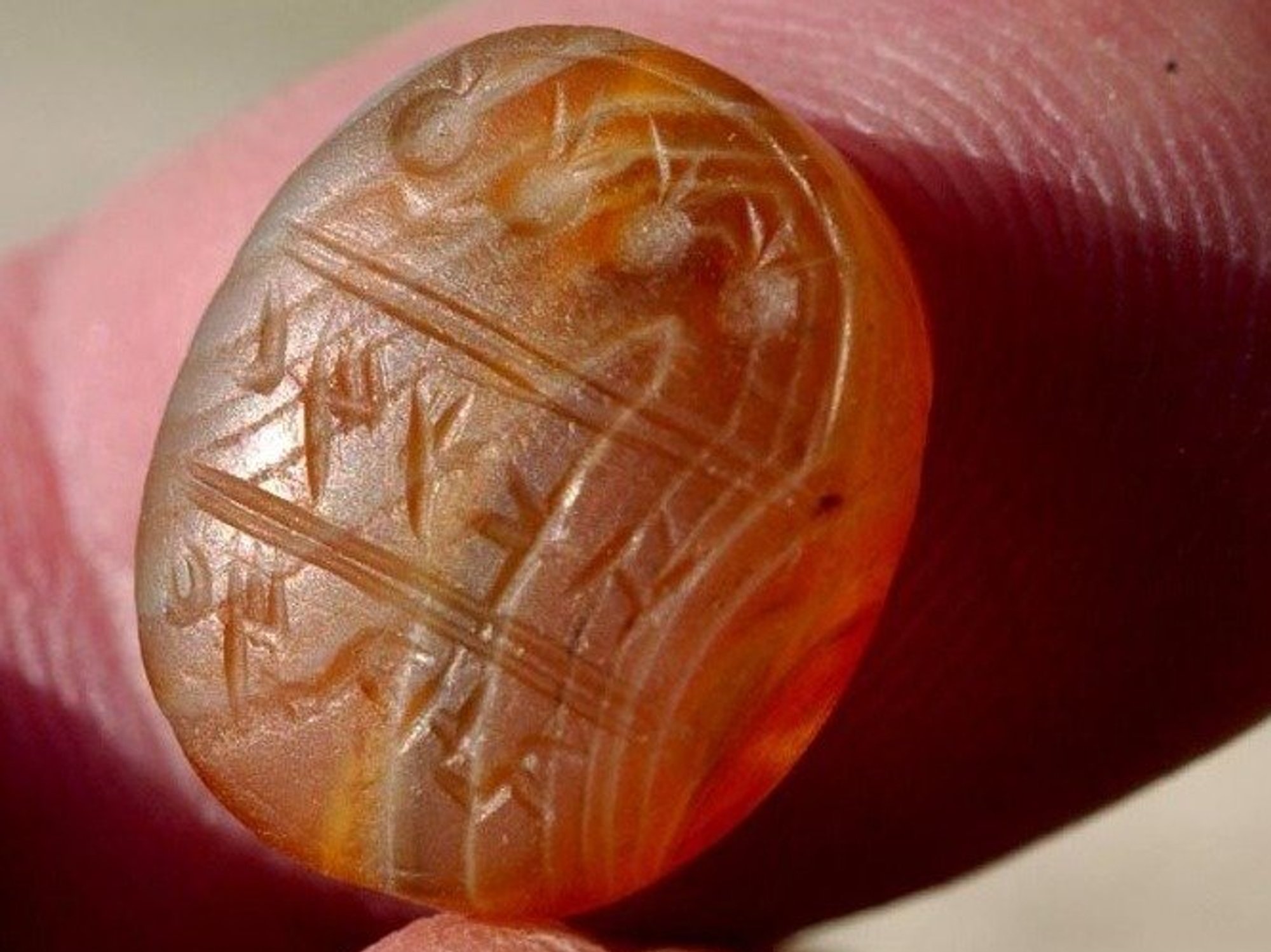
The seal was translated
|HANDOUT
The excavation was conducted by archaeologists Dr Amir Gorzalazni and Gerald Finkelstein, who uncovered what appears to have been a significant logistical hub serving the kingdom.
The pomegranate held profound meaning throughout biblical scripture, serving as an emblem of beauty and abundance.
In the Book of Numbers, scouts returning from Canaan carried pomegranates as evidence of the land's fertility and promise.
The Temple of Solomon, as described in 1 Kings, incorporated pomegranate motifs into the decorative elements adorning its pillars.
LATEST DEVELOPMENTS
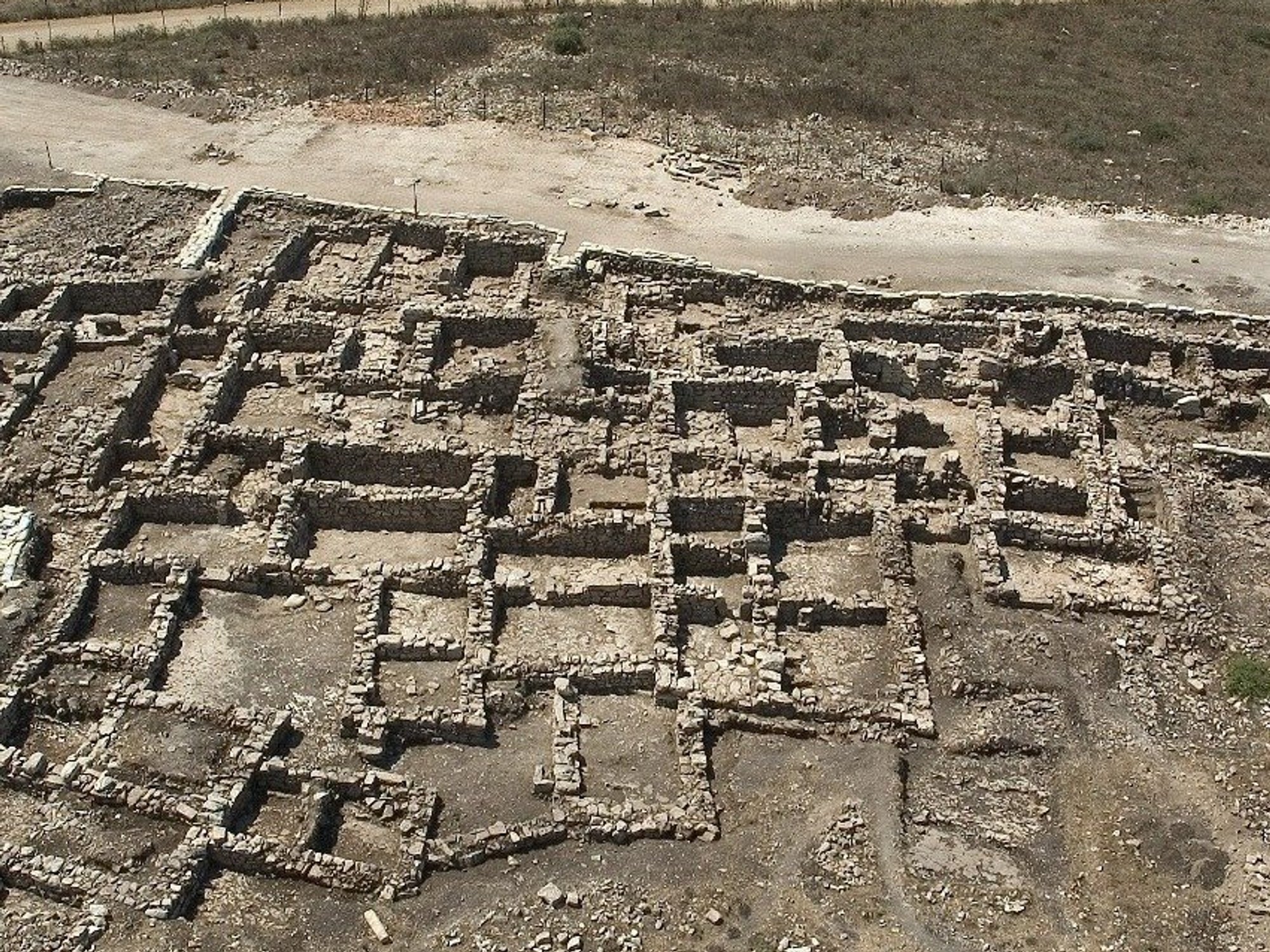
The discovery was made near the Ein Tut interchange in the north of Israel
|HANDOUT
This symbolic resonance extended well beyond ancient Jewish tradition into Christian artistic expression.
Renaissance master Sandro Botticelli depicted the infant Jesus clutching a pomegranate in a 1487 painting.
Israeli archaeologists suggested this demonstrated how the fruit's significance persisted across religious boundaries and centuries.
The presence of this imagery on an official seal suggests the owner wished to associate himself with these powerful cultural and spiritual connotations of fruitfulness and divine favour.
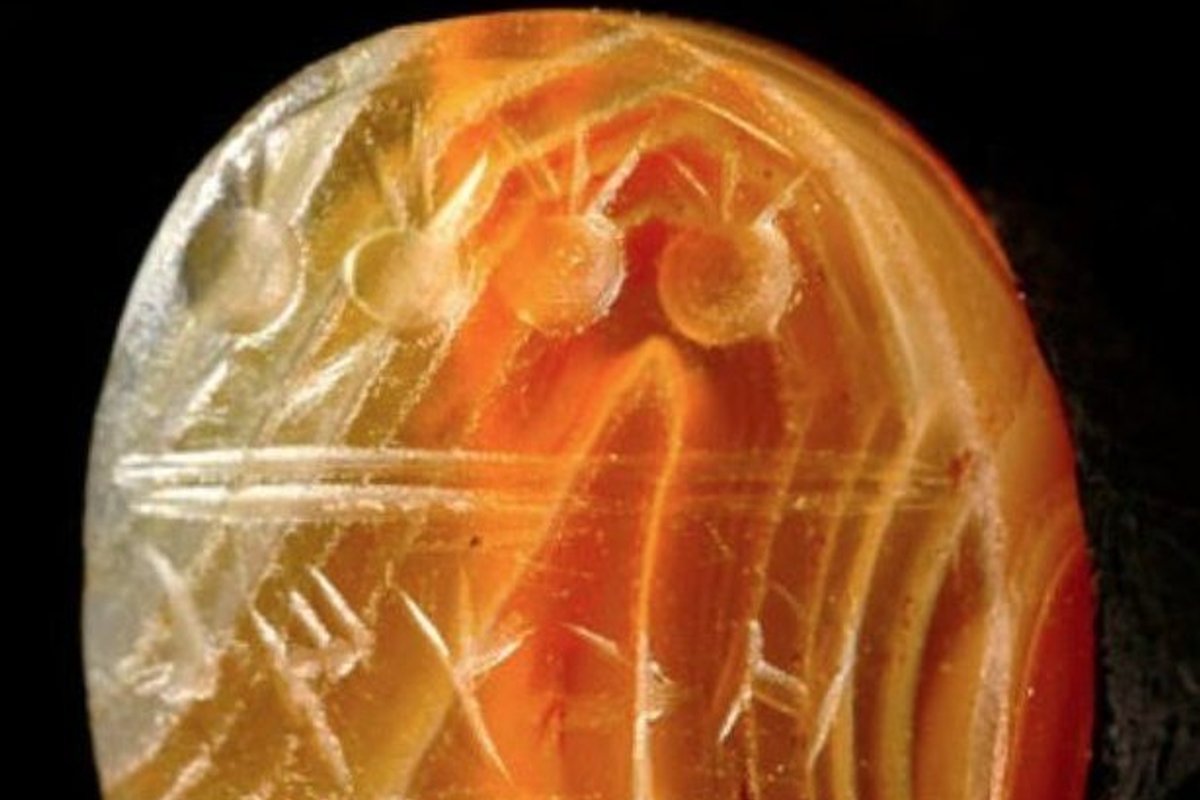
The pomegranates could be seen on the top of the seal
|HANDOUT
The administrative centre's location deep within the territory of the biblical Kingdom of Israel rather than Judah has puzzled researchers.
"Such seal prints are a common finding on biblical sites in the area of Judah, but their presence at a site so northern, deep within the territories of the biblical Kingdom of Israel is most surprising," archaeologist Amir Gorzalazni said in a statement from the Israel Antiquities Authority.
Alongside the seal, excavators recovered fragments of storage vessel handles bearing royal inscriptions.
These pottery shards carried the phrase "belonging to the king" together with the names of Hebron and Ziph.
Both of these functioned as key administrative centres within the Kingdom of Judah during the final years of the First Temple period.