










A remarkable dinosaur skull unearthed in Africa's Sahara Desert has ignited widespread speculation online that scientists may have finally found evidence of a real dragon.
The fossil, roughly the size of an adult human, was recovered by a University of Chicago research team and belongs to a newly identified species dubbed Spinosaurus mirabilis, which translates to "astonishing spined lizard".
With its elongated reptilian jaw, hand-sized pointed teeth, and crocodile-like snout, the specimen bears an uncanny resemblance to the legendary fire-breathing creatures of ancient mythology.
A prominent curved horn positioned above the eyes, along with spikes extending from the rear of the skull, completes the dragon-like appearance.
The massive predator measured approximately 40 feet in length and tipped the scales at between 10,000 and 14,000 pounds, earning it the nickname "hell heron."
Its most distinctive feature was a 20-inch-tall bony crest rising between the eyes, which researchers likened to a scimitar.
The reconstructed skull, complete with rows of interlocking teeth and the sword-shaped horn, presents an image strikingly similar to mythical dragon depictions.
Social media users have been quick to voice their opinions.
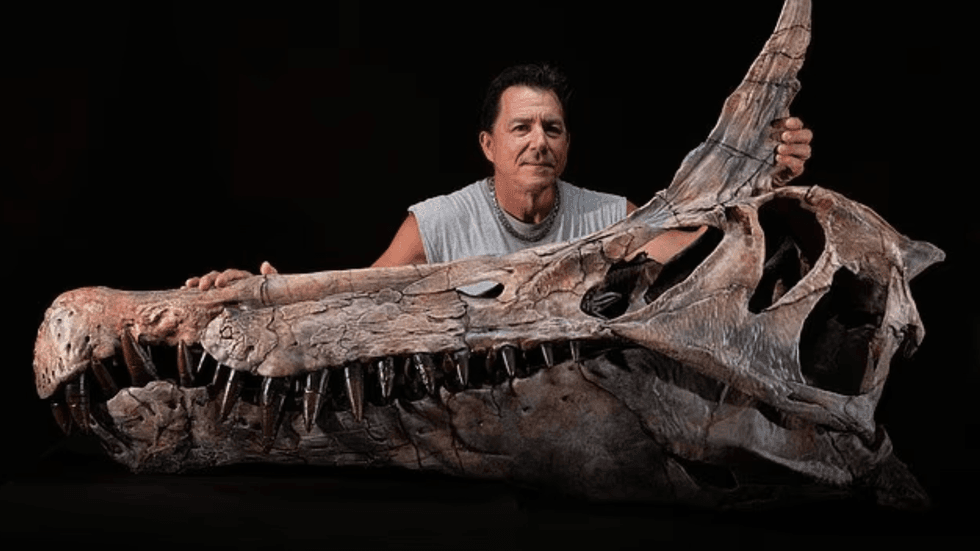
The fossil, roughly the size of an adult human, was recovered by a University of Chicago research team
|UNIVERSITY OF CHICAGO / PAUL SERENO
"That's definitely a dragon head," one person declared online, whilst another commenter urged scientists to "just say it's a dragon already."
One observer dubbed it "the unicorn of spinosaurids".
Scientists believe Spinosaurus mirabilis belonged to the spinosaurid family, a group of large carnivorous dinosaurs that roamed the Earth between 95 and 130 million years ago.
This particular specimen lived approximately 95 million years ago during the Cretaceous Period, when the Sahara was a verdant landscape of forests, rivers and inland waterways.
ARCHAEOLOGY BREAKTHROUGHS - READ MORE:
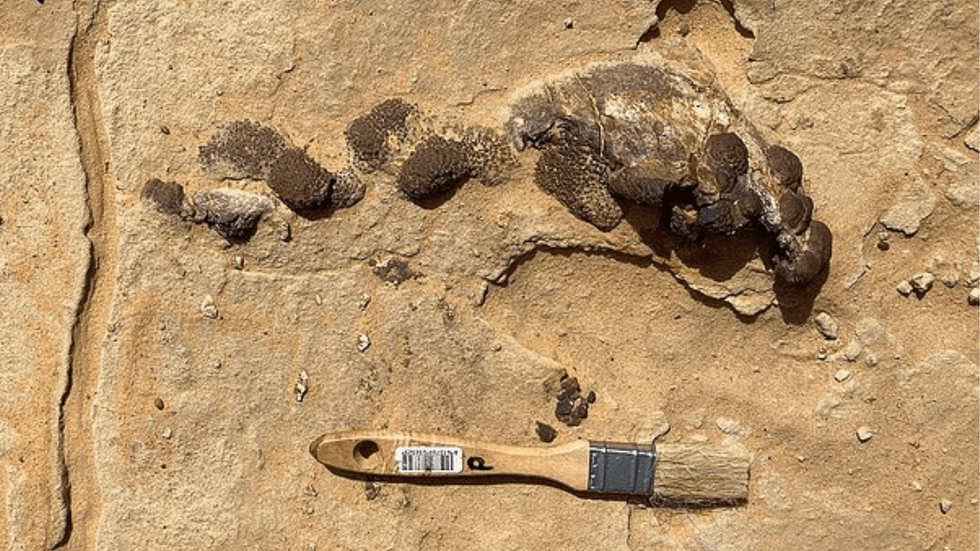
The fossil site in present-day Niger had remained untouched by researchers for more than seven decades
|DANIEL VIDAL
Evidence suggests the creature could wade through water up to seven feet deep whilst hunting fish, setting it apart from land-based predators such as Tyrannosaurus Rex.
"This find was so sudden and amazing, it was really emotional for our team," said paleontologist Paul Sereno.
"I'll forever cherish the moment in camp when we crowded around a laptop to look at the new species for the first time."
The fossil site in present-day Niger had remained untouched by researchers for more than seven decades before expeditions in 2019 and 2022 finally returned to the area.
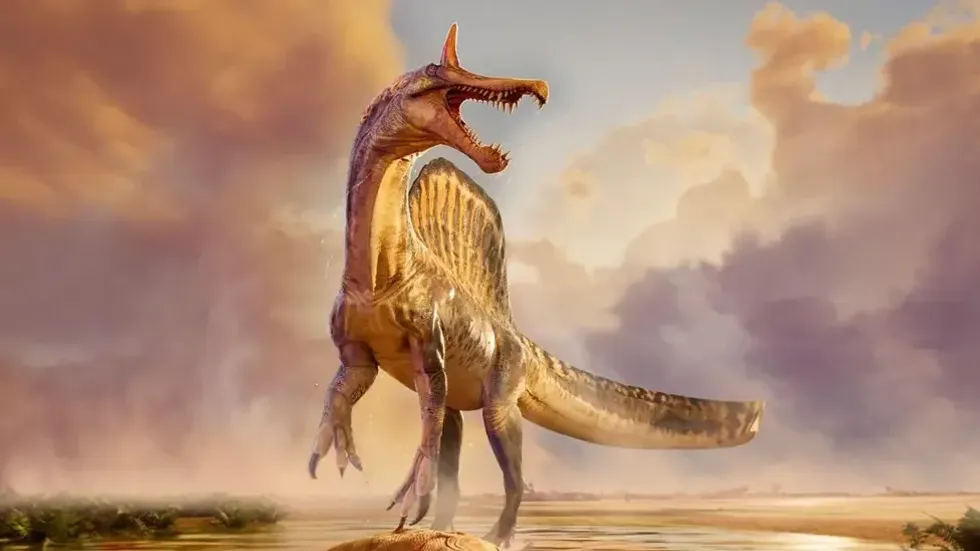
PICTURED: An artist's impression of Spinosaurus mirabilis
|DANI NAVARRO
French geologists had first visited the location in the 1950s, discovering a single sabre-shaped tooth.
However, no scientist had ventured back to the remote region surrounded by sand seas and lacking any roads or settlements.
Mr Sereno tracked down the long-forgotten site with assistance from a local Tuareg guide on a motorbike who knew where large fossil bones lay exposed in the sand.
The discovery could fundamentally alter scientific understanding of spinosaurid habitats, as the find occurred far from any coastline.
Our Standards: The GB News Editorial Charter