










Scientists have unearthed a fearsome new dinosaur species in a remote part of the Sahara Desert after it lay there hidden for 95 million years.
The prehistoric predator, now named Spinosaurus mirabilis, belongs to the spinosaurid family and has been likened to a creature from hell.
Its most remarkable characteristic is a blade-shaped crest resembling a scimitar that curves up.
The unusual head ornament proved so unexpected that researchers failed to identify it when first discovered in 2019.
Two more crests were then found in 2022, confirming what the team had actually found.
Their findings have now been published in the journal Science.
The crest measured approximately 20 inches long, and scientists believe it would have displayed vivid colours.
Researchers think the structure was covered in keratin, the same protein found in rhinoceros horns - and your hair.
Spinosaurus mirabilis also had interlocking teeth that functioned as a lethal snare for catching slippery fish.
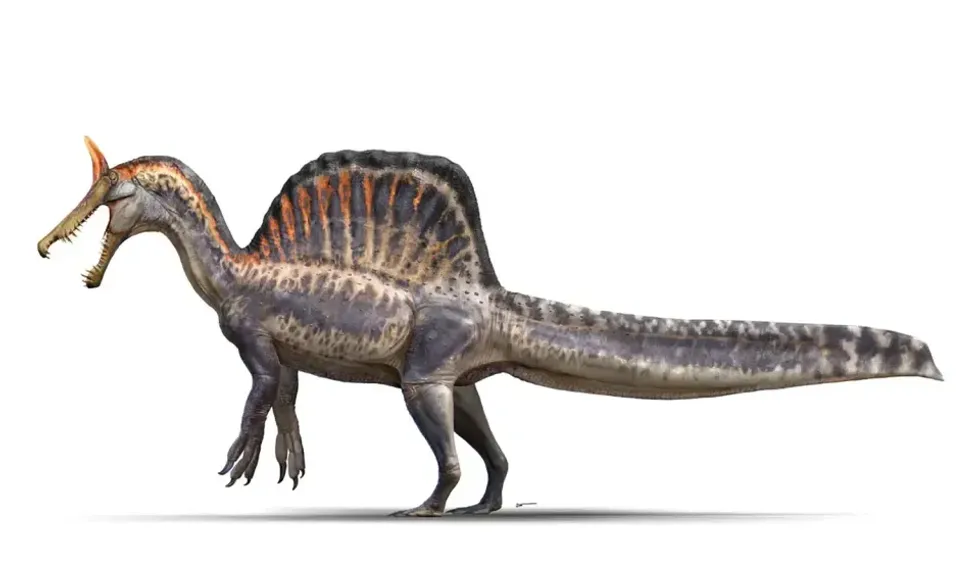
The prehistoric predator, now named Spinosaurus mirabilis, belongs to the spinosaurid family and has been likened to a creature from hell
|SCIENCE/UNIVERSITY OF CHICAGO
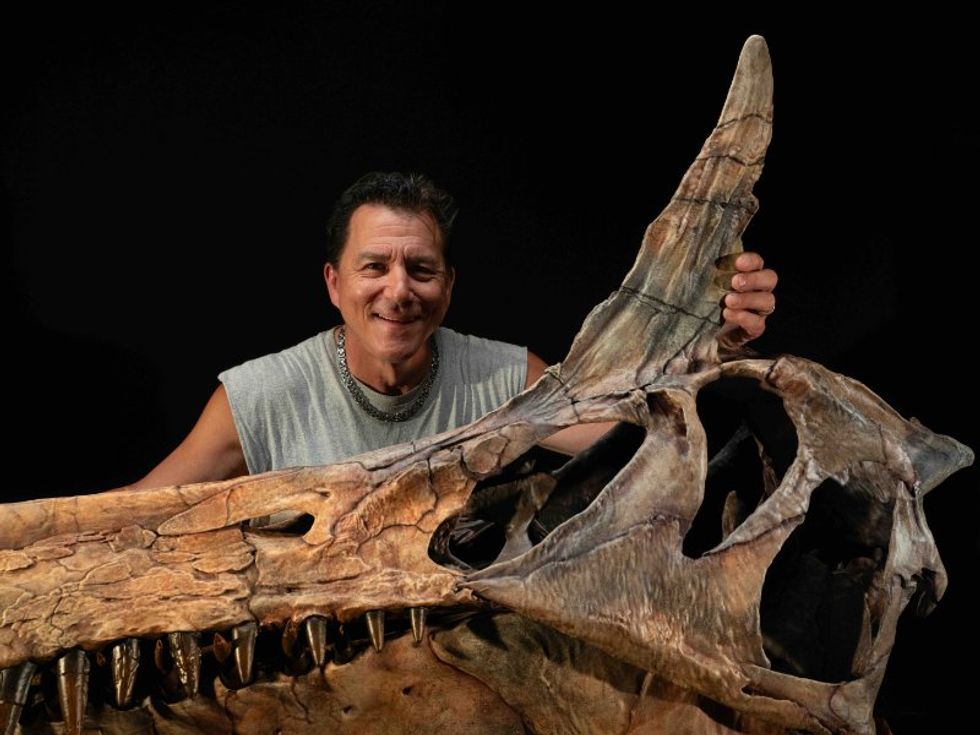
'This find was so sudden and amazing, it was really emotional for our team,' said Professor Paul Sereno (pictured with a reconstructed spinosaur skull)
|SCIENCE/UNIVERSITY OF CHICAGO
"This find was so sudden and amazing, it was really emotional for our team," said Professor Paul Sereno of the University of Chicago, who led the discovery.
"I'll forever cherish the moment in camp when we crowded around a laptop to look at the new species for the first time."
The team generated three-dimensional digital models of the bones to reconstruct the skull using solar power in the desert.
"After one member of our team generated 3D digital models of the bones we found to assemble the skull -- on solar power in the middle of the Sahara," Prof Sereno said.
DINOSAUR DISCOVERIES - READ MORE:
- Roman treasures, Saxon homes and DINOSAURS discovered beneath £134m new bypass
- Scientists unearth remarkably well-preserved fossil with dinosaur skin still attached
- Dinosaur discovery by palaeontologists fundamentally alters scientific understanding of the T. rex
- Scientists discover new massive dinosaur dubbed 'cow of the Creaceous' that roamed 75m years ago
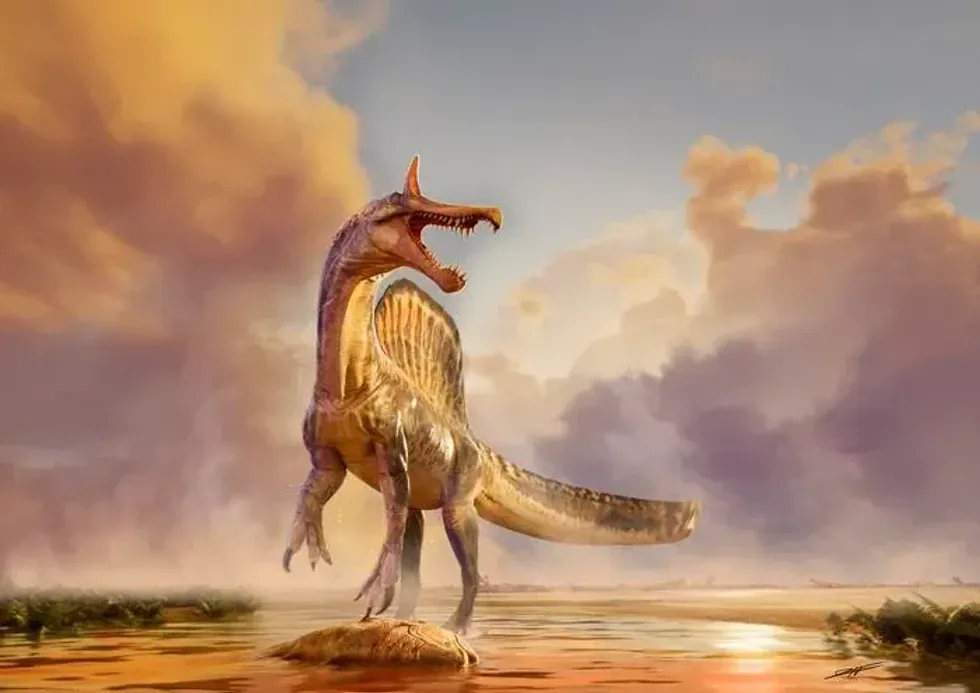
PICTURED: An artist's impression of the fearsome beast
|SCIENCE/UNIVERSITY OF CHICAGO
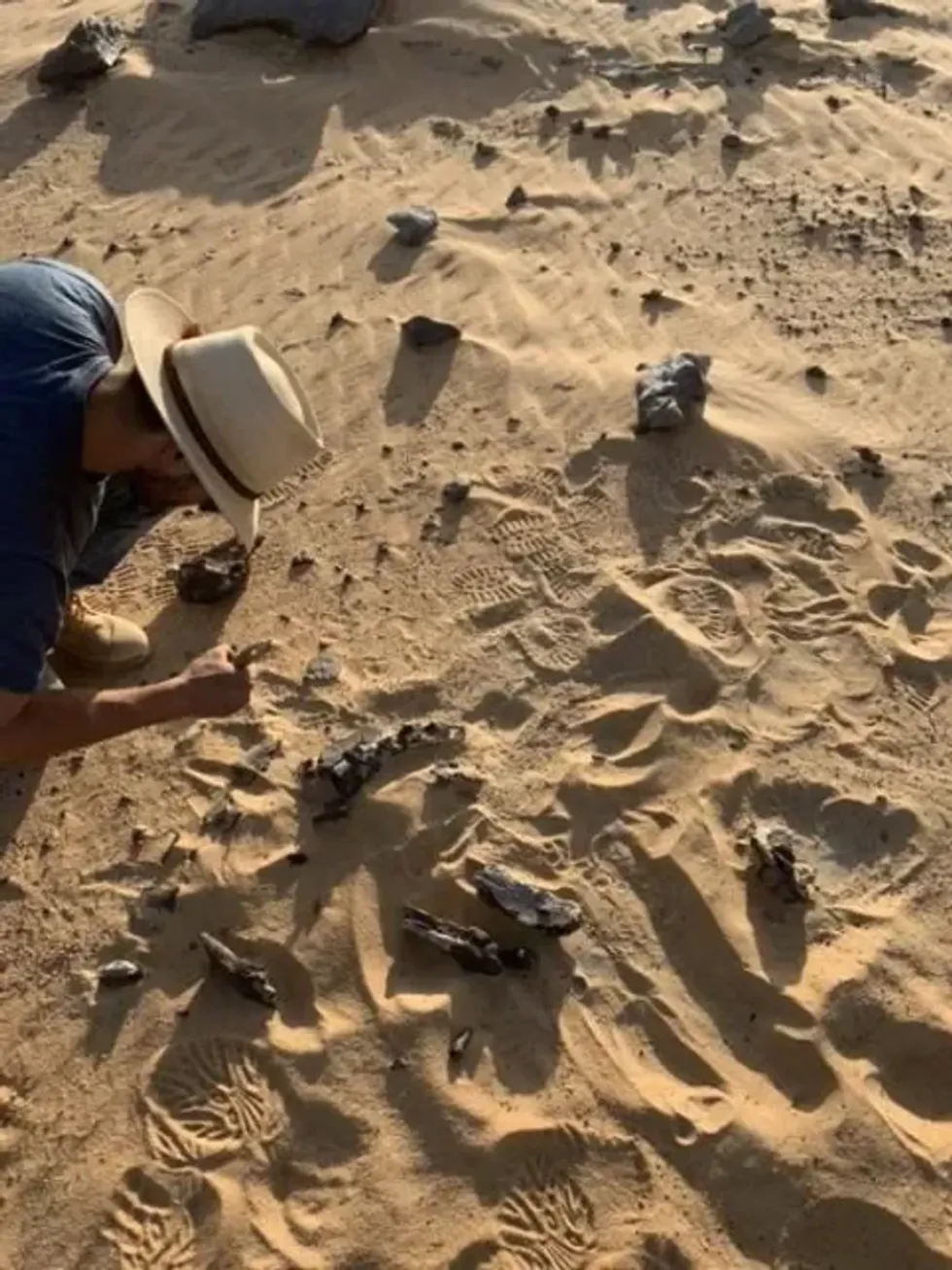
Researchers' expedition traced its origins to a 1950s note from a French geologist who mentioned finding a fossilised tooth in Egypt's Western Desert
|SCIENCE/UNIVERSITY OF CHICAGO
"That's when the significance of the discovery really registered."
Their expedition traced its origins to a 1950s note from a French geologist who mentioned finding a fossilised tooth in Egypt's Western Desert.
When Prof Sereno's team visited the location, they encountered a local Touareg man who guided them deep into the sands to a site where he had spotted enormous fossil bones.
The journey to reach the fossil field took nearly an entire day.
There they discovered teeth and jaw bones belonging to the new species.
"No one had been back to that tooth site in over 70 years," Sereno said.
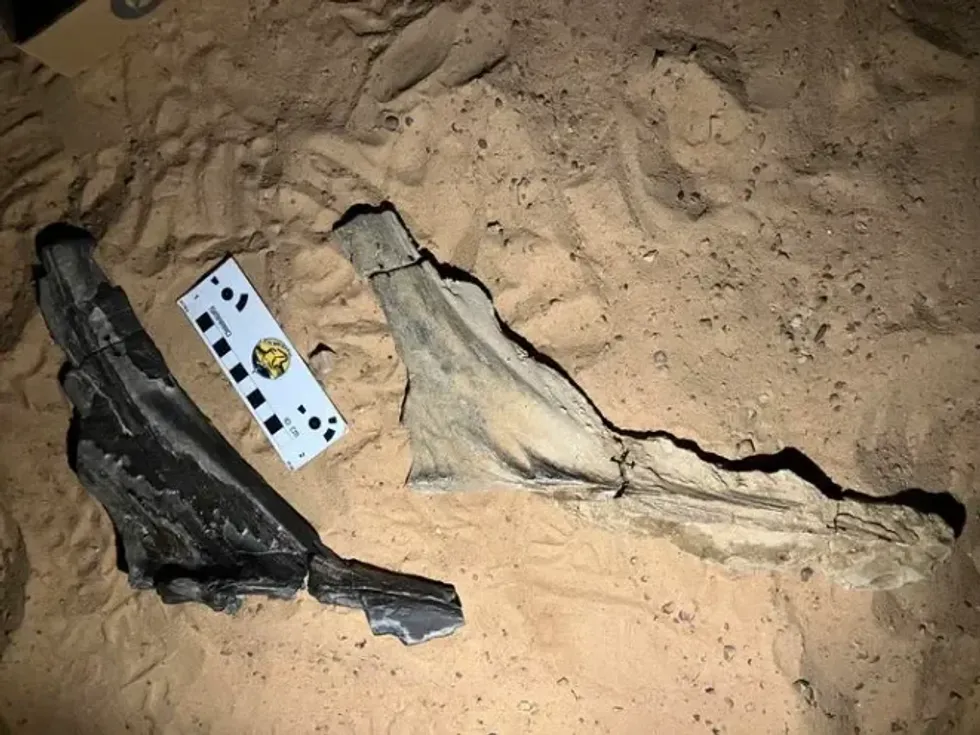
The journey to reach the fossil field took nearly an entire day - before the team then discovered teeth and jaw bones belonging to the new species
|SCIENCE/UNIVERSITY OF CHICAGO
"It was an adventure and a half wandering into the sand seas to search for this locale and then find an even more remote fossil area with the new species."
Prior to this discovery, spinosaurid fossils had only been recovered from coastal deposits near ancient shorelines.
Some experts had concluded the dinosaurs were entirely aquatic creatures that hunted exclusively beneath the water.
However, the site reveals these animals inhabited inland territories hundreds of miles from any coast, likely dwelling in forested river environments.
"I envision this dinosaur as a kind of 'hell heron' that had no problem wading on its sturdy legs into two meters of water," Prof Sereno explained.
"But it probably spent most of its time stalking shallower traps for the many large fish of the day."