










Scientists have identified a previously unknown dinosaur species that has been nicknamed a "cow of the Cretaceous" due to its cattle-like behaviour of roaming in herds.
The enormous hadrosaurid, now formally named Ahshislesaurus wimani, would have reached lengths of between 35 and 40 feet during its lifetime approximately 75 million years ago.
"Hadrosaurs have sometimes been colourfully called 'the cows of the Cretaceous,'" said Dr Steven Jasinski of Harrisburg University of Science & Technology, who contributed to the research.
"While this may not be a perfect metaphor, they likely were living in herds," he added, noting they would have been prominently visible across northern New Mexico's ancient landscapes.
The creature possessed a distinctive flat mouth shaped like a duck's bill, a characteristic feature of hadrosaurid dinosaurs.
Researchers estimate the animal tipped the scales at just over eight tonnes.
This massive herbivore existed several million years before more famous dinosaurs such as Tyrannosaurus rex and Triceratops walked the Earth.
"Ahshislesaurus wimani is a captivating new dinosaur," Dr Jasinski remarked.
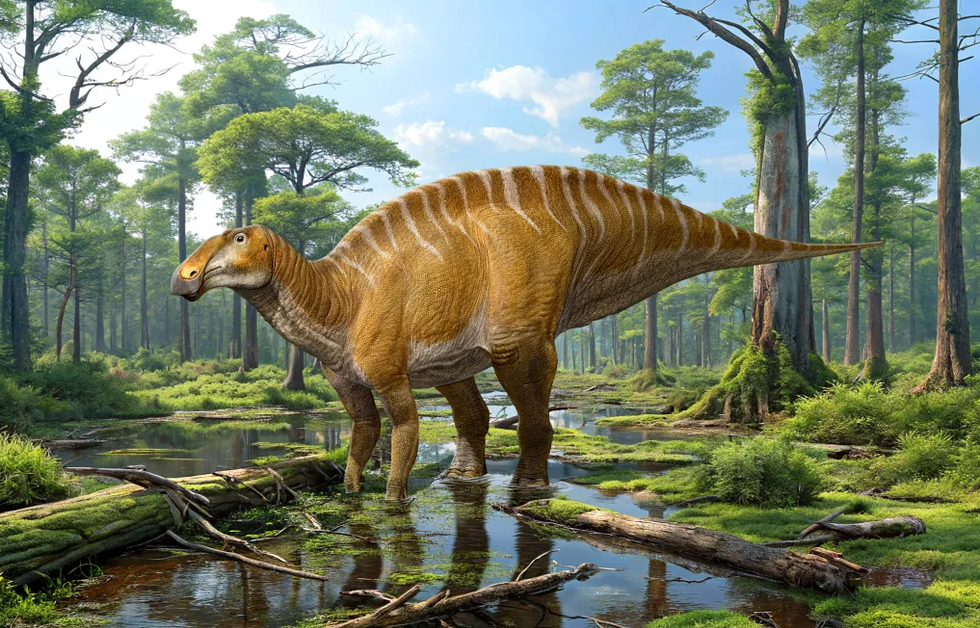
The enormous hadrosaurid, now formally named Ahshislesaurus wimani, would have reached lengths of between 35 and 40 feet
|HARRISBURG UNIVERSITY OF SCIENCE AND TECHNOLOGY
"The more we learn about these ancient animals, the more we realise there are so many more things to discover and learn."
The fossils belonging to this newly recognised species were originally unearthed in 1916 at Ah-Shi-Sle-Pah, a renowned palaeontological site in northwestern New Mexico.
Celebrated collector John B Reeside Jr discovered the bones, which were subsequently examined and described by researchers in 1935.
However, scientists at that time incorrectly attributed the remains to a different hadrosaurid species known as Kritosaurus navajovius.
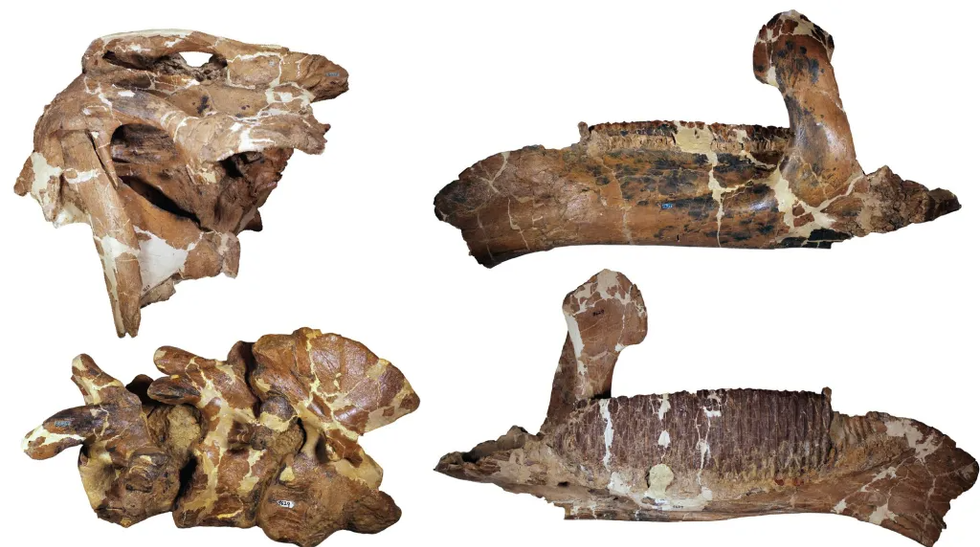
The fossils belonging to this newly recognised species were originally unearthed in 1916 at Ah-Shi-Sle-Pah
|HARRISBURG UNIVERSITY OF SCIENCE AND TECHNOLOGY
LATEST DEVELOPMENTS
Fresh analysis of the specimens has now revealed they actually represent an entirely distinct dinosaur species.
The famous fossil location had previously attracted legendary collector Charles H Sternberg during the early 20th century, who distributed his excavated finds to institutions worldwide.
Ahshislesaurus wimani belonged to a broader group of duck-billed dinosaurs that inhabited regions spanning New Mexico, Texas, and Mexico.
Evolutionary studies have also uncovered evidence of ancient migrations between Asia and North America, facilitated by a land bridge that once connected Alaska and Russia.
The primary threat to this herbivore would have been Bistahieversor, a tyrannosaur that shared its habitat.
The dinosaur coexisted with numerous other creatures including fish, amphibians, turtles, lizards, crocodilians, pterosaurs, and early mammals.