










One of the most complete hominin fossils ever discovered could completely change our understanding of human evolution, new research has suggested.
An investigation by Australian scientists has concluded that Little Foot, an ancient hominin that lived millions of years ago, could represent a previously undocumented species within human ancestry.
The findings, detailed in the American Journal of Biological Anthropology, challenge existing classifications of the specimen.
The skeleton stands as the most intact example of an Australopithecus ever recovered.
TRENDING
Stories
Videos
Your Say
Research led by Dr Jesse Martin from La Trobe University in Melbourne indicates the fossil's characteristics diverge from both previously proposed species identifications.
The fossil derives its name from foot bones initially uncovered in South Africa during 1994, which prompted a meticulous excavation spanning two decades within the Sterkfontein cave system.
The specimen was revealed to the public in 2017.
Prof Ronald Clarke, a paleoanthropologist at the University of the Witwatersrand who directed the excavation team, assigned the skeleton to Australopithecus prometheus.
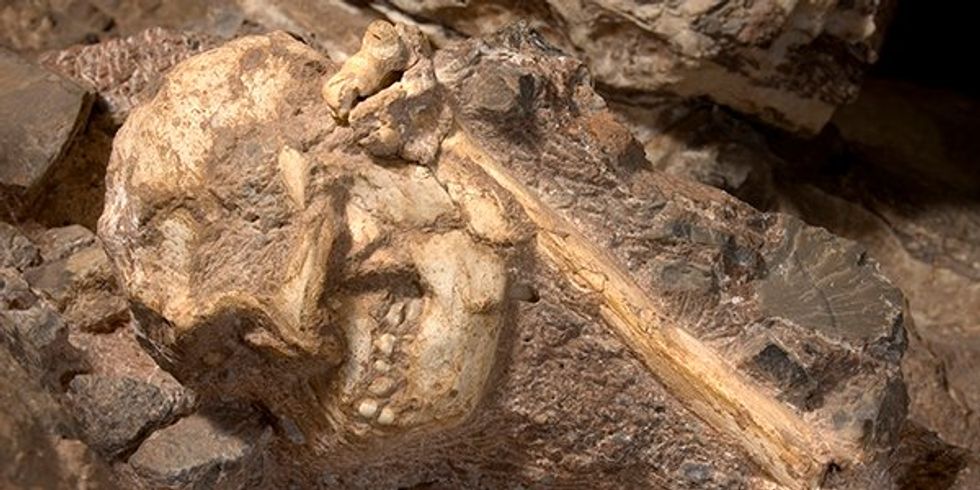
Research on the fossil could completely change our understanding of human evolution
|UNIVERSITY OF THE WITWATERSRAND
Alternative interpretations identified the fossil as Australopithecus africanus, a species originally documented in 1925 that had been recovered from the same cave network previously.
The genus Australopithecus, translating as "southern ape", encompasses a collection of hominins that inhabited Africa from at least 4.2 million years ago.
This classification has remained a point of scientific contention since Little Foot's excavation concluded.
Dr Martin, who also holds a postdoctoral research fellowship at the University of Cambridge, said Little Foot represents "a formerly unknown, unsampled species of human ancestor".
LATEST DEVELOPMENTS:
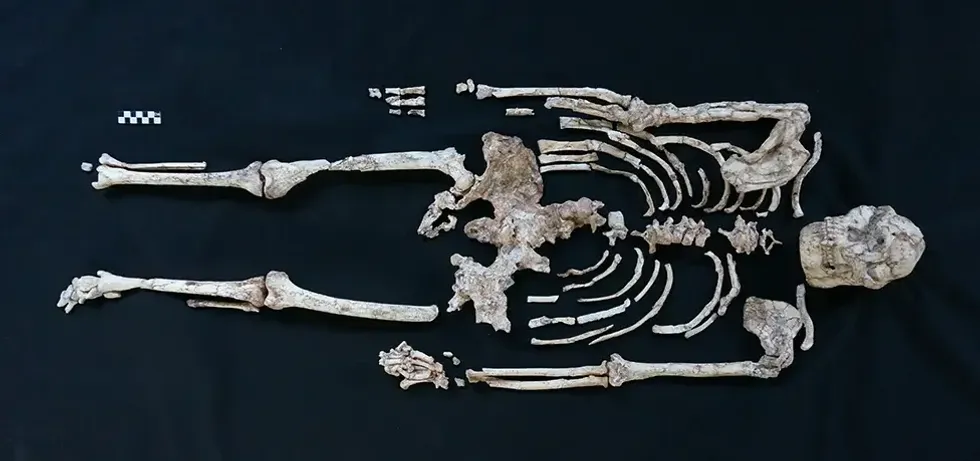
Little Foot is one of the most complete hominin fossils ever discovered
|UNIVERSITY OF THE WITWATERSRAND
The anatomical evidence centres on distinctive cranial characteristics that separate the specimen from known Australopithecus types.
"It doesn't look like Australopithecus prometheus ... but it also doesn't look like all of the [Australopithecus] africanus to come out of Sterkfontein," Martin explained.
The investigation identified a more elongated nuchal plane among other differences, situated at the rear portion of the skull.
Martin emphasised "the bottom back of the skull is supposed to be fairly conserved in human evolution, which is to say it doesn't change that rapidly".
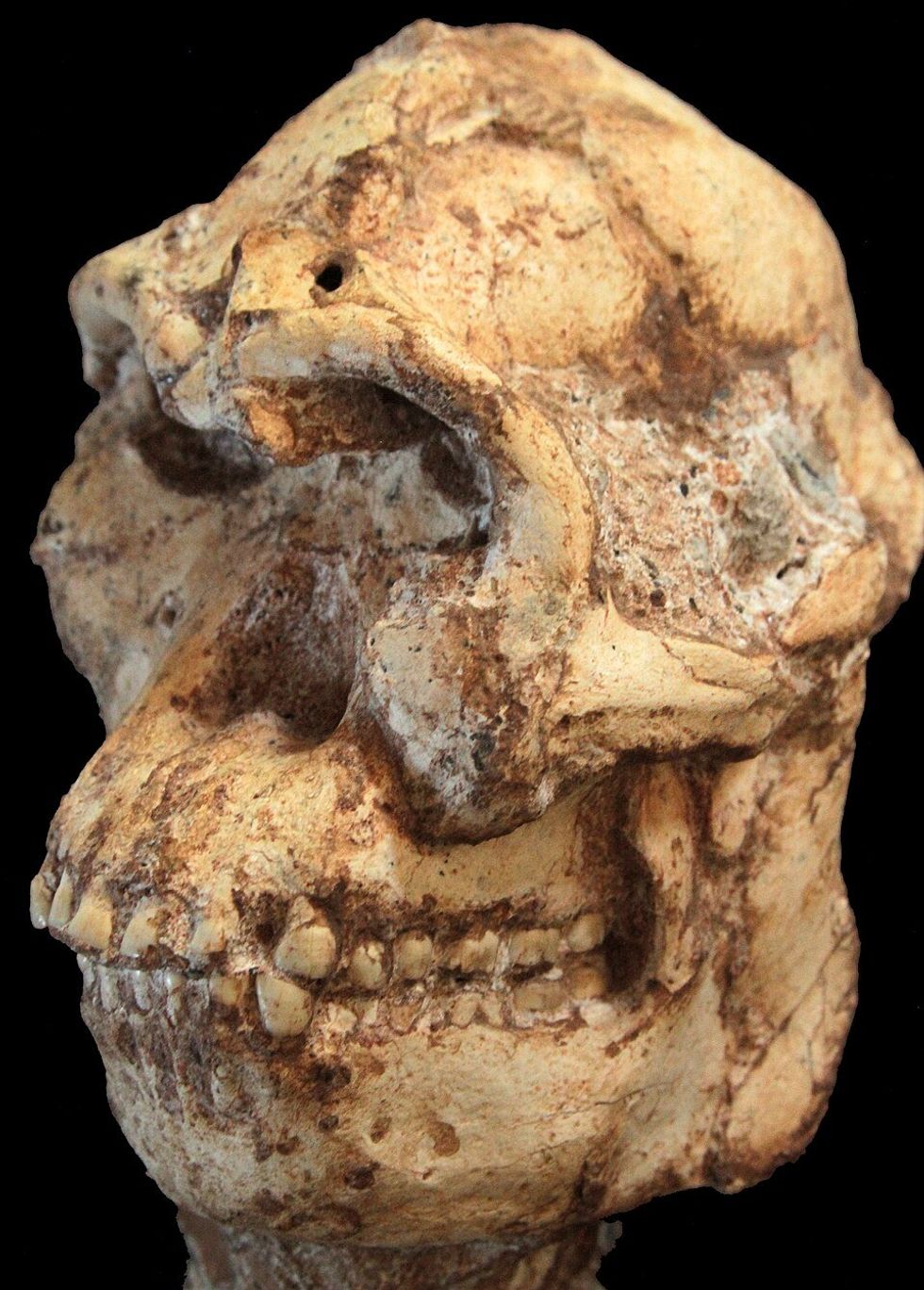
The investigation identified differences in the nuchal plane, situated at the rear portion of the skull
|WIKIMEDIA COMMONS
These anatomically stable regions provide more reliable indicators of species distinction, as "differences are more likely to represent different species, because they just don't change readily, evolutionarily speaking".
All distinguishing features identified by the team occur within this cranial region.
Martin noted the discovery could represent not merely an isolated point within humanity's ancestral tree but potentially "an entire limb of that tree".
He described finding "evidence hiding in plain sight at Sterkfontain of an entirely new species" as "kind of remarkable and counterintuitive" given Little Foot is "the most complete human ancestral fossil in the record".
However, the research team has refrained from formally reclassifying the specimen.
They said it would be "more appropriate that a new species be named by the research team that has spent more than two decades excavating and analysing the remarkable Little Foot specimen", describing their analysis as "well-intentioned advice".
Disagreement persists amongst scientists regarding the fossil's chronological placement.
Whilst the skeleton has been dated to 3.67 million years old, other researchers maintain Little Foot cannot exceed 2.8 million years in age.
Our Standards: The GB News Editorial Charter